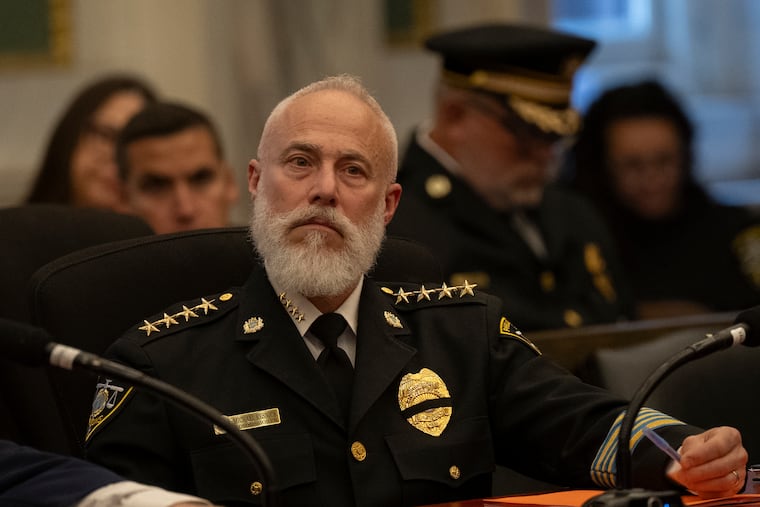
Phila. relief bill gets House panel OK
HARRISBURG - A House panel last night approved changes to Philadelphia's budget-relief package that would strip out most of the provisions that organized labor vehemently opposed in recent days.
HARRISBURG - A House panel last night approved changes to Philadelphia's budget-relief package that would strip out most of the provisions that organized labor vehemently opposed in recent days.
The full House is expected as early as today to vote on the plan, which would still allow Philadelphia to temporarily raise the sales tax by a penny on the dollar and to defer payments to the city pension fund as Mayor Nutter first sought.
But even if passed, its future in the GOP-controlled Senate remains in doubt.
The House Rules Committee voted unanimously for an amended version of the relief package, capping a daylong drama in the Capitol in which officials - until shortly before the vote - closely guarded details of the amendment as they tried to reach a compromise with the Senate.
Information was sparse even for the mayor of the state's largest city, who spent the day in Harrisburg lobbying for the relief package.
In an interview at 6 p.m., two hours before the vote, Nutter said he had not seen a final version of the amendment that was the last best hope for the city to avoid thousands of layoffs.
"We've done every possible thing that we could do to prevent this, yet we are caught up in a political maelstrom where action gets taken but there is seemingly never a resolution," said Nutter, frustrated with the slow pace of Harrisburg.
After the committee endorsed the rewritten bill, Nutter's tone softened somewhat.
"This keeps the bill alive," he said. "It keeps it moving. We are hopeful."
Wrangling over the city's pension issue has dominated backroom discourse in Harrisburg in recent days even as the state was grappling to reach an agreement on its own budget.
And time is running out for the city.
At noon today, the city's financial watchdog, the Pennsylvania Intergovernmental Cooperation Authority (PICA), is scheduled to vote to accept or reject Nutter's "doomsday" budget, known as Plan C.
It calls for 3,000 city layoffs, eliminates funding for Philadelphia's court system, and closes every city library and recreation center, among other budget-cutting steps.
It was unclear yesterday how board members would vote.
But PICA Chairman James Eisenhower said, "There certainly is a concern about a budget that does not fund the court system, and as a former prosecutor, I certainly have that concern.
"I don't think that is tenable."
If the board rejects the plan, it has the authority to withhold the PICA portion of the city wage tax - about $30 million a month - and to file a court action to compel the city to file a balanced budget.
With all the uncertainty, the city moved ahead yesterday preparing to implement Plan C.
A sign posted on the door of the South Philadelphia Older Adult Center, which sponsors yoga, dance, and music lessons and provides a daily lunch, noted that the facility would close Oct. 2 without "necessary legislation by the state in Harrisburg."
That prospect worried retiree Carolyn Claurdone, 66.
"A lot of older people are not going to cook for themselves," she said.
Such reactions are understandable, Nutter said.
"The people of Philadelphia are increasingly getting pissed off about this entire situation," he added.
The House originally passed the relief package Aug. 5.
That plan allowed the city to defer pension contributions and impose a 1-percentage-point increase in the sales tax until 2014 to help cover budget shortfalls.
But three weeks later, the Senate amended the bill to include far-reaching provisions dealing with municipal pensions across the state. Among other things, that version would allow the state to take over weaker-performing pension plans and freeze benefits for some plan members to bring stability to those funds.
Those changes have drawn the intense backlash of organized labor statewide, most notably from police and firefighter unions. They argued that the changes would wrongly restrict their collective-bargaining rights.
The new House version as approved last night would strip out many of the changes the GOP-controlled Senate sought.
House Majority Leader Todd Eachus (D., Luzerne) said that it ensured that union "collective-bargaining rights are on balance with the protection of taxpayers."
However, Senate Majority Leader Dominic Pileggi (R., Delaware) said many members of the upper chamber "will have serious concerns about the House's decision to remove those protections."
Yet, Pileggi acknowledged that the House did keep several so-called reform items, including pay-to-play limitations in the administration of municipal pension systems and the statewide elimination of Deferred Retirement Option Plans, or DROP, for elected officials.
Union leaders quickly applauded the House's efforts.
"We would have liked to not have been in this position at all," said Bill Rubin, District Council 33 representative on the city pension board. "In the end, I believe the best possible outcome was reached."
Said John McNesby, president of Lodge 5 of the Fraternal Order of Police: "It's a great thing. The city will get its relief, hopefully, and it's not on the backs of municipal workers."