From a boyhood hero to a brazen street thug
One afternoon in September 2002, a boy dressed in his grade-school uniform walked into a West Philadelphia police station.
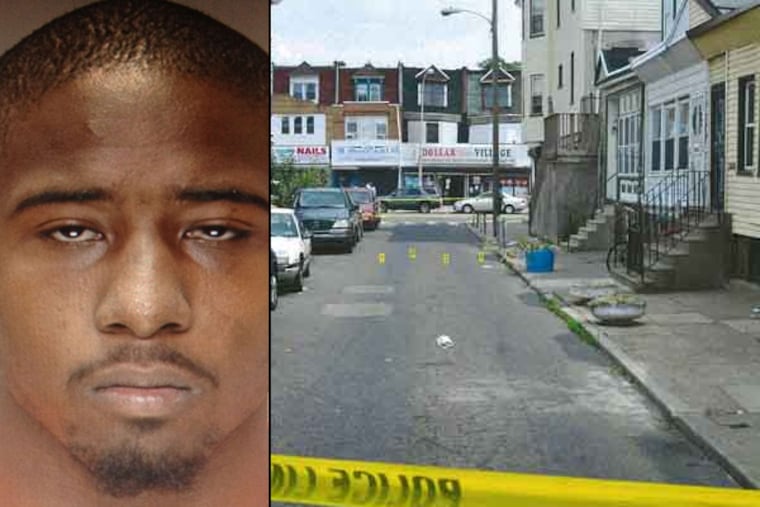
One afternoon in September 2002, a boy dressed in his grade-school uniform walked into a West Philadelphia police station.
Edward Sheed Jr. had a story to tell.
In a quiet voice, the 11-year-old pulled his hoodie over his head and described for officers how all summer long, from morning to almost dinner, his father made him sell drugs.
Tiny bags of white rocks.
Sometimes, his father made him hold a gun. "A cowboy gun," he called it.
If he didn't listen, his father beat him with a belt.
Narcotics officers drove Edward to North Philadelphia. He pointed to his father selling drugs.
For a brief moment, the city embraced Edward Sheed Jr. as a hero.
Mayor John F. Street and Police Commissioner Sylvester Johnson praised his courage. There was talk of establishing a trust fund. Philadelphia Weekly named him Person of the Year.
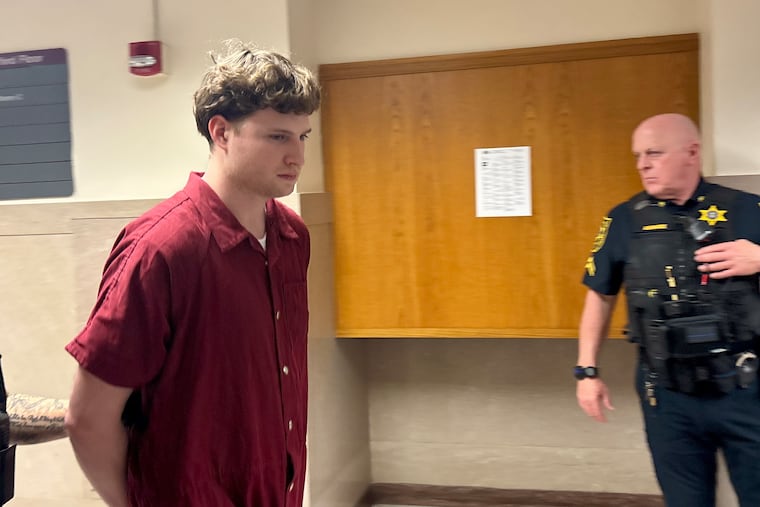
Earlier this month, Edward Sheed Jr. walked into another room - Courtroom 708 at the Criminal Justice Center - led by deputy sheriffs.
The child, now 23, had grown up. He wore a suit and glasses. He sat at the defendant's table, charged with shooting and paralyzing another man during a 2011 robbery.
The first thing Edward Sheed Jr. told police in 2002 was that he had gotten in trouble in school and was scared to go home.
His father said he would throw him in the Schuylkill if he got in trouble again, he said.
Then, he kept talking.
His father, Edward Sheed Sr., had just gotten out of prison. Most mornings that summer, he would pick up Edward Jr. in Mantua, where he lived with his mother and siblings, telling the child's mother they were fixing up a nearby house.
Instead, Edward Jr. said, his father drove to North Philadelphia. On the way there, he made him hold the drugs. If they got stopped, the police would not think to search a child, he said.
They went to a house on Styles Street. It was big and abandoned with some windows broken and others boarded. His father would go inside. Edward stayed on the porch with the drugs. When people came knocking, Edward Sr. would send his son into the alley to give them the baggies.
At day's end, they would go to the house of his father's mother. She hid the money under her bed, according to court documents.
Twice, two white men from Virginia came to Edward's grandmother's to deliver big, white rocks. His father cooked the white rocks on the stove.
Edward Sr.'s reputation preceded him in court - in 1987 he was sentenced to 2 to 10 years for mugging Common Pleas Judge Lisa Richette.
Before sentencing Edward Sr. to 121/2 to 25 years in 2004, a judge noted that Edward Jr. "testified about the packaging of drugs as well as any narcotics officer."
While city officials praised Edward Jr. for defying his criminal upbringing, court papers painted a much more complicated portrait.
The year before he went to police about his father, he was arrested for beating up a classmate and stealing his Game Boy.
When his parents were arrested - his mother, Rhonda Overton, was sentenced to probation after police searched the house and found a packet of crack on her - the city's child welfare agency took custody of Edward Jr.
While being taken to a temporary shelter, Edward tried to stab his social worker, according to a 2002 court-ordered psychiatric evaluation report.
He was taken to the children's health institute in Glenside. His behavior was "very streetwise and intimidating," the report said.
"He has potential for very manipulative behaviors, and can become quite agitated and violent," it read. One time, hospital staff required "four-point restraints."
Psychiatrists found him to be deceptive, noting that he told different stories about whether his bruises were the result of abuse from his father.
Edward Jr. did not appear to be "a reliable historian," the report said. "He seemed to say whatever he thought was in his best interest at the time."
Doctors recommended a residential treatment facility for troubled children.
For five years, Edward Jr. bounced through a half-dozen facilities, including one in Colorado, his sister Rachonda Lewis said in an interview.
When he was 16, Edward Jr. went to live with his maternal grandmother on Allison Street in Southwest Philadelphia.
A year later, Edward was arrested - and would eventually serve about a year and half in prison - for two gunpoint robberies, including one of a woman on Allison Street.
Marvin Brown, who was 19 in 2011, liked to throw dice on Allison Street. He knew Edward by his street nickname, Doobie.
Brown was throwing dice against the concrete wall of a corner store about 1 p.m., June 10, 2011, with three friends, when he saw Edward Sheed Jr. pacing Allison Street.
Brown's friends scattered when Sheed walked up behind him with a gun poking out of his waistband.
Sheed, according to court testimony, stuck his hand inside Brown's sweatpants pocket.
"Give me your phone," he said.
Sheed walked away with the phone. Brown followed for about 30 feet, asking for it back.
Sheed turned and fired.
Brown felt burning sensations. The first bullet struck him in his chest. The next, his thigh. He turned to run. The third bullet hit him in his neck. He couldn't feel anything after that. He lay in the street, unable to move, watching as Sheed walked to a waiting car.
In the hospital, Detective Matthew Farley pulled a curtain closed and flipped through suspect photos. Brown, permanently paralyzed from the shoulders down, could only nod at a photo of Sheed.
Police arrested Sheed on Allison Street. During booking, they took pictures of his tattoos.
On his right arm, he had a handgun with the words Bleed for the Street. On his left: Whatever don't kill me makes me stronger.
Prosecutors offered Sheed a plea agreement - 121/2 to 25 years. Sheed rejected the deal.
In his suit and glasses, Sheed was composed throughout the three-day trial. He took notes, shuffled papers, and constantly whispered to his attorney.
A nurse and medical technicians wheeled Brown in to testify from his bed. He lives in a small room in his father's house, crowded with medical equipment and oxygen tanks.
"He shot me," Brown said, an intern holding a microphone to his mouth.
"Marvin Brown had one thing left to do in what is likely going to be a short rest of his life," Assistant District Attorney Morgan Model Vedejs said in her closing.
She pointed at Sheed: "To make sure he came in here and told you that this man . . . was the man that put him in this bed."
When the jury foreman read the guilty verdict July 10, Sheed took off his glasses. He untucked his shirt.
He shouted at his lawyer: "You might as well be sitting over there with her," pointing to the prosecutor.
He barked at the judge, demanding to be sentenced on the spot.
"I want you to give me what you got," he said.
No, the judge told him, setting sentencing for Sept. 10.
The boy with a story to tell now faces from 30 to 60 years in prison.