Temporary disability, permanent enlightenment
How a busted bone made me appreciate all the ADA has done
I BROKE MY foot two weeks ago, but that's not what this column is about.
It's about how I've been feeling since then. Thwarted and frustrated, yeah, but I'm an impatient sort anyway (ask my husband). So, no surprise there.
What's strange is how vulnerable I suddenly feel in public. In my job, I've crawled through some of the city's worst neighborhoods, sometimes at night and usually alone. Call me stupid, but I've never felt scared.
So after an appointment last week at 10th and Chestnut streets, I didn't fear getting to the Daily News at 8th and Market on my own. Because I'm unable to put weight on my busted left foot, I use a scooter that lets me kneel on my left knee while kicking myself forward with my right leg.
The city is full of curb cuts, I thought. How hard could this be?
Within a half block, my knee ached so badly I had to shake out the spasm. I didn't know what I'd do if the pain became too much for me to keep going.
Would a cabbie be willing to fold the scooter into the taxi, for a piddling two-block fare? What if he broke it? Who would help me into the office?
Then there was the dude at the corner of 10th and Market.
"Wadja do to your foot?" he asked, falling into step next to me. His voice was friendly, but his manner squirrelly. He was walking too close to me, but I couldn't move away easily the way I've done other times when passing strangers on the streets.
He eyed my scooter and then my purse. If he grabbed both, what would I do - chase him on my hands and knees?
A few steps later, he ambled off.
"Hope you get better," he said.
I felt bad for having been suspicious. But I was in survival mode: He had mobility - power - and I did not.
I share this with the knowledge that, in two months, I'll be sure-footed again. But my temporary incapacitation is permanently enlightening me about what folks with disabilities deal with.
They've always had my empathy. Now they have my understanding.
Sunday is the 25th anniversary of the Americans with Disabilities Act. The watershed civil rights legislation ensures that people with disabilities needn't wait for me or anyone else to understand their needs before the country accommodates them.
The ADA outlawed discrimination against people with disabilities in all areas of public life - jobs, school, transportation and all private and public places that are open to the general public.
As then-U.S. Rep. Pat Schroeder said in 1990 of the need for the ADA, "What we did for civil rights in the '60s we forgot to do for people with disabilities."
"The aim of the ADA was broader than just, 'Can I get through a door?' " says Carl Webster, executive director of Easter Seals of Southeastern Pennsylvania. "It was, 'Can I get into society?'
"The act has literally opened doors for people with disabilities in terms of their being able to live life with greater independence, freedoms and dignity."
Their dignity was hard won.
In 1990, the act had the support of President George H.W. Bush and the Senate but stalled in the House.
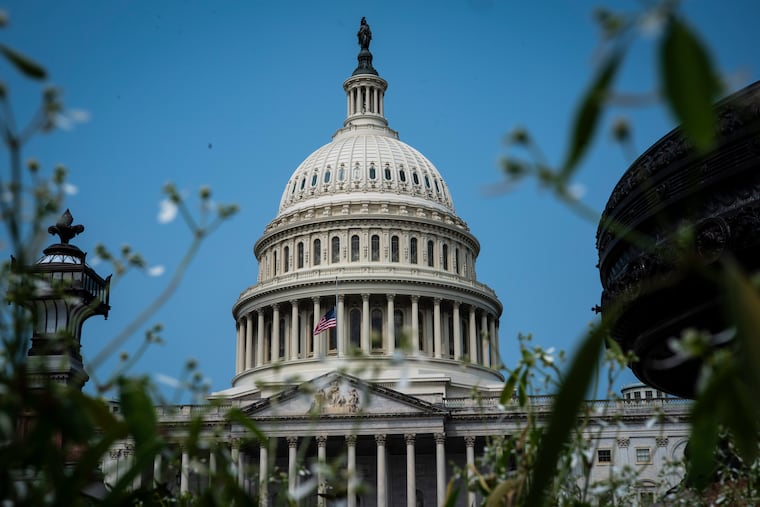
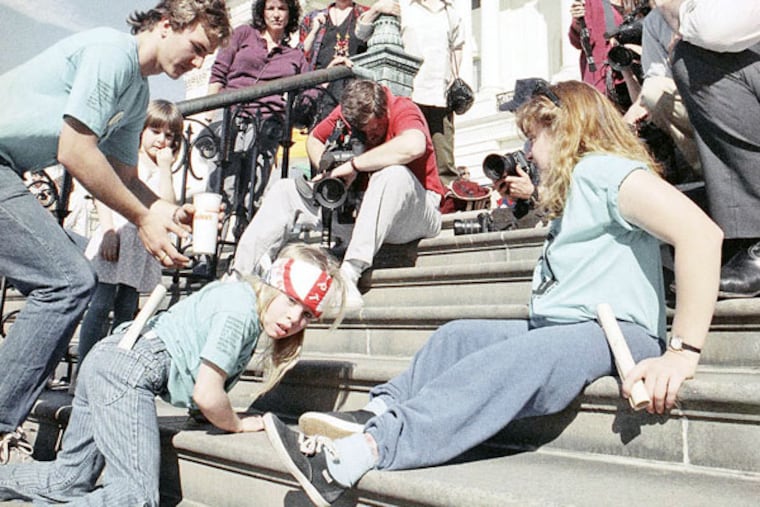
The frustration of its advocates came to a head on March 12, 1990, when more than 60 physically disabled people left their crutches and wheelchairs at the bottom of the Capitol stairs in Washington, D.C., and crawled up the 83 stone steps to protest the delay of the bill's passage.
"Some people thought it would be demeaning," recalls disability rights activist Michael Winters in Lives Worth Living, a documentary about the disability rights. "But my feeling was that it was really demeaning the way the country was treating disabled people anyway."
Televised images of the "Capitol crawlers"- including an extraordinary 8-year-old girl with cerebral palsy who grunts, "I'll take all night if I have to!" as she hoists her small body up the stairs - helped get the bill passed four months later.
Thanks to the ADA, we now have curb cuts in our sidewalks. Automatic doors. Ramps next to stairs. Wheelchair-accessible voting booths, restrooms, buses, movie theaters and trains. Elevator buttons numbered in Braille. Audio-enabled ATM machines.
These accommodations have given those with disabilities access to society in ways the able-bodied take for granted. They've brought the disabled out of homes where they were often stranded and into the public realm - on our streets and buses, in our theaters and restaurants - where we all have a right to be. They've helped them contribute to society - in the workplace, in the classroom, in elected office - in ways that are necessary if we're to be a country that allows liberty, justice and the pursuit of happiness for all of us.
Not just those whose bodies work in a certain way.
Happy birthday, ADA. You've made the country a better place for those who have always been more than their disabilities.
Whether the disabilities are temporary or permanent.
Phone: 215-854-2217
On Twitter: @RonniePhilly
Blog: ph.ly/RonnieBlog
Columns: ph.ly/Ronnie