Torches caused Conshohocken fire; residents sue
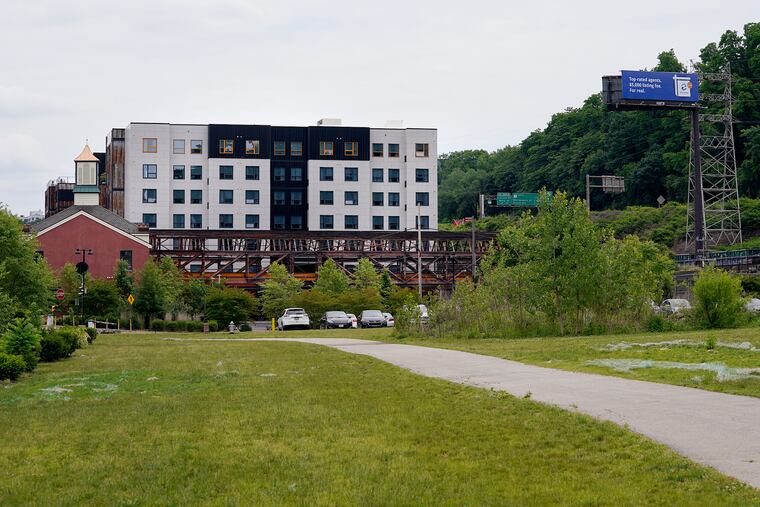
As investigators confirmed yesterday that molten metal and sparks from a welding torch at the Stables at Millennium in Conshohocken ignited the eight-alarm blaze that destroyed 180 apartments Wednesday, a group of residents filed a lawsuit over the fire, seeking class-action status.

As investigators confirmed yesterday that molten metal and sparks from a welding torch at the Stables at Millennium in Conshohocken ignited the eight-alarm blaze that destroyed 180 apartments Wednesday, a group of residents filed a lawsuit over the fire, seeking class-action status.
County fire and law enforcement officials have ruled the fire accidental, and Conshohocken officials have supported developer J. Brian O'Neill, who they say followed every fire and building code the borough required for the Riverwalk at Millennium apartments. The welders operating the acetylene torches at the Stables construction site had left before the fire broke out, investigators said.
The residents' lawsuit names O'Neill; property manager Bozzuto Management Co.; and the construction companies that worked at the site, alleging that safety measures were ignored and that the occupied buildings should have had firewalls and sprinkler systems that extended to the attics and roofs, where the fire caught and spread.
"Using a 3,000-degree acetylene torch in a wood-frame building is like using matches in a barn full of hay . . .. Wood and flames do not mix," lawyer Robert Mongeluzzi, who represents the residents, said at a news conference yesterday.
Mongeluzzi said the Riverwalk apartment buildings did not meet National Fire Prevention Association standards, which require attic sprinklers and firewalls that extend to the roof for buildings of five or more stories. Riverwalk has four stories with a garage on the first level.
O'Neill said his lawyers would answer the suit but he declined to comment further.
Welders were using oxyacetylene torches to remove steel supports for balconies that had been improperly installed, according to a statement yesterday from Montgomery County District Attorney Risa Vetri Ferman.
The welders stopped work at 2:30 p.m. Wednesday and returned to the site about an hour later to make sure there were no problems. They then closed up the site and left. About an hour later witnesses in a nearby building saw a small fire where the welders had been working. Fire officials received the call at 4:52 p.m.
Ferman declined to discuss any specifics of the welding operations or other code issues raised in the lawsuit, but she said many factors contributed to the intensity of the fire.
"This was an extraordinary confluence of circumstances," Ferman said. "If one piece had been different, this fire would not have started and spread the way it did."
To prevent fires during welding, construction crews are supposed to protect combustible material within 35 feet of the welding site by wetting down surfaces or using fireproof covers, said Amy Beasley Spencer, a senior chemical engineer at the nonprofit National Fire Prevention Association.
"All of these precautions are really well known," Beasley Spencer said.
O'Neill said he knew that workers returned to the site to look for fires or other problems from the welding but could not speak more specifically about safety precautions taken at the site. When asked whether the welders were adequately trained, O'Neill said he was still looking into it.
Cavan Construction of Aston, the company named in the suit as having performed the welding, did not return a call for comment yesterday. The other two construction companies named in the lawsuit - Merion Construction and L2I Construction - declined to comment.
About 30 state, county and local officials toured the Riverwalk apartments yesterday and promised to help find money to replace and repair damaged fire equipment. Officials reiterated that the buildings were up to code but said they planned to review local building codes and fire-prevention requirements to see whether more restrictions were needed.
"My eyes weren't lying to me when I saw how fast that erupted, how fast that spread," said Jim Matthews, chairman of the Montgomery County Board of Commissioners. "I saw the lack of retardant . . . without the firewalls and it doesn't take a lot of brains to realize there could have been something done better or differently." He added, "Now, that does not mean it wasn't done according to code. This is really a question of addressing code in the future."
Montgomery County Public Safety Director Tom Sullivan said the fire was difficult to fight because of its location along the river and because rush-hour traffic was backed up around Conshohocken when nearly 300 firefighters made their way to the scene. Some cars ran over hoses, Sullivan said, cutting off the water supply as firefighters tapped hydrants farther and farther from the scene.
Matthews said the bridge across the Schuylkill needs to be widened to allow better access to properties along the river during rush hour.
"It is no longer a question of how, it's a question of when," Matthews said.