Killer's lawyers seek reduction in sentence
At least once a week, before she goes to sleep, Esther Anderson finds herself trapped in the darkest corners of her mind.
At least once a week, before she goes to sleep, Esther Anderson finds herself trapped in the darkest corners of her mind.
She imagines her 12-year-old daughter, Kim, the pretty seventh grader who dreamed of being a ballerina, inside the family's Deptford home.
Suddenly, a monster appears in the form of a 14-year-old boy, a neighbor who was a friend of Kim's brother, Stephen Jr.
"Something clicks in my head and I'll start to relive the whole thing," Anderson says, tensing. "I'll start wondering about things I don't know about. But I'm always very cowardly in knowing about her wounds, so I put it out of my mind. I just can't go there."
Tomorrow marks 21 years since Kenneth Houseknecht broke into his neighbors' home for what he contends was supposed to be a simple robbery. Instead, the eighth grader viciously attacked Kim Anderson, stabbing her nearly 100 times. The then-rare child-on-child crime became national news.
The ferocity of the assault was so intense that the tip of his knife broke twice, leaving pieces in Kim's head. Houseknecht, who stood 6 feet tall and weighed 200 pounds, also beat the 5-foot, 3-inch, 120-pound Kim repeatedly with a telephone.
A judge ordered Houseknecht tried as an adult, and a jury convicted him of murder after an emotionally charged trial that was moved from Gloucester County to Salem County because of extensive publicity. He was sentenced to life in prison, meaning he would have to serve a minimum of 30 years before becoming eligible for parole.
Now, attorneys for Houseknecht, held at East Jersey State Prison in Rahway, want his sentence reduced. They seek post-conviction relief, a last-ditch legal effort exercised after all appeals have been exhausted.
In court filings, they claim, among other things, that Houseknecht had ineffective counsel. They contend that Houseknecht, who turns 36 next month, was denied an opportunity to plead to a sentence that would have allowed him to go free after 30 years, bypassing the discretion of the parole board.
A status conference is scheduled for May 5 in Superior Court in Gloucester County.
Alone in the house
Early on April 19, 1988, Kim Anderson and another girl were expected for breakfast at a friend's house before school.
Esther Anderson, who ordinarily would have been home, went to work early that day to help her husband, Stephen, at the family catering business in Blackwood Terrace.
Stephen Jr. boarded the bus to Monongahela Junior High, which he and Houseknecht attended. Other than the family boxer, Bo, Kim was alone.
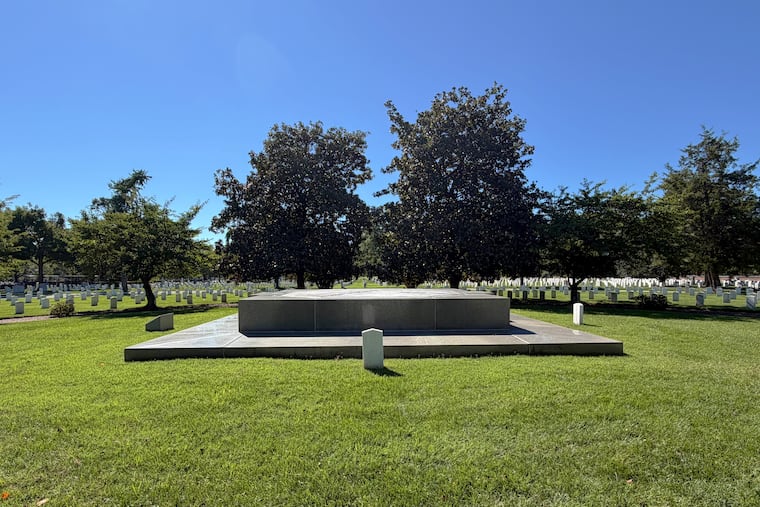
When the family visits the cemetery in Bellmawr where Kim is entombed, Esther apologizes to her daughter.
"I wasn't there to protect her," she said on a recent gray Monday, fighting back tears. When Kim failed to show for breakfast, Joanie Collum and another friend went to the Andersons' home. Shouting Kim's name, they got no response. They decided to investigate. Kim, partially clothed, was lying on the floor just inside her bedroom, next to a blood-soaked Cabbage Patch doll.
"It was awful," says Joan Krucinski, the former Joanie Collum, now a married mother of three. She suffered nightmares for years after the murder, which strongly influenced her decision to become a police officer "so I could help to keep people safe."
For almost two years, she has been a detective with the Major Crimes Unit of the Gloucester County Prosecutor's Office, which interviewed her after she discovered Kim's body.
Investigators quickly zeroed in on Houseknecht as a suspect. He was late to school that morning, and was sent to the nurse's office to treat a cut on the palm of his right hand.
Police also interviewed James Mollo, a 20-year-old laborer who supplied Houseknecht with drugs, beer, and pornographic magazines. Mollo told detectives that Houseknecht owed him $50 for the magazines, which Houseknecht sold to other students. Mollo had been pressuring Houseknecht for the money, and the teen was "willing to do anything to get it," according to his statement.
Mollo, who also admitted briefly pulling into the Andersons' driveway on the morning of the murder, was not charged or called to testify. Prosecutors said they had decided to keep the focus on Houseknecht.
Shortly after the murder, Houseknecht had approached investigators scouring the neighborhood for clues.
"You know my fingerprints are all over the house, even in Kim's room," he told them, according to court records. "I like to stand in front of the mirror and listen to Kim's radio. My prints are even on her bed because I looked out the window."
Investigators discovered a note on Houseknecht's bed written to the Andersons that featured sexually explicit drawings, the same type a school psychologist had noted when Houseknecht was 11.
"This is your daughter's killer. I hope you know I used gloves. The next one to get it is Mrs. Anderson," the note read.
Houseknecht has never publicly given his version of events, except to characterize the murder as an accident before he was sentenced in September 1991. He did not respond to a written request for an interview sent to the prison. In court documents, he said he robbed the house and Kim confronted him.
"She screamed and grabbed me," he said, according to an interview he gave to one of his court-appointed doctors in 1990. "We were wrestling. I had a knife. She might have thought I was going to rape her.
"I wanted to leave, and she kept screaming. I grabbed the telephone and hit her on the head to get her off."
Houseknecht took the knife and "started to give her jabs so she would keep off. . . . I don't know why I just didn't knock her out. I didn't want to hurt her."
Eventually, Houseknecht passed out. When he awoke, "she is under me. She is all stabbed. I was scared."
After wiping off his fingerprints and spraying the room with deodorant, Houseknecht went home and changed his bloody clothes.
"I thought that if I went to school, and then I went home and go to sleep then it would never have happened because it would all have been a dream," the report said.
The Anderson home was a popular gathering spot for neighborhood children, including Houseknecht. Defense witnesses testified that Houseknecht was physically and emotionally abused for years.
They said his mother was ashamed of him, favoring his younger sister, Joyce, a successful beauty pageant contestant who was crowned Miss New Jersey Teen USA in 1995.
The Andersons insist that Houseknecht wanted to do more than just rob them.
"He wanted to destroy us," Stephen says.
"He resented what we had, and what he didn't have," Esther says.
They say the ordeal has been toughest on their son, who was close to his sister and who feels guilty because Houseknecht was his friend.
"Sometimes he talks about children, but I don't believe he'll ever have them," Esther says of Stephen Jr., who is single and who plans to move to Tampa, Fla., this month. "He always says he could never go through what we have gone through."
Lasting memories
Reminders of Kim decorate the Andersons' Mount Laurel home. They moved there in 2005 from Voorhees, to which they moved shortly after the murder, unable to cope with the painful memories haunting their house on Arline Avenue.
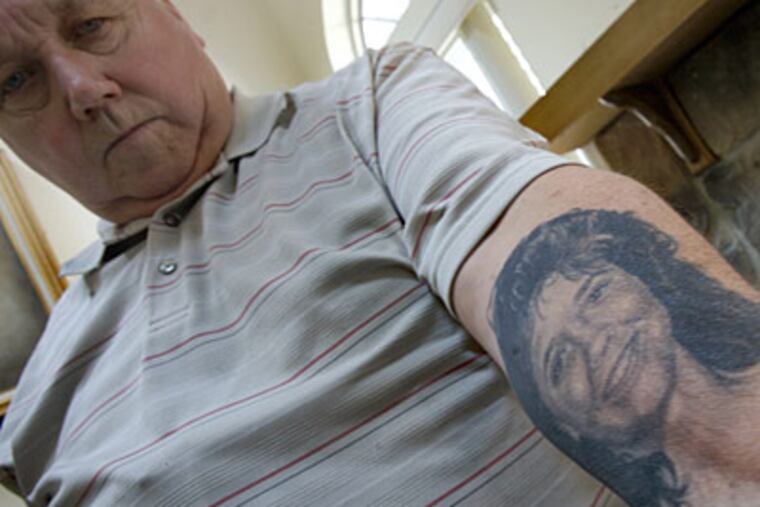
Large portraits of Kim dominate the downstairs. Her parents kept most of her things, including her doll collection and a bed set they still use. Two Christmases ago, Esther and her son gave Stephen his favorite gift: a tattoo on his left forearm of what he calls "my Kimmy"; a portrait of his two children together decorates his right forearm.
Esther and Stephen will both turn 60 later this year. Childhood sweethearts, they have been married for nearly 36 years and together for 44. The prospect of Houseknecht's early release worries them, because, Esther says, "he's a very defective person."
In his brief opposing the petition for post-conviction relief, Assistant Prosecutor Joseph H. Enos Jr. of Gloucester County cited the trial testimony of Houseknecht's doctors, who said there was still the potential for another psychotic episode.
"This sentence simply isn't excessive," Enos wrote, "and . . . should be left to the parole board to fashion a release date, if ever."
For years, Esther refused to embrace the hopeful promise of spring because it was the time of year when Kim was killed. She still struggles to move forward.
"Eventually," she says, staring out into her backyard as a steady rain soaks the ground, "the trees bud and the flowers bloom."