Audit rips Chester Upland School District
The Chester Upland School District is in "disarray," with "ineffective" governance and financial oversight preventing it from meeting its mission of educating students, according to a state audit.
The Chester Upland School District is in "disarray," with "ineffective" governance and financial oversight preventing it from meeting its mission of educating students, according to a state audit.
"Those students may never recover from the loss of an effective education, and in the long run, the district's failure could ultimately prevent them from realizing their true potential," Auditor General Eugene DePasquale's report said.
The review covered the period from May 4, 2010, through Feb. 26, 2013, during which the 4,505-student district was identified as among the lowest-achieving in the state. In the 2011-12 school year, the graduation rate was 42 percent.
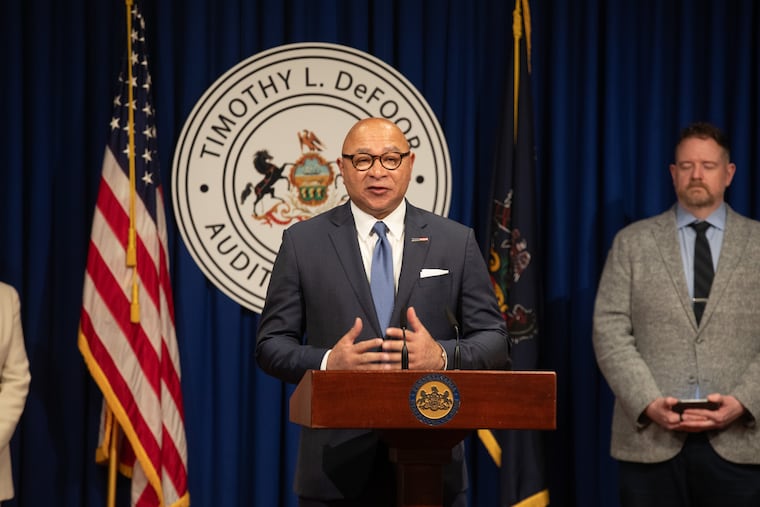
At a Capitol news conference, DePasquale said the situation was so dire there that there was little hope for the district's future barring a long-term, concerted effort by administrators to tackle the problems.
More than two dozen district employees did not even have proper certifications for their jobs, including one school nurse, he said.
"That's a school district in disarray," DePasquale said. "What the kids need, let's be blunt, are adult professionals who are in it for the long haul, who want to turn this around and who are willing to accept that it won't be easy."
DePasquale said he believed the appointment in December of Joseph Watkins as the district's receiver would go a long way on the administrative side toward establishing oversight and control over spending, personnel, and policy.
The report paints a bleak picture of how the district has operated.
Among the findings: Students graduated who did not meet requirements; board members failed to file statements of financial interest; the district violated the public school code by overspending on its budget; expenditures lacked documentation; state subsidies and reimbursements also lacked documentation; and bus driver qualifications could not be verified.
The last three years have been tumultuous even by Chester Upland standards. In 2010, voters elected their first school board since 1994, the year the struggling school system was first placed under state control because it was in fiscal and, later, academic distress.
But the state again has taken the reins and appointed Watkins as the chief recovery officer.
Pointing out that the district has been under state control during most of the last 19 years, school board member Anthony Johnson said, "They can't blame us." The board has limited powers.
The district's problems were worsened by the near-constant turnover in its senior management, the report said. Since 2005, Chester has had seven superintendents and seven business managers, including acting and interim.
The revolving door allowed issues raised in past audits to be ignored. The district's boards "should have ensured that each new administrative staff member addressed the appropriate operational priorities," the audit said.
Watkins, who was in Harrisburg with DePasquale, said "Continuity is critical."
He added: "We have a lot of work to do, but we are serious about implementing positive change and making it a strong school district, one where there is accountability and, more importantly, great educational opportunities for every student in the district."
Watkins sidestepped the question of whether his plan included bringing in more charter school operators.