Inquirer Editorial: Smoking reality
The Food and Drug Administration's plan for gruesome warnings on cigarette packaging will help public health officials level the playing field in a way that could save lives.
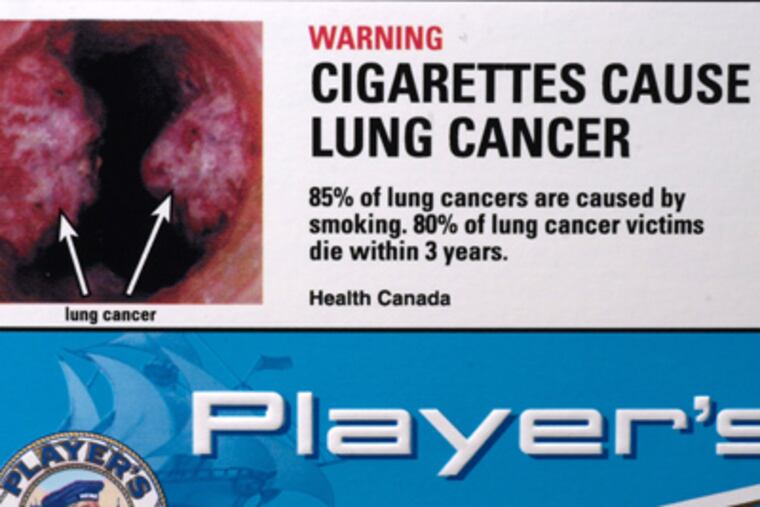
The Food and Drug Administration's plan for gruesome warnings on cigarette packaging will help public health officials level the playing field in a way that could save lives.
With authority granted by Congress in 2009, the FDA has ordered that half of every cigarette pack - both front and back - must contain a photo depicting the health ills of smoking, as well as the blunt warning that "Smoking can kill you."
Not for the faint of heart, these shocking images: About two years from now, cigarette packs will display diseased lungs, toe-tagged bodies, terminally ill cancer patients, and the like. Even more important, one fifth of cigarette ad displays also must contain the images and health warning.
The images will help counter the tobacco industry's multibillion-dollar advertising budget.
Public health experts here and abroad think the transition from gentle warnings - such as the "cigarettes may be hazardous to your health" message required since 1965 - will dissuade potential new smokers, particularly teens, and persuade more adults to kick the addictive habit. Even an industry executive says that the graphic warnings would "stigmatize smokers and de-normalize smoking" - both potentially powerful factors for teens susceptible to peer pressure.
Another indication that the strategy just might work is the tobacco industry's fight overseas against increasingly restrictive marketing rules for their wares. With lobbying and legal skirmishes, tobacco firms have launched a full frontal attack on foreign nations' efforts to set guidelines for the enforcement of a worldwide antismoking treaty.
In this country, the decline in smoking has leveled off even though smoking kills 440,000 people annually. At the same time, state budget crunches are prompting shortsighted funding cuts for smoking-cessation efforts. So the FDA cigarette labeling rules couldn't come at a better time.