Senate Republicans join in rebuking White House over science funding
A Trump-backed rule change would give political appointees sweeping power over hundreds of billions of dollars in federal grants. A provision in the Senate spending bill would block it.
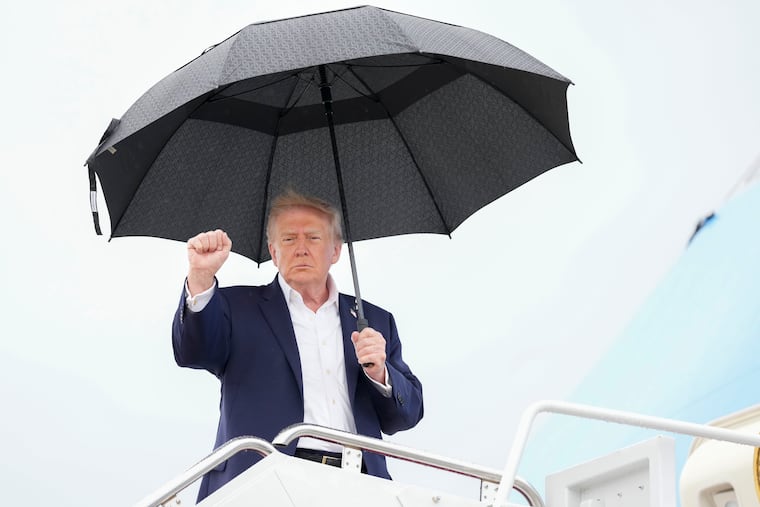
Senate Republican leaders unveiled a spending bill Sunday that would temporarily block President Donald Trump from implementing a rule change that would give political appointees sweeping power over hundreds of billions of dollars in federal grants.
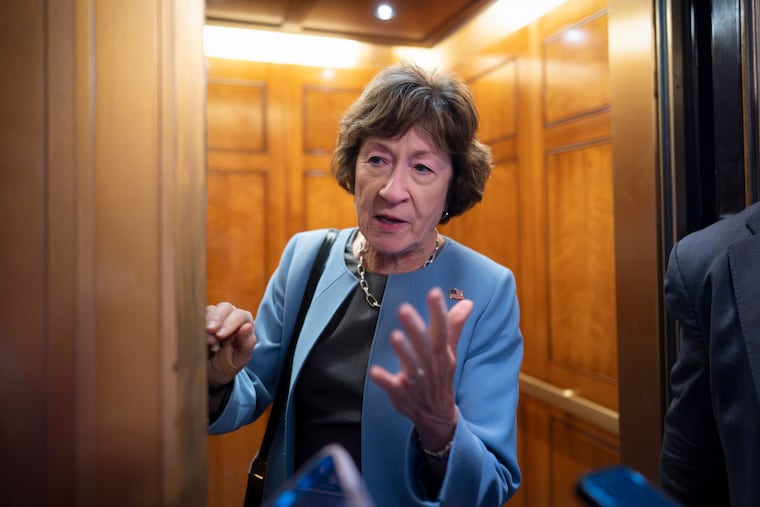
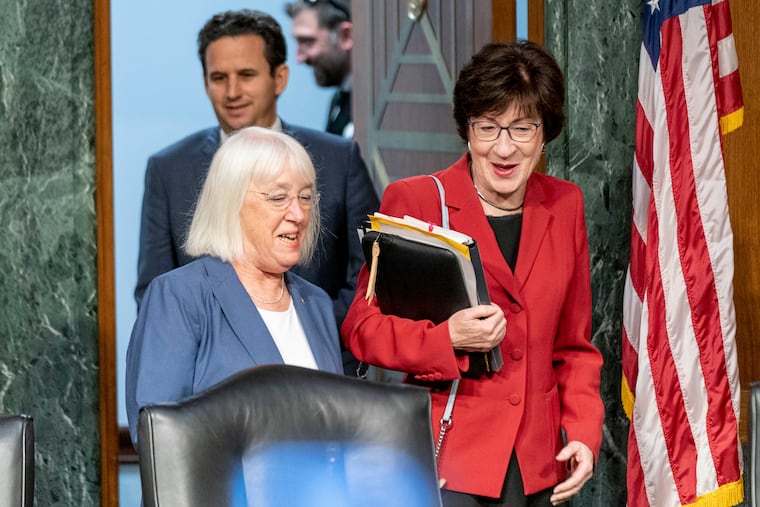
The provision was tucked into a bipartisan measure to fund the government through Dec. 11 that was negotiated by Senate Appropriations Committee Chair Susan Collins (R., Maine) and Vice Chair Patty Murray (D., Wash.) and reviewed by Senate GOP leaders. It marks another notable rebuke of the president by senators from his own party.
In a statement, Collins said she is “pleased” the provision was included in the spending agreement. She also said the White House rule change has the “potential to politicize grants and harm small, rural communities, families, and biomedical research.”
The rule change, released in May by the White House Office of Management and Budget, would give political appointees more power over discretionary grant funding, diminishing a system created after World War II that calls on independent peer reviewers — experts in the field — to determine whether scientific proposals are worthy of federal funding.
It would require political appointees to review grants before they’re awarded to ensure they advance the president’s priorities and do not support projects the administration opposes, including those that “fund, promote, encourage, subsidize, or facilitate” diversity, equity, and inclusion principles or “deny the biological reality of … the sex binary.”
It also would give agencies the power to end grants at any time, to further restrict collaboration with researchers in China, Russia and certain other foreign countries, and to add new requirements for foreign researchers working in the United States. The rule would not apply to disaster recovery grants or some grants awarded by Congress through law, including block grants.
Trump administration officials say the rule would add needed oversight to federal grant-making, ensuring federal funds aren’t wasted or misused. OMB officials did not immediately respond to a request for comment late Sunday, but have said that the Biden administration used federal grants to promote a “far-left” agenda.
OMB said it planned to finalize the rule by Oct. 1. If the Senate’s funding extension were approved by both chambers, it would block OMB from implementing the rule, at least until the measure expires on Dec. 11.
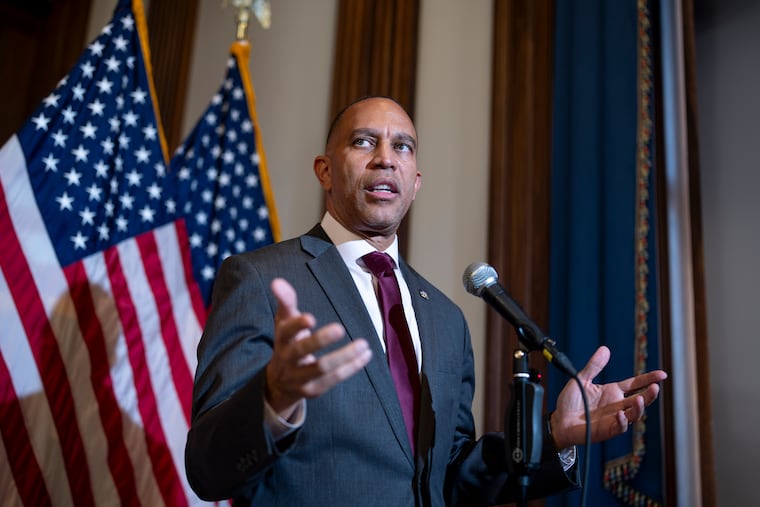
Collins urged OMB to withdraw portions of the rule in early July. Dozens of Democratic lawmakers — along with GOP Sen. Lisa Murkowski (Alaska) — have raised similar concerns. Murray and Rep. Rosa DeLauro (D., Conn.), the top Democrats on the Senate and House Appropriations Committees respectively, celebrated the provision in statements Sunday.
The new OMB rule would “only give Trump the greenlight to take even more federal funding hostage,” said Murray, who worked with Collins to craft the Senate spending measure. Murray said she pushed for a provision that would have permanently killed the OMB rule but was rebuffed by her Republican colleagues.
When OMB announced it this spring, the proposed rule change drew widespread outrage from scientific researchers, who say it could end U.S. scientific dominance by subjecting research institutions to political meddling, introducing new instability to federal funding, limiting foreign collaboration, and pushing away talented researchers.
Trump administration officials have said they wouldn’t use the rule to blindly slash scientific funding. OMB Director Russell Vought said during a congressional hearing last month that the administration doesn’t intend to cancel grants “in a heartbeat.”
But “when we find something that’s problematic that our policy officials would not have caught, we need to be able to turn it off,” Vought added, citing as an example an NIH subgrant given from a U.S.-based nonprofit to the Wuhan Institute of Virology, the Chinese laboratory at the center of suspicions about the origins of COVID-19.
Last year, the Trump administration canceled hundreds and froze thousands of federal grants to projects they argued did not align with administration priorities. It unleashed chaos within research institutions, scientists said, prompting layoffs and upending projects.
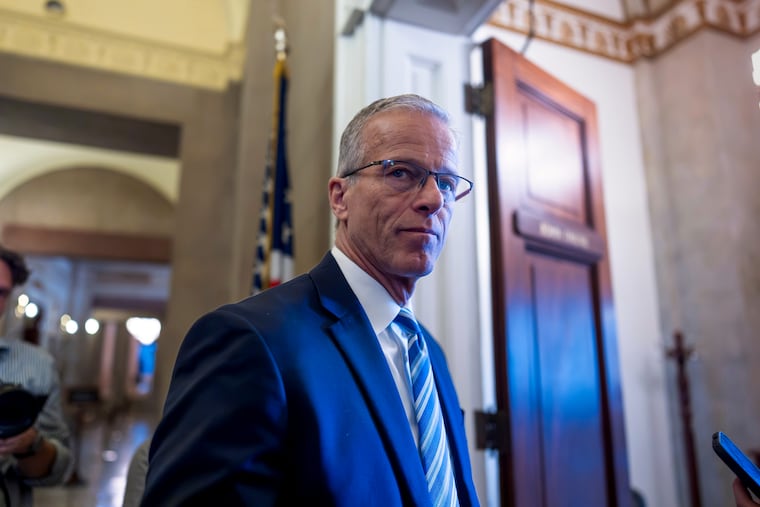
Senate Majority Leader John Thune (R., S.D.) has said he aims to pass the spending bill before the Senate leaves town Friday for a monthlong recess. The government would shut down at the end of September if the measure — or one like it — is not approved.
It was unclear Sunday whether the GOP-controlled House would support the measure as written. The House returns from its own monthlong recess on Aug. 31. Spokespeople for Speaker Mike Johnson (R., La.) and Republican House appropriators did not immediately respond to requests for comment.