At 20, BlackStar founder Maori Karmael Holmes’ documentary on the women of Philly hip-hop remains a cultural touchstone
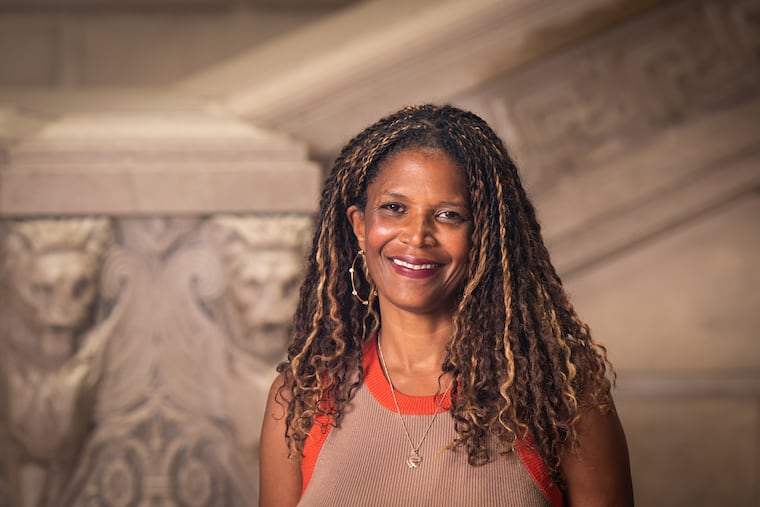
“Everything I’ve done, from my exhibitions to my films, is because I’m curious about things," said Holmes whose festival turns 15 this year with a robust lineup of films and events.
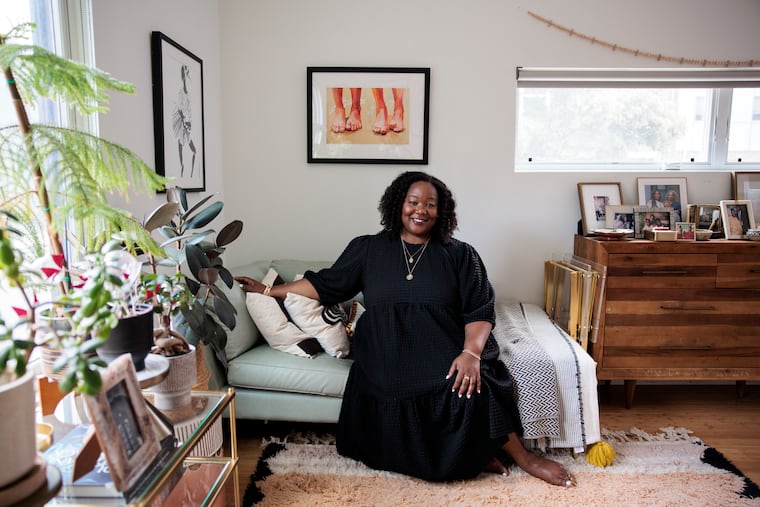
Watching Maori Karmael Holmes’ 2006 documentary Scene Not Heard: Women in Philadelphia Hip Hop is a sweet throwback to the era of Questlove and Mike Nyce on the Tastytreats turntables at Fluid Nightclub.
It’s remembering what it was like seeing Jill Scott, Floetry, Kindred the Family Soul, and the Jazzyfatnastees at Black Lily.
It calls to mind open mic poetry at Crimson Moon coffee shop, the simplicity of Razr cellphones, and the ubiquity of the Honda Accord. Before there were Instagram stories and Facebook feeds, Megan Thee Stallion and Cardi B, Holmes made Scene, an authentically Philly exploration of the life of the lady emcee.
The 44-minute documentary, featuring legendary rappers Bahamadia and Monie Love, deejays Lady B and Dyana Williams, and poets Ursula Rucker and Lady Alma will screen again Friday afternoon at 4:30 p.m. during the 15th BlackStar Film Festival at the Suzanne Roberts Theatre.
“Scene Not Heard is a part of the BlackStar origin story,” Holmes said in a video call last week. She didn’t know it back then but Scene — her thesis project for her Temple University MFA — would become BlackStar’s foundation.
It feels like a lifetime ago.
“There are so many people who identify me with BlackStar, but they have no idea that I’m a filmmaker. They see me as an arts worker,” said Holmes, who has since released several documentaries and directed the music video for India Arie’s 2018 single That Magic.
Friday’s screening is the first time Scene will be shown at BlackStar. Holmes is a little nervous about rereleasing Scene to a new generation of film festivalgoers, but she’s also curious about what they’ll think about watching the film she made when the festival itself was a distant dream.
For Scene, Holmes masters the art of being the silent observer. She gets more than a dozen women in Philly hip-hop to talk candidly about what it feels like to assume roughneck personas or be pressured to dress scantily to be seen on the scene. That couldn’t have been easy when the male gatekeepers at the time were as vindictive as they were entitled. The women talk about their love of hip-hop but don’t deny how the culture marginalized them.
Bahamadia cries, recalling how hard it was to break through and how in 2005 she was fighting to remain relevant.
That was 20 years ago. I wondered aloud how she felt now. Holmes wasn’t sure.
Bahamadia is invited to the screening but hasn’t RSVP’d yet. By the end of Scene, it’s clear that Philly B-girls of the late ’90s and early aughts made a way for Cardi, Megan, Tierra Whack, Latto, and Doechii to find their footing in the industry.
“There is so much more visibility for women in hip-hop now,” Holmes said. “It used to be you got one at a time. Nicki Minaj was the last of that era.”
The old and the new at the 15th BlackStar
Scene is one of 91 films from 43 countries featured in the 2026 BlackStar Film Festival, more than double the number of films shown at the first fest in 2012. The festival runs Thursday through Sunday.
This year’s standouts include The Keeper, a horror film by Tananarive Due and her husband, Steven Barnes, scheduled for Saturday, 8:30 p.m., at the Perelman Theater.
Ethiopian filmmaker Haile Gerima’s five-part documentary Black Lions - Roman Wolves: The Children of Adwa will be screened throughout the four-day fest, culminating into a closing-night showing.
» READ MORE: How to have a Perfect Philly Day, according to BlackStar founder Maori Karmael Holmes
“It is the corrective story of the Ethiopian resistance to Italian occupation in Ethiopia,” explained festival director Nehad Khader.
The Daily Jawn Morning Show will return to the Kimmel. BlackStar’s health and wellness program has grown more robust over the years, featuring daily yoga, acupuncture, and breathing sessions.
Earlier this year, Scene went through a 2K restoration and was transferred to a digital file. It is one of two retrospective films featured at the festival this year. Showing throwbacks, Khader says, pays homage to the independent filmmakers from previous generations.
The second is A Different Image, a 1982 film by Alile Sharon Larkin, exploring Black women’s beauty standards. It will be screened Sunday, Aug. 9, at the Wilma Theater. Like Scene, it speaks to how today’s generation of Black women’s mothers and grandmothers demanded to be seen on their own terms, setting the stage for their agency in this millennium.
“We have so many newcomers to BlackStar,” Khader said. “People of this generation may not know these stories. Scene Not Heard is a revival of Philly history, but it’s also Maori’s backstory.”
‘When people went to the culture’
Holmes, who is from Los Angeles, moved to Philadelphia from Washington, DC in the early aughts, completed an MFA program at Temple in 2005. Scene debuted in 2006 at the International House to a standing-room-only audience of more than 400 people. The film cost $16,000 to make.
After its Philly run, Holmes screened the film at more than 40 hip-hop, women’s, music, and movie festivals between 2006 and 2007. It won best documentary at the Denver Pan African Film Festival and best short documentary at the Trenton Film Festival, among other awards.
Scene, however, didn’t launch Holmes’ film career. She instead began building platforms for other artists to show their work. In 2007 and 2008, Holmes partnered with the Jazzyfatnastees Mercedes Martinez and Tracey Moore to create the Black Lily Film &Music Festival. It ran for two years.
BlackStar kicked off in 2012. Philadelphia scholar Yaba Blay named the fest after Marcus Garvey’s early 20th-century shipping line Black Star.
“We launched with 40 films, from four continents over four days,” Holmes said.
Today, BlackStar is the crown jewel under the BlackStar Projects umbrella. It operates with a $4 million budget and a staff of 15. It publishes the biannual film journal Seen and hosts the William and Louis Greaves Filmmaker Seminar at Stanford University. BlackStar is a curation partner for programs at the Barnes Foundation and the Philadelphia Museum of Art.
Currently “Freedom Dreams,” a film exhibit Holmes cocurated at the Barnes with its Fleischner Family vice president for engagement of community engagement James Claiborne, is on view.
“The through line for me is curiosity,” Holmes said. “Everything I’ve done, from my exhibitions to my films, is because I’m curious about things. I want to figure out how to make things happen. Sometimes I’m teaching myself along the way. But that curiosity is what fuels me.”
Yesterday’s curiosity leads to today’s conversations.
Friday afternoon’s screening will be followed up Saturday with a panel featuring Holmes, Martinez, and filmmaker Tina Morton. The conversation is to be moderated by Deesha Dyer, Barack and Michelle Obama’s Philly-born former social secretary and author of Undiplomatic. Dyer was a mover and shaker in the scene back in the day, too.
Thanks to the screening of Scene, BlackStar promises to be a reunion of Philly’s hip-hop greats. There will be reminiscing. The scene has changed so much.
The Black Lily is no more. Tastytreats is over. Crimson Moon is closed.
“That film represents a time, the ending of a time, when people went to the culture,” Holmes said. “Now, culture comes to us on YouTube.”
This weekend, we can see the culture for ourselves at BlackStar.
The BlackStar Film Festival 2026 will screen movies throughout Philadelphia from Thursday, Aug. 6, through Sunday, Aug. 9. For a complete schedule, visit BlackStarProjects.org.