Hanwha is importing parts for made-in-America ships
American-made ships at the Philly Shipyard are built with Chinese fuel tanks and Korean steel.
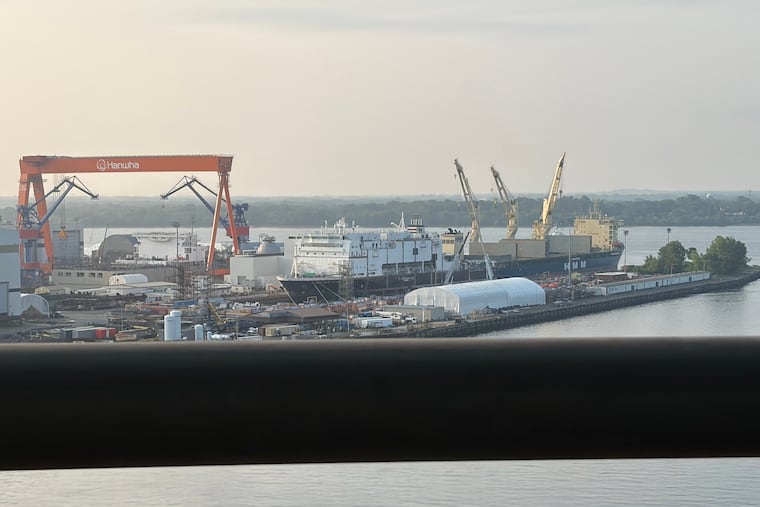
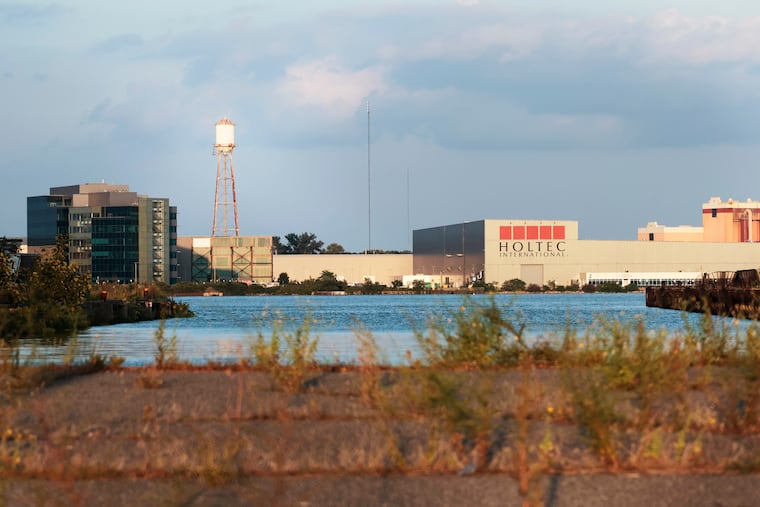
Longshoremen at Hanwha Philly Shipyard this week have been unloading fuel tanks and other imported equipment from the China-built cargo ship HMM Nabi. They are to be used in ships Hanwha has started building under a law requiring the use of U.S.-built ships on routes connecting U.S. ports.
Nabi, a bulk cargo carrier operated by Korea-based Hyundai Merchant Marine (HMM), arrived last weekend at its berth next to where the Schuylkill flows into the Delaware River.
“We’ve had 12 or 13 guys on that pier” each day, starting Monday, to unload the Nabi, said Boise Butler, president of International Longshoremen’s Association Local 1291, which handles cargoes moving through Philadelphia port terminals.
Nabi left the Chinese shipbuilding and ship-equipment manufacturing center of Nansha in April and has since called at other U.S. ports, including Dundalk, Md., before arriving in Philadelphia last weekend, according to shipping records.
“The HMM Nabi is at Hanwha Philly Shipyard to deliver materials and equipment that will be used in the construction of the second of three new Matson Aloha Class containerships currently under construction at the shipyard,” Hanwha spokesman Rob Loveless said.
Hanwha referred questions on the cargo to Matson Navigation Co., which is based in Honolulu. Matson officials had no immediate comment. Industry sources familiar with the shipment confirmed it includes parts made in China and in Korea.
Matson has said it plans to use the ships to connect West Coast ports with terminals on Hawaii and Guam and for its service connecting Los Angeles’ Long Beach port to China.
Shippers moving cargoes exclusively between U.S. ports are required to use ships assembled in the U.S. and crewed by U.S. merchant marine sailors under the federal Jones Act, designed to protect U.S. shipbuilders from cheaper competition.
The Jones Act, long a target of free-market advocates who oppose U.S. shipbuilding subsidies, was suspended by President Donald Trump in March, citing the need for flexibility following the start of the Iran war.
U.S. shipping advocates who support Jones Act protections and shipbuilding subsidies argue that Trump’s plan to rebuild U.S. shipping in competition with high-volume shipyards in China, Korea, and Japan requires Jones Act protections — at least until U.S. shipbuilding has grown much larger, cutting costs per ship.
Jones Act ships can use foreign engines, tanks and other components and foreign metal, so long as they are assembled in U.S. yards. Ships originating in foreign ports can call at multiple U.S. ports without violating the Jones Act.
Shipyard owner Hanwha Systems told investors Wednesday that it is still losing money at Philly Shipyard, but less lately as it steps up the pace of its shipbuilding.
Philly Shipyard lost around $15 million for the quarter, down from around $33 million in losses the previous quarter and $22 million a year ago. Sales rose to $160 million, up 40% for the quarter and more than 50% from a year earlier.
Container ships, like the ones it’s building for Matson, lose money, the company said. But Hanwha expects to profit next year from additional U.S. government contracts.
Besides the Matson commercial ships, Hanwha confirmed earlier this month it has won an order from the U.S. Missile Defense Agency to build the first of two Missile Range Instrumentation Vessels (MRIVs) to replace the 1960s-era “tracking ships” that help locate and defend against potential attacks on the U.S. Hanwha says the contracts could eventually be worth $2 billion.
Hanwha representatives have been scouting the Delaware Valley, including the former BP refinery site in Paulsboro, for an additional shipyard site but have not yet closed a deal, according to industry sources.
Hanwha has also considered shipyards in the South and on the Gulf Coast if it can’t expand as much as it wants in the Philadelphia area.