Was the World Cup good for Philly’s economy? The early signs are in
Hotels and short-term rentals made more money, but it was sometimes due to higher pricing, not increased occupancy.
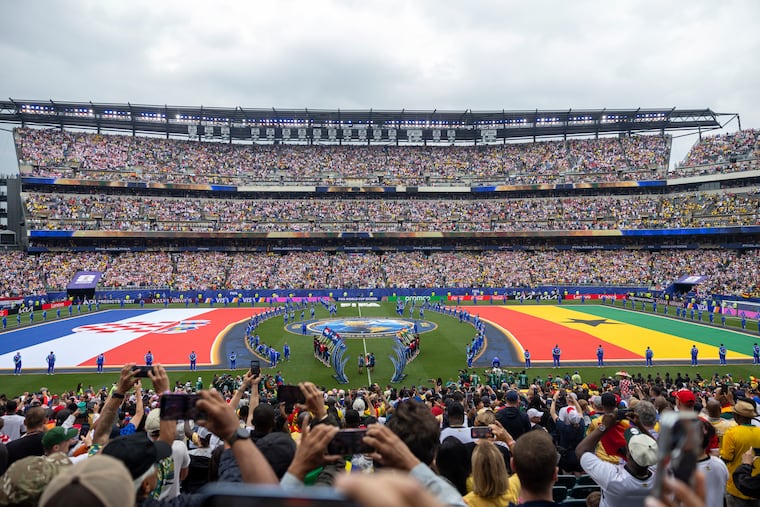
Prior to the kickoff of the World Cup, the organizers of the city’s events projected the soccer tournament would bring $770 million to Pennsylvania in gross revenue.
Yet, George Diemer, a sports economist at Temple University, said those in his field tend to be skeptical of pre-event projections. Organizers “have an incentive to blow the numbers up,” he said.
Midway through the tournament, the Economy League of Greater Philadelphia estimated that $30 million to $90 million would actually stay in the city. The economists factored in metrics such as leakage, when a share of money spent goes to national organizations instead of staying local. The current analysis, done after the tourists have left, leans “toward the lower end of that range,” said Saloni Tandon, director of research and analytics at the Economy League, the region’s independent civic think tank.
“Even if it goes up, it feels like our estimation is likely to stay in the tens of millions, rather than cross into the range of hundreds of millions,” said Tandon.
The cleat-kicked dirt is still settling, and Tandon said conclusions will continue to change as more data comes to light. The city is looking for a consultant to craft a postmortem analysis on the year’s largest events’ economic impact.
Here is what we know so far.
Hotels and short-term rentals made more money
Center City hotels made out well, as almost 410,000 fans from more than 190 countries flocked to Philadelphia to watch the six matches at Lincoln Financial Field.
The Philadelphia Convention & Visitors Bureau data say on the dates of the six soccer Philadelphia matches, hotels saw a 50.3% increase in revenue compared to those same dates in 2025.
Using that data, however, Tandon calculated that Center City hotel occupancy on the game days increased around 3% — modest gains. Much of that revenue increase was thanks to higher per-night pricing by the hotels due to the special event.
A 3% occupancy increase doesn’t validate “a massive spike in terms of tourism,” Tandon said.
Ethan Conner-Ross, executive vice president of consultancy firm Econsult Solutions Inc., noted that hotels may have lost some business to short-term rentals, with “people finding a different way to stay based on their needs,” he said.
An Airbnb spokesperson said the World Cup was the biggest hosting event in the company’s history in all host cities.
For short-term rentals in Philadelphia, revenue reached $38.3 million over the tournament window — up 25% from the same period last year, according to AirDNA, a research company that tracks the short-term rental market.
But that gain was almost purely pricing — with $7.5 million of the $7.8 million increase coming from higher rates. Translation: hosts drove revenue by increasing prices rather than filling more nights. Occupancy dropped in 12 out of 16 host cities compared to the same period last year, including Philadelphia, as supply outpaced demand.
How SEPTA, PHL, and rideshare handled more travelers
Hosting a large sports event can strain local infrastructure as tourists crowd public transit and other services, leaving high costs of building infrastructure or congestion for locals.
Diemer pointed out that it took Montreal 30 years to pay off its debt from hosting the 1976 Olympics.
Since the six World Cup matches in Philly were spaced out over June and July, Diemer said that helped diffuse the costs.
“I think it was successful,” said Diemer of the decision to ”spread out the games so it won’t be overloading the local infrastructure.”
SEPTA, for example, saw manageable bumps in ridership over the summer. On June 19, the day of the Brazil vs. Haiti match, SEPTA recorded the second-highest event ridership ever on the B line. (The first was after the Eagles won the NFC Championship in January 2025.)
Travelers took advantage of public transit to get to and from the airport, as well. On the two days sandwiching a match, ridership on the Airport Regional Rail line typically increased at least 20%.
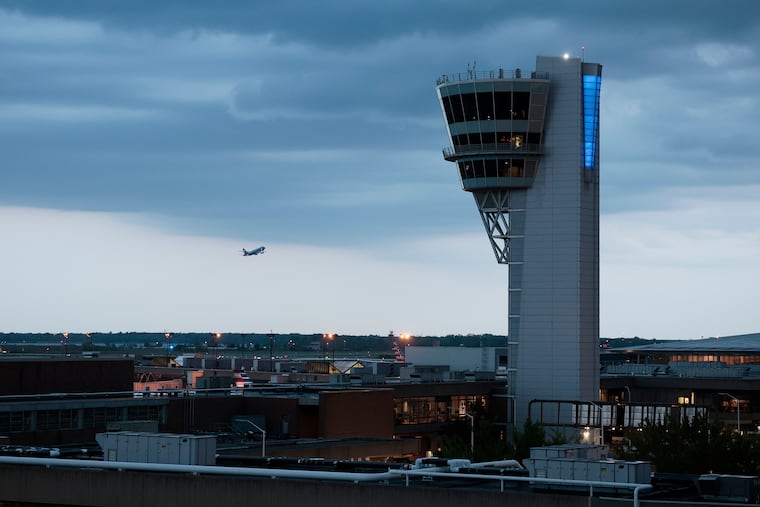
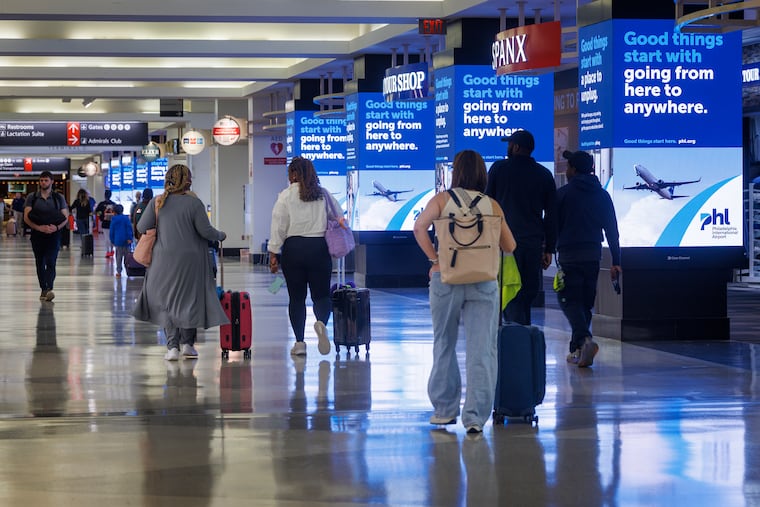
At Philadelphia International Airport (PHL), international arrivals were up 8.3% in June year-over-year.
Spokesperson Heather Redfern said that in a usual summer, PHL is typically a big outbound and connecting market to other destinations. This summer, there were more inbound passengers coming to Philadelphia from countries playing games in the city. In addition, many travelers, notably Scottish fans and Czech fans, took advantage of unique nonstop routes through PHL on the way to games in other cities.
“We focused on delivering an experience for those passengers that made them fond of Philadelphia and want to come back and visit,” said Redfern, “From this perspective, we are very happy.”
Despite some rideshare restrictions surrounding the FIFA Fan Festival in Lemon Hill, Uber drivers transported tens of thousands of fans to and from the festival and the stadium complex, according to Jazmin Kay, head of public affairs for Pennsylvania at Uber.
Prior to the tournament, Uber onboarded more drivers and maximized earning opportunities for them: one way was creating an event-rider surcharge near venues, with 100% of those surcharges paid directly to drivers.
For Lyft, on days when Philadelphia hosted a World Cup game, rides to bars increased by 18% compared to their typical average on the same day of the week. On June 19, rides to bars were 49% above average.
Where soccer fans ate and drank
Philly’s fan festival saw 575,304 attendees, and bars nearby, like the Black Taxi, saw greater foot traffic and a boost in sales.
For other Philadelphia restaurants, outcomes seem more mixed.
On four of the six World Cup game dates, local restaurants that use reservation site OpenTable saw an increase in seated diners, according to OpenTable data. The biggest gain was 22% on June 25, and of the two dates when reservations decreased, June 14 was the worst with a 44% decline.
At Reading Terminal Market, soccer fans helped drive a 13% year-over-year increase in June foot traffic. On June 19, the market saw more than 30,000 customers, setting a five-year record for Friday visitation.
“Our prepared food merchants — especially if you are in the pretzel, cheesesteak, pizza, or burger business — had a great month,” said Annie Allman, CEO of Reading Terminal Market.
Still, Allman noted that there was a drop in the number of loyal local customers that shopped at the market’s butchers, fishmongers, and grocers, “as they chose to stay home to avoid the crowds.”
A longer-term reputation boost for Philly?
It’s tricky to untangle the effects of the World Cup from tourism spending driven by other coinciding large events, such as the July Fourth celebrations for America’s 250th birthday.
Additionally, not all impacts will be observed within the short period of the tournament. Some benefits, like an improvement of Philly’s reputation or publicity on an international stage, could be realized later on.
“But it’s definitely in a mix of assets that affect how people think about Philadelphia,” Conner-Ross said, “and that contributes to those decisions that happen down the line.”