Developer sues Upper Merion Township over rejected King of Prussia data center proposals
Brian O’Neill said Upper Merion Township officials stated that data centers would be allowed under its zoning code, then changed their tune due to pushback. Now, he wants a judge to approve his plans.
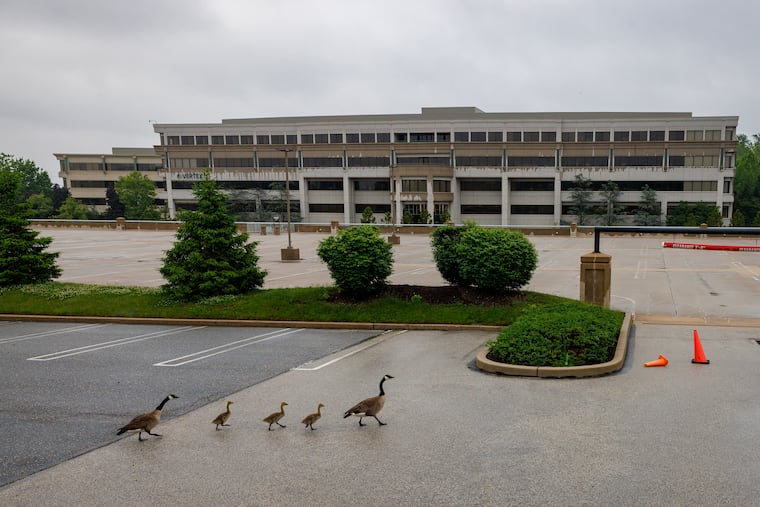
Developer Brian O’Neill has sued the Upper Merion Township Board of Supervisors over its rejection last month of his proposed 4.6 million-square-foot data center campus.
In lawsuits filed Wednesday in Montgomery County Court of Common Pleas, O’Neill said Upper Merion officials have stated in recent years that data centers — which house the equipment that powers AI — qualify as warehouses and are therefore permitted under its zoning code. They changed their tune, according to O’Neill’s team, only after residents pushed back against the plans.
“The township issued a zoning officer’s determination letter that the proposed use was a permitted use, and then when the people started to bombard them, they did a 180,” said Marc Kaplin, an attorney representing O’Neill. “This is what happens when there is public pressure.”
Township Manager Anthony Hamaday said Thursday that Upper Merion officials had been informed of O’Neill’s land-use appeals but that the documents had yet to be delivered to them. They declined to comment, pending a full review of the filings.
O’Neill is asking a judge to reverse the supervisors’ denial, give his plans preliminary approval, and appoint an independent third-party “referee” to conduct an evidentiary hearing and oversee the rest of the process. In the lawsuit, O’Neill says the board acted in bad faith and denied his plans over “minor technical items.”
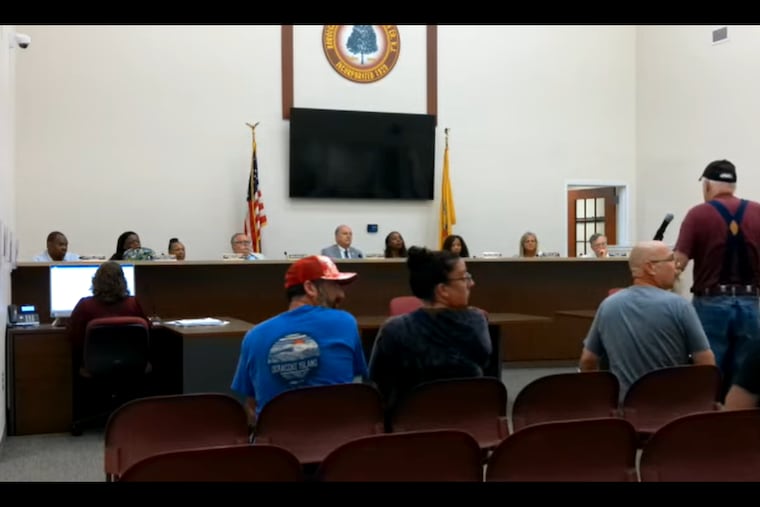
At a contentious Aug. 13 meeting, the supervisors unanimously rejected O’Neill’s five data center plans on the grounds that the proposals lacked specificity, including on fire-safety-related issues, and did not meet zoning requirements. They said O’Neill’s team failed to address their many questions and concerns during the review process.
» READ MORE: King of Prussia data center complex is rejected by Upper Merion Township officials
O’Neill had said his team needed more time to respond and requested an extension until Sept. 30, a request township officials denied.
A day before the supervisors’ vote, the developer sued the township, its planning commission, and its board of supervisors, saying they violated his legal right to an extension. In response, Montgomery County Court Judge Garrett D. Page ordered a pause on township proceedings and decisions related to the data centers. That decision was vacated the next day, just hours before the supervisors’ vote on Aug. 13.
Neighborhood pushback
O’Neill, a longtime real estate developer in the region, is fighting to build a data center complex on five of his properties in a swath of Upper Merion Township between West Conshohocken and Bridgeport.
The developer has declined to specify who would operate the centers, though he indicated the facilities would fuel AI-powered biotech to complement his existing life-sciences complex, Discovery Labs.
O’Neill has said the centers would emit little light and noise, operate on a closed-loop system that requires no outside water, and provide their own power. They would also be an economic engine for Montgomery County, according to O’Neill, who released an economic impact study saying the project would result in more than 10,000 jobs during construction, more than 700 permanent jobs, and more than $55 million a year in local tax revenue.
Neighborhood groups have rallied against O’Neill’s plans, organizing on social media, packing township meetings, and displaying bright orange lawn signs opposing the project. About 18,000 people had signed a Change.org petition against the Upper Merion data centers as of Friday. Opponents have expressed concerns about pollution, light, noise, electricity prices, property values, and quality of life.
» READ MORE: Human reporters explain why AI data centers are so controversial in the Philly suburbs and beyond
The pushback in Upper Merion mirrors the opposition seen across the Schuylkill River in Plymouth Township, where O’Neill has spent a year trying to get the OK to build another 2 million-square-foot data center on a shuttered steel mill outside Conshohocken. The project was set to be the subject of a Plymouth Township Zoning Hearing Board meeting on Thursday, but the meeting was canceled due to what the township called “an administrative oversight.”
Plymouth Township officials failed to post the meeting agenda 24 hours in advance, in violation of the Sunshine Act.
“Out of an abundance of caution and in the interest of legal compliance and public transparency, the board will not convene as scheduled,” Plymouth Township officials said Thursday in a statement, adding that the meeting will be rescheduled.
O’Neill has also faced off with Plymouth Township officials in recent months. In July, he filed a legal challenge to the Plymouth Township zoning ordinance, which prompted township leaders to accuse O’Neill of “throwing a tantrum” in an attempt to bully and intimidate them. O’Neill called their statements “a bald-faced lie.”
News of O’Neill’s actions in Plymouth Township prompted a rebuke from Gov. Josh Shapiro, who had previously encouraged data center development. Weeks later, the governor signed an executive order restricting data center development in Pennsylvania, including by requiring projects to get local approval before receiving state permits.
» READ MORE: In a major shift, Gov. Josh Shapiro restricts data center development in Pennsylvania
Fears about AI
The debate over artificial intelligence has intensified in recent weeks, with executives at some of the country’s largest AI companies urging a slowdown of the technology amid fears that it may eventually wipe out humanity.
Despite pushback, O’Neill’s team remains bullish on data centers.
“Everybody is against data centers but everybody wants their Amazon order delivered instantaneously,” Kaplin said. “We want all these things that are powered by data centers, so you can’t have it both ways.”
Two decades ago, Kaplin said he worked for a developer trying to get several of the region’s Walmarts approved. At the time, there was great public opposition, he said, but now “everybody is like, ‘Walmart is part of the community.’”
“This too shall pass,” Kaplin said. “We have to have this computing power to compete in the world.”