The city plans to pay up to $75,000 to help measure the economic impact of Philly’s major events in 2026
The city is looking for a consultant to supply “economic analysis services to better understand the economic and fiscal impact of Philadelphia’s 2026 events and related activity on the local economy."
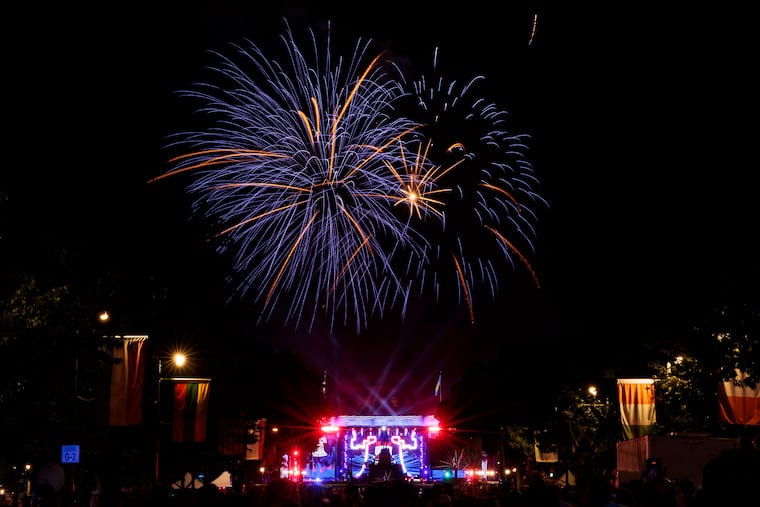
When Mayor Cherelle L. Parker faced questions about spending on Philadelphia’s Fourth of July concert, she promised a “fiscal impact report” that would help determine how the economic benefits of the concert and other major events in Philadelphia during 2026 compared with their cost to city taxpayers.
It turns out the city will have to spend a bit more taxpayer money to get to the bottom of that inquiry.
The finance department is looking to hire a consulting firm for up to $75,000 to provide “economic analysis services to better understand the economic and fiscal impact of Philadelphia’s 2026 events and related activity on the local economy,” according to a contract opportunity posted on the city’s website last week. Responses are due Aug. 5.
» READ MORE: Mayor Parker changed things up for this year’s July 4th concert — and it’s costing Philly’s taxpayers millions more
The contract solicitation calls for an evaluation of “event-related visitation, tourism activity, and associated economic activity” and estimates of “state and local tax revenues generated by event-related economic activity,” among other things. But it does not ask the consultant to produce an accounting of the city’s spending on those events.
Andrew Richman, a top attorney in the city law department, said the administration will also produce an analysis of the city’s spending related to the major events hosted in Philly during 2026, including the nation’s 250th birthday, FIFA World Cup games, and the MLB All-Star Game.
“As a standard operating procedure in the Parker administration, there will be financial accounting that details every dollar and cent spent on 2026-related activities, analysis including all expenses, and economic impact of all activities and investments associated with 2026,” Richman said.
The mayor’s office did not respond to a request for comment on when that accounting will take place.
Parker’s administration this year took over management of the July Fourth concert and fireworks show on the Ben Franklin Parkway, which for years had been handled by the nonprofit Welcome America, a public-private partnership created by the city in the 1990s.
Parker instead hired ESM Productions, a for-profit company led by well-known concert producer Scott Mirkin, and renamed the event the “One Philly: Unity Concert for America,” a version of her slogan, “One Philly: A United City.”
» READ MORE: Mayor Parker changed things up for this year’s July 4th concert — and it’s costing Philly’s taxpayers millions more
The changes resulted in a much more expensive concert than in years past. The city agreed to pay ESM about $15.5 million to put on the show, The Inquirer reported after obtaining the contract. The previous year’s concert cost Welcome America about $3 million, a source with knowledge of the event told The Inquirer.
Those sums did not include costs related to city employees, such as sanitation workers and overtime for police officers who worked the event.
Inclement weather, including extreme heat in the afternoon and a thunderstorm that disrupted the concert for hours in the evening, limited attendance at what Parker had hoped would be a major event.
» READ MORE: Philly’s delayed late-night fireworks were prompted by safety and weather concerns, city says
The city’s coming analyses, however, will include all of 2026’s major events, not just the concert.
Parker has said her administration will spend $120 million on this year’s celebrations, and she has pledged to ensure communities across Philadelphia, not just Center City, benefit from the investment, which includes beautification projects in neighborhood commercial corridors and funding for block parties and events across the city. The administration has not yet provided details on how much was dedicated to the concert or any other specific event this year.
“At the end of our celebration, you will be able to see an accounting of how that $120 million was spent,” Parker said at a July 1 news conference.
Economic impact analyses produced by paid consultants often include rosy estimates that public officials use to justify priorities. Academics who study their work for years have cited issues including inflated assumptions for visitors’ spending and understated or omitted opportunity costs for economic activity displaced by a large project or event.
“Most economic impact studies are commissioned to legitimize a political position rather than to search for economic truth,” John L. Crompton, a professor at Texas A&M University, wrote in an influential 2006 paper published in the Journal of Travel Research. “Often, this results in the use of mischievous procedures that produce large numbers that study sponsors seek to support a predetermined position.”
This year’s July Fourth concert was supposed to be headlined by Christina Aguilera, but the pop star ended up not taking the stage after the city paused the event around 9 p.m. due to the storm. The show resumed shortly after midnight, pushing the fireworks to about 2:30 a.m. July 5.
Parker’s office on Wednesday did not respond to a request for comment on whether the city would receive any refund in light of Aguilera not performing.
All other scheduled performers went ahead with their sets, including the Roots, Jill Scott, Meek Mill, DJ Jazzy Jeff, and Will Smith, who said Parker reached out to him personally to ensure he came back after the weather delay.