Raymond Horsch was convicted of luring a 9-year-old girl to his car in 2009. Now those court records could be destroyed.
The case has haunted the original prosecutor ever since.
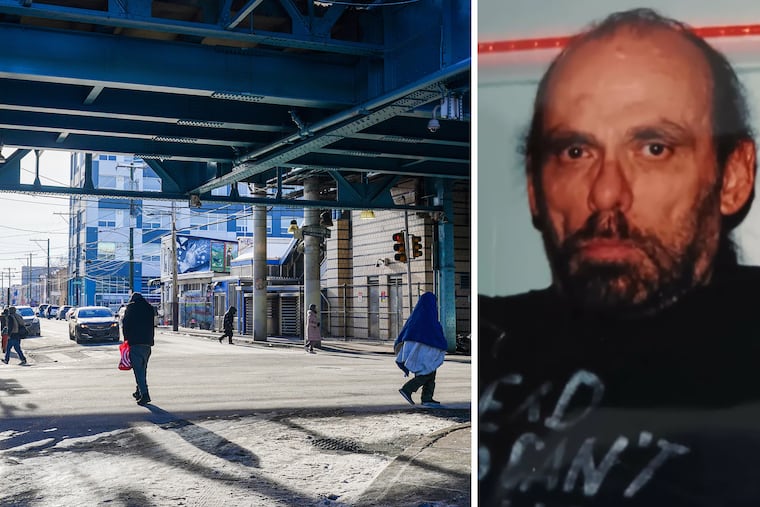
In 2009, Raymond “R.C.” Horsch — the violent pornographer now linked to seven dead or missing women — was arrested for trying to lure a 9-year-old girl into his green Jeep Wrangler in Kensington.
“Come here, in my car, sexy girl,” Horsch told the girl, according to an arrest report obtained by The Inquirer.
When police found Horsch circling the neighborhood that March night, officers recovered a pair of high-powered binoculars, a digital camera, telephoto lens, an eye patch, and condoms inside his Jeep, the prosecutor on the case said.
Horsch was convicted of two misdemeanor counts of luring a child into a motor vehicle and corrupting the morals of a minor at a trial in Municipal Court in 2010. He was sentenced to 2 ½ to 5 years in prison, and would have been required to register as a sex offender with Megan’s Law, said Jill Fertel, the prosecutor who handled the case.
But Horsch insisted he did nothing wrong, and requested a new trial in the Court of Common Pleas. Another prosecutor took over the matter.
The victim and her mother became too afraid to testify in court again, according to two people familiar with the matter. The case fell apart and prosecutors dropped the charges. The original conviction was vacated, and in 2015, Horsch successfully petitioned a Common Pleas Court judge to expunge the case.
Fertel, in an interview Tuesday, said Horsch — and that outcome — have “haunted her for the last 16 years.”
Horsch was known to prowl Kensington to recruit women in addiction to appear in his violent pornographic works in exchange for drugs, cash, and a place to stay at his home. But the details of the expunged conviction, which have not been previously reported, indicate Horsch may have also sought underage girls — and suggest that law enforcement was alerted to his troubling behavior nearly two decades ago.
Now, the court records in the case — the sole known sex crime Horsch is believed to have been charged with — are at risk of being destroyed.
The records are on file at the Criminal Justice Center, but when The Inquirer sought to review them on Monday, a clerk denied that request.
Because the case had been expunged, the clerk said, the records should have been destroyed years ago. The filings could not be reviewed, he said, and would ultimately be destroyed in accordance with state law.
The Inquirer sent a letter to administrative judges in Philadelphia’s First Judicial District Monday night, asking that the records be preserved in the interest of the public, and be unsealed because of the ongoing investigation into Horsch’s connection to missing women.
“Horsch is dead, and this case has extraordinary public interest and news value,” the newspaper wrote. “The filing could hold pieces of information that are irreplaceable and important to the public and the criminal investigation.”

Read more of The Inquirer's reporting on the sprawling missing persons investigation centered around the late pornographer Raymond “R.C.” Horsch and his son, Eugene:
- How a pornographer's violent art complicates Philly missing women mystery
-
Raymond Horsch had access to a Kensington crematorium linked to illegal body parts sales, years before investigation
-
‘Consumed by anger’: Inside the 1985 psych profile of Raymond Horsch
- A troubling photo of a missing woman appeared on Raymond Horsch’s erotic website, years before police investigated
- Police grapple with a lack of bodies in disturbing Olney investigation — and for families, a lack of closure
- Two women appear dead in “graphic and dark” videos recovered from Olney house, police say
Fertel — who left the district attorney’s office in 2018 — said there are likely essential records of the case that remain in the court file, including notes of testimony, psychology examinations, and letters from Horsch’s defense lawyer submitted as part of his sentencing hearing.
She said the sex offenses triggered a sexually violent predator assessment of Horsch, and recalled that the psychologist was “horrified” by Horsch’s pornography and feared he could be violent.
“This is the only sexual offense he was every convicted of, that I know of,” Fertel said in an interview Tuesday. “His conduct and his films and video were part of the sentencing. What he was doing [in Kensington] was part of the sentencing. That record is important to have, if we’re to prevent this from happening again.”
Police said they have so far recovered footage on hard drives inside Horsch’s home that appeared to show five women dead — including a video of Horsch filming himself while strangling a woman to death with a zip tie. Two other women, including Horsch’s ex-wife, were last seen at the home but remain missing.
Luring a child
Around 7 p.m. on March 20, 2009, the 9-year-old was walking on Ontario Street when Horsch, in a green Jeep, slowed next to her.
“Yo, come here,” Horsch said, before getting out of his car to approach her, and calling her “sexy,” according to the arrest report.
The girl ran home and told her mother an old man in a green Jeep asked her to get into his car. The mother ran outside and chased after the Jeep, which circled the block and drove off, the report said. They called police, who responded and found Horsch in his car near the 3200 block of Kensington Avenue, the report said.
The girl identified Horsch as the man who approached her, the document said.
Fertel said during the trial, the victim cried on the stand, at times prompting the judge to leave the bench to comfort her as she testified before Horsch, who was standing just feet away.
Horsch was released on bail.
While Horsch faced those charges in Philadelphia, in July 2009, police responded to his home in Chalfont — where he lived before moving to Olney in 2013 — after a 21-year-old woman called to report a break-in. When officers arrived, they found 455 marijuana plants and two shotguns spread among five partitioned rooms in the basement, according to The Bucks County Courier Times.
Officers also recovered bondage gear, photographs of bleeding women, and a homemade movie labeled with the word “rape,” the newspaper reported.
Court records show that the woman who called police later told investigators she struggled with a heroin addiction and had met Horsch while doing sex work in Kensington. (That woman died of an overdose in January 2016 when she relapsed, her mother said in an interview this week.)
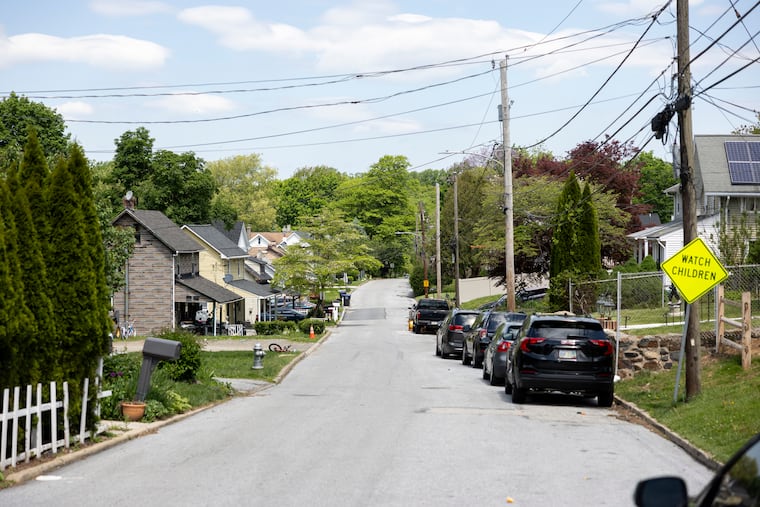
When Horsch returned home that night in July to find police raiding the property, he ran down his tree-lined suburban street, according to the news report.
He was later arrested and pleaded guilty in federal court to manufacturing drugs and illegal gun possession, and was sentenced to 54 months in prison, plus five years probation.
Fertel said that, as she prosecuted Horsch in Philadelphia, she learned details of the Bucks County drug raid — including that officers had found disturbing pornography, guns and explosive materials at his suburban home. That became part of her case, she said, and led her to ask that Horsch be sentenced to the maximum penalty of 5 to 10 years in prison.
Common Pleas Court Judge Roger Gordon — who presided over the case — sentenced Horsch to 2 ½ to 5 years.
But then, Horsch appealed, and the case collapsed after the child and her mother became too scared to testify against him again.
Fertel said the materials found in Horsch’s home, and the psychologist’s fears of his potential threats to the community, have remained seared in her memory ever since.
“He was able to treat women in this fashion for decades and no one has stepped up to protect them. No one was able to stop him,” Fertel said this week. “Everybody knew about it.”
A ‘fabricated thing’
Horsch, who died in May 2025, boasted about his criminal career as a drug manufacturer and document forger. He also spoke openly about how he recruited drug-addicted women in Kensington to appear in his violent pornographic photos and films that featured drug use, overdoses, and staged hangings, drownings, and killings.
But Horsch vehemently denied ever trying to lure a child into his car. He spoke about it years later, in a 2013 interview with the Rialto Report podcast and said the 9-year-old girl lied.
“It’s just a totally weird, fabricated thing,” he said. “All you have to do is go to the state sex offender list and you won’t find my name there.”
In his 2003 movie, “Slaves,” Horsch played a semi-autobiographical character who, in one scene, described approaching a young girl in a mall. The girl’s mother, Horsch’s character said, then yelled, “Get away from my daughter!”
“The place froze, literally froze. Time stood still. Every eye was on me, from every direction, hundreds of eyes,” Horsch said in the movie. “And I realized in an instant, that to every single person there, I was a child molester.”
As Philadelphia police sort through more than one million photos and videos on the hard drives recovered from Horsch’s home on West Chew Avenue in Olney, they’ve encountered what they believe was staged violence as part of his art — and also photos and a video of what they now believe were real missing women, dead inside Horsch’s home.
So far, police have identified five women in the footage who they now believe are dead: Maribel Fresses, Gabrielle Amarando, and Nicole Fusaro, as well as a 25-year-old woman who has not been identified at the request of her family, and another woman investigators are still working to identify.
Two other women who were last seen at Horsch’s Olney home — Blair Tonzelli and Amy McHale — are still missing.
Police have so far only reviewed about 30% of the materials on the hard drives.
Fertel said she hopes that revelations about the 2009 case will draw more attention to the exploitation of women in Kensington.
“No one was getting arrested for what Raymond Horsch was doing,” she said. “This is an opportunity for people to recognize that this is wrong and that we can’t let it happen again. We can’t let this happen to more people.”
The Inquirer’s journalism is supported, in part, by the Lenfest Institute for Journalism and readers like you. News and editorial content are created independently of The Inquirer’s donors. Gifts to support The Inquirer’s high-impact journalism can be made at inquirer.com/donate. A list of Lenfest Institute donors can be found at lenfestinstitute.org/supporters.