Philadelphia man convicted in killing of homeless man whose mother says she never stopped fighting for him
Roger Gosson, 63, was convicted of third-degree murder in the killing of Joshua Daywalt, 35, whose body was found in February 2025 in the Schuylkill.
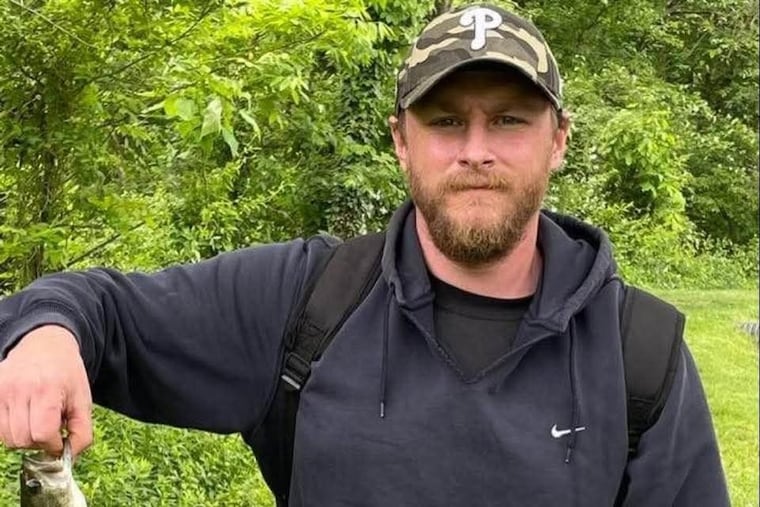
For the seven months he lived on Manayunk’s streets before he was shot and killed, Joshua Daywalt’s mother said she tried to persuade him to come back to the life waiting for him.
Jennifer Daywalt, of Phoenixville, ticked off the list: She regularly brought him bottled water, chips, and other easy-to-carry snacks at the encampment he frequented. She brought reassurance, too, reminding him that his family — three sisters, one brother, and two children — loved him and wanted him back home.
Authorities recovered Daywalt’s body from the frigid waters of the Schuylkill near Kelly Drive and Midvale Avenue on Feb. 7, 2025. A day later, a city medical examiner determined he had been shot at least once in the head, just behind his right ear, turning what had been a death investigation into a homicide.
And on Thursday, a Philadelphia judge found Roger Gosson guilty of killing Daywalt, 35, delivering the outcome his mother said she had been advocating for since the day she learned her son was gone.
“I need people to know that not everyone who is homeless is unloved,” Jennifer Daywalt said. “I never stopped trying. I never stopped begging. I never stopped fighting for him.”
Gosson, 63, was convicted of third-degree murder and related crimes in Daywalt’s shooting death, following the two-day bench trial in Philadelphia Common Pleas Court.
Gosson — a homeless man living in an intricate, multilevel setup inside a hole in the Green Lane Bridge — became detectives’ lead suspect in part because of body-worn camera footage from a patrol officer who encountered him a month before the killing. In the video, Gosson complained that “somebody [has] got to do something about” Daywalt, whom he accused of stealing from other homeless people in the area.
Later, inside Gosson’s living space, police recovered the gun they say was used to kill Daywalt .
Gosson’s fingerprints and DNA, however, were not found on the handgun. And without cellphones to track his movements or street cameras to capture the shooting, prosecutors’ case against Gosson was, as Assistant District Attorney Ashley Toczylowski acknowledged during her closing argument on Thursday, anything but typical.
“But,” she said, “that doesn’t mean we don’t know what happened.”
Judge Charles Ehrlich spent less than 10 minutes deliberating before returning a guilty verdict Thursday afternoon. Even so, a case built largely from the testimony of other homeless men created obstacles for prosecutors and, at one point, threatened to unravel before it ever reached trial.
The witnesses had told police in the weeks after Daywalt’s body was found that Gosson confessed to the killing in a series of conversations and, in one case, a note written on a napkin that was never recovered. But on Thursday, one of those witnesses disputed his previous account, blaming a drug-induced haze for his loose lips and claiming he couldn’t recall his videotaped interview with police.
And last month, Gosson’s trial was postponed for the fifth time after prosecutors said police had been unable to locate that same witness. The delay prompted Gosson’s defense attorney, Gina Amarillo, to ask the judge to dismiss the case, arguing that prosecutors had already taken more than the 365 days allowed by law to bring Gosson to trial.
Ehrlich denied her motion. And to ensure the trial could begin on Thursday with the key witness, prosecutors held him in jail on a material witness warrant ahead of the court date.
At the delayed August trial date, Detective Craig Coulter testified that he’d tried to find the homeless witness for three weeks without success, calling him “a constant moving target.”
“It’s like trying to find a squirrel in the woods,” he said. “That’s what all the witnesses in this case have been like.”
Amarillo argued on Thursday that prosecutors had relied on speculation to accuse Gosson of a killing for which no hard evidence had been found implicating him. Changing unreliable witness testimony, she said, was “not enough to say Mr. Gosson did this beyond a reasonable doubt.”
“My client was hoping for a different verdict based on the evidence presented,” Amarillo said in a phone interview Thursday night. She added that they will likely appeal the judge’s verdict.
Outside the courtroom, Jennifer Daywalt remembered her son as a “brilliant artist” who’d first picked up pencils to draw at 4, she said. He gravitated toward portraits in pencil and charcoal, often of his favorite hard-rock bands, she said.
Before he began living on the streets of Manayunk, Daywalt left four psychiatric hospitalizations intended to stabilize him after he stopped taking medication for his diagnosed paranoid schizophrenia and multiple personality disorder, Jennifer Daywalt said. His illnesses, she guessed, may have caused him to steal. “It made him feel as if he couldn’t conform to society,” she said.
Jennifer Daywalt said she has appealed to lawmakers to change the state’s laws on hospital commitments, and will continue to fight for mandatory holding periods and follow-ups that she believes could have saved her son.
For now, she said: “It felt good that the judge saw what the rest of us saw. It felt like Joshua’s voice was heard.”
Gosson is scheduled to be sentenced in December.