Pa. measles vaccine messaging depends on word-of-mouth to reach the Amish community
The so-called `Amish Internet’ is in high gear.
Outside a Lancaster County fire station, an electronic billboard flashed an invitation to a forthcoming Halloween “trunk or treat,” a “thank you” to community donors, and the local time and weather: a balmy 68 degrees on a Tuesday afternoon.
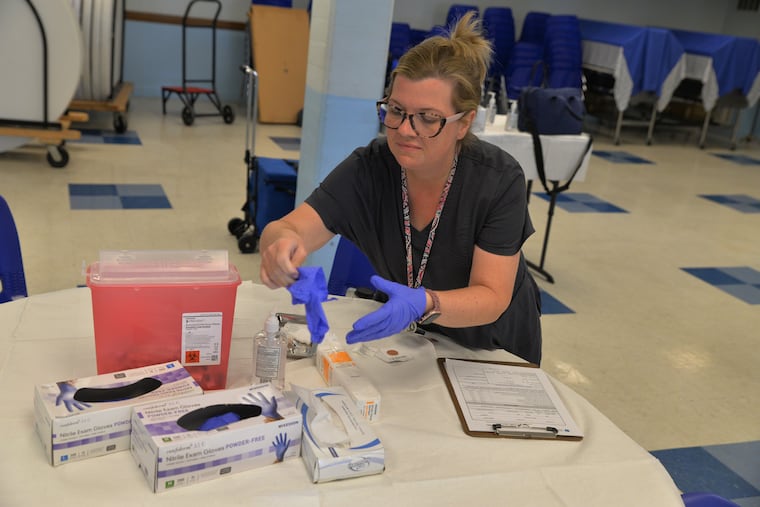
No signage advertised the pop-up measles vaccination clinic held inside the Robert Fulton Fire Company last week in the village of Peach Bottom, at the epicenter of the nation’s largest outbreak in decades. So far, Pennsylvania has reported more than 1,300 cases.
Yet moments after the clinic opened at 4 p.m., Amish families — parents with as many as 10 children — converged in the gravel parking lot behind the fire hall, out of view from the rural highway.
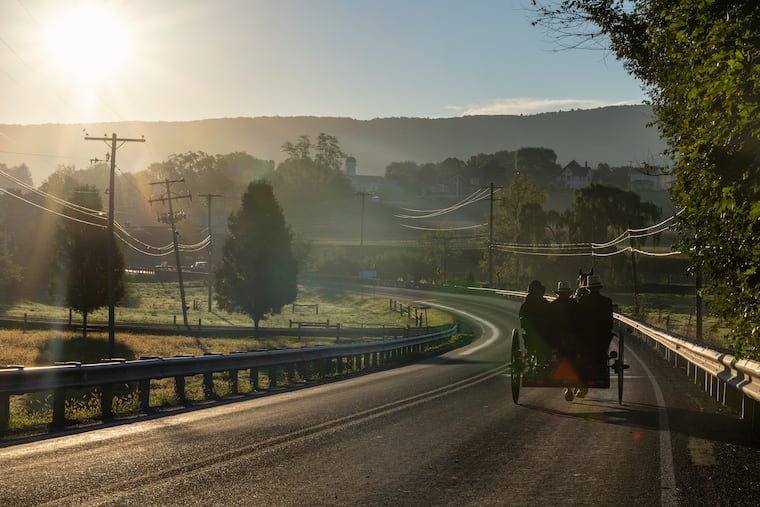
They slipped through a back door: mothers with babies hoisted on hips; fathers clutching the hands of toddlers. Some hired drivers because most Amish people, in keeping with tradition, don’t operate motor vehicles.
When the highly contagious virus began to spread this spring, notably in places with sizable Amish communities, state health officials faced the challenge of convincing an intensely private and insular community to get vaccinated. Many Amish residents have skipped vaccines for generations, partly due to a cultural preference for natural remedies and mistrust of what is in the shots.
Public health campaigns through social media, email blasts, texts, and highway billboards seemed unlikely to penetrate Amish communities who often avoid modern technology. Nor would news conferences and public service announcements of the kind that prompted mass COVID-19 vaccinations at health centers and crashed government websites as people tried to schedule appointments online.
This time, the state decided to bring measles vaccines to the doorsteps of Amish families.
» READ MORE: Measles is thought of as a childhood illness, but more Pa. adults are getting sick
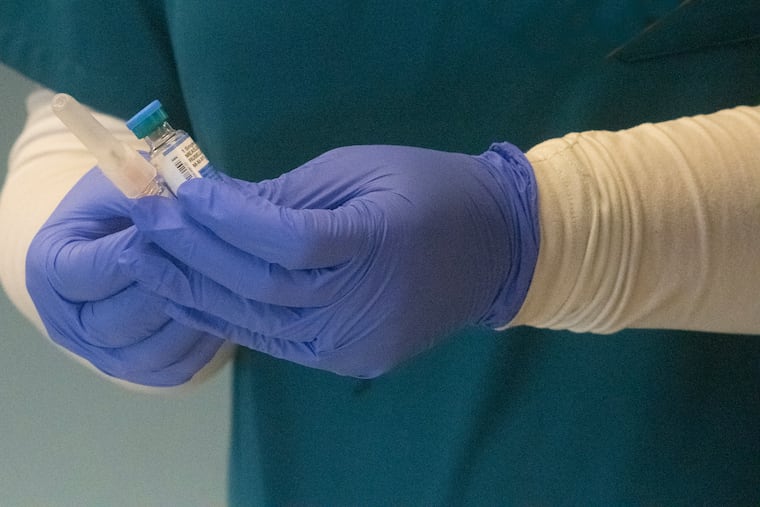
Health department officials brainstormed ways to draw Amish community members to free measles vaccination clinics near their homes, or even allow them into their kitchens or barns to administer shots, according to pediatrician Jennifer Wallace, medical director of the state’s health centers.
They sought input from Amish elders and religious leaders, who recommended their own back channels. This “Amish Internet,” as some call it, is a word-of-mouth connectivity as invisible as radio waves.
“We thought, ‘Is this going to work or not?’ It totally flipped what public health normally is,” said Wallace, who runs the pop-up clinics. “We were very nervous about whether or not we could get the word out that way.”
Additionally, Amish leaders advised, the response would be better if their community could receive shots discreetly.
Health officials said Amish people are not necessarily opposed to vaccines. However, many had not felt any need or urgency to get vaccinated against a disease few could remember. Measles was declared eliminated in the U.S. in 2000, thanks to widespread vaccination, which also protected the relatively few Americans who were not vaccinated.
In the months since the outbreak started in April, Lancaster County has led the state with the highest number of measles cases, now reporting nearly 470 cases, or nearly 40% of all Pennsylvania cases. Two local infants and a 20-year-old woman from Lancaster County were among the six measles-associated deaths identified by the state and local coroner’s offices.
State nurses go out and do wellness checks on families. “When the mother answers the door, the nurses can hear the children moaning in the background,” Wallace said, describing measles’ high fever, rash, and dry cough as “miserable.” Some symptoms can last more than two weeks.
‘It’s gone gangbusters’
When the state launched the pop-up clinics in early May, health officials worried about the low turnout.
At the first one, held in Lebanon County at the request of a community member, only 30 attended and 26 got shots, according to the health department.
Then, in mid-June, the clinics took off as word got out, Wallace said.
“We were willing to try it out, and it’s gone gangbusters,” she said.
The turnout picked up even more after health officials opened clinics in the evenings to accommodate farmers who work the fields until late afternoon.
The state has organized 223 clinics statewide, including 51 in Lancaster County, and vaccinated more than 6,000 people through them.
Sometimes, clinicians are invited to a private home to vaccinate a family of 12, only to also meet throngs of friends and relatives.
At one Lancaster County home, 110 people formed “a line out the kitchen door,” Wallace said.
“We were like, ‘Whoa.’ We had to run back to the health center twice to get more vaccine,” Wallace said. “It starts out as a very private family thing, and it ends up being a neighborhood community thing.”
At Tuesday’s clinic, 79 out of 94 people who showed up chose to get vaccinated, according to the state. It was the third clinic at that fire station, where the volunteer company includes Amish firefighters.
Questions, then relief and tears
Wallace said most Amish people who come to the clinics ultimately opt to get vaccinated, but prefer to keep it private.
“There is an element of, they don’t want people to know both in their own community as well as outside their community,” Wallace said. “They tend to be very private people.”
Many ask about what’s in the shots.
Is there a microchip in the vaccine? No. Is it made of aborted babies? No.
What offers more immunity? Getting measles or the vaccine?
Wallace has a ready answer. “They both give you immunity. However, I would rather have the measles vaccine, which maybe gives you a little bit of a fever, maybe a little bit of a sore arm for a couple of days, vs. the measles disease, which can have very serious consequences up to death.”
She will tell them the vaccine is free, whether they are insured or not. Some will counter, “Well, I’ll just get measles. That’s free, too,” and she will reply that measles complications can result in expensive hospital bills. Most Amish do not have health insurance, and sometimes must pay cash or turn to a community medical fund.
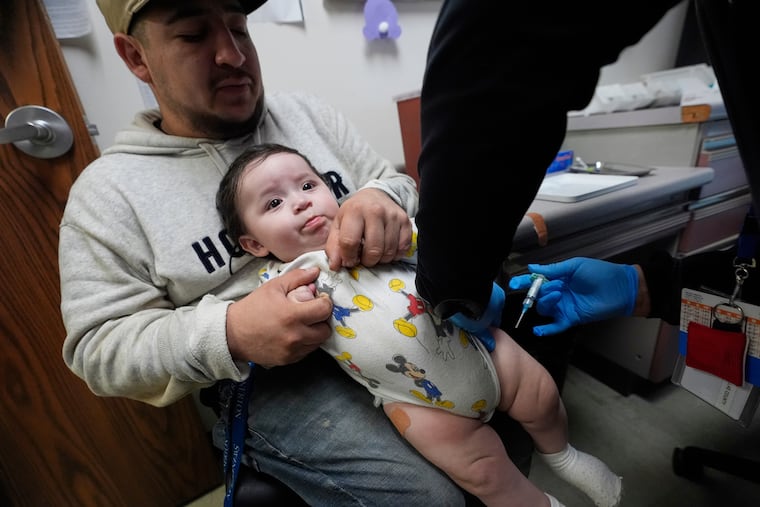
Increasingly, mothers coming to the clinics are more worried about their kids getting measles than about the vaccine. Wallace will administer doses into tiny arms and watch the mother’s face wash over with relief. Some cry afterward, she said.
“It all started with, ‘What are the communities we are trying to target, and how can we be respectful and work with them? Let’s not push what we think public health should be,’” Wallace said. “And it worked. It’s just snowballed.”
‘Never been vaccinated in my life’
The pop-up clinics are not aimed at persuading those who oppose vaccinations, Wallace said.
“The anti-vaxxers are never going to walk through these doors. They’ve made up their mind,” she said. “Many of them have already closed to their mind to it.”
Art Winter, 48, runs an auto-repair business behind the fire station where Tuesday’s clinic was held. The clinic drew Amish families from Quarryville, about 10 miles away, where Winter lives, but he had not heard about any of the state’s clinics.
“I don’t fall for that crap,” he said about vaccinations. “Never been vaccinated in my life.”
He went to a public elementary school in Upper Darby. Although state law required the measles, mumps, and rubella vaccine to enroll, his mother opted out under Pennsylvania’s widely permitted exemptions for people with religious, philosophical, or medical concerns.
He is not worried about getting measles, even though cases are all around him. “I don’t live my life in fear,” he said.
Angela Conrad, who lives about 30 feet from the fire station in a white trailer, said she had “no clue” that a vaccination clinic was occurring. “Was that on social media?” she asked. Regardless, the 57-year-old resident said she had been vaccinated as a child, like more than 90% of Pennsylvanians.
People who are unsure whether they were vaccinated as infants, or cannot remember whether they had measles, can get a blood test to show whether they need vaccine protection. But people who get tested do not need extra outreach to get vaccinated.
As the conversation around measles vaccinations has become increasingly politically charged, some providers consider not publicizing the pop-up clinics to be a security precaution.
“There are so many people who maybe don’t approve of vaccines that we don’t want to bring any negative attention to the clinics, so it’s just a word-of-mouth type of clinic,” said Beth Smith, a nurse whose worked for the state health department for 27 years and was at Tuesday’s clinic administering shots.

-
Your questions about Pennsylvania’s measles outbreak, answered
-
New vaccination data show hundreds of Philly-area schools vulnerable to a measles outbreak
-
Chester County has more measles cases than most entire states in the country
-
Pa. measles outbreak is nation’s worst, echoing deadly 1991 Philadelphia epidemic