How children, good lyrics, and love brought me around to country (ish) music
I never understood the appeal of country music. Growing older showed it to me.
My son and I sat on the tailgate of his truck on a recent summer afternoon, sipping beers and looking out at the crowd filling up the fields at the site of the original Woodstock.
He was shirtless in jeans and cowboy boots and a camo Eagles hat. Other trucks filled the spaces around us, but Subarus and Toyota Priuses rolled in, too. I saw an Arthur Russell bumper sticker on one truck and smiled, a man in a Primus shirt by another, not to mention hundreds of people, of all ages, I’d guess were major Phish fans.
“I don’t know,” I told my son. “This doesn’t look like a country music crowd.”
“Billy’s not country,” he replied.
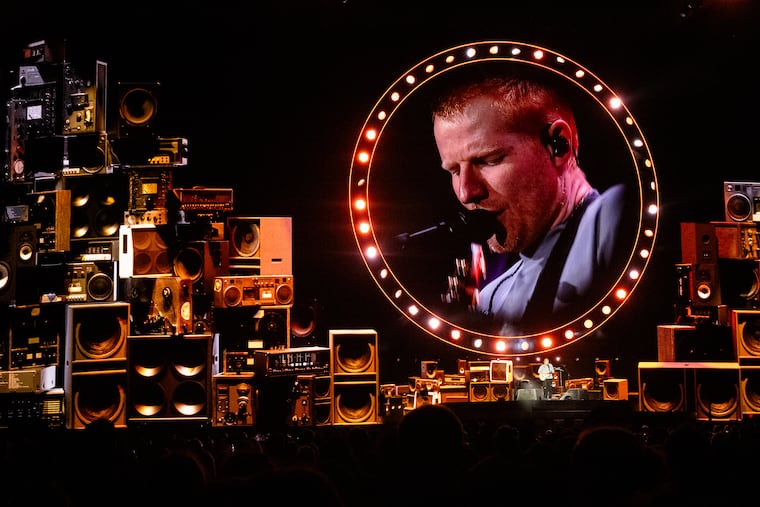
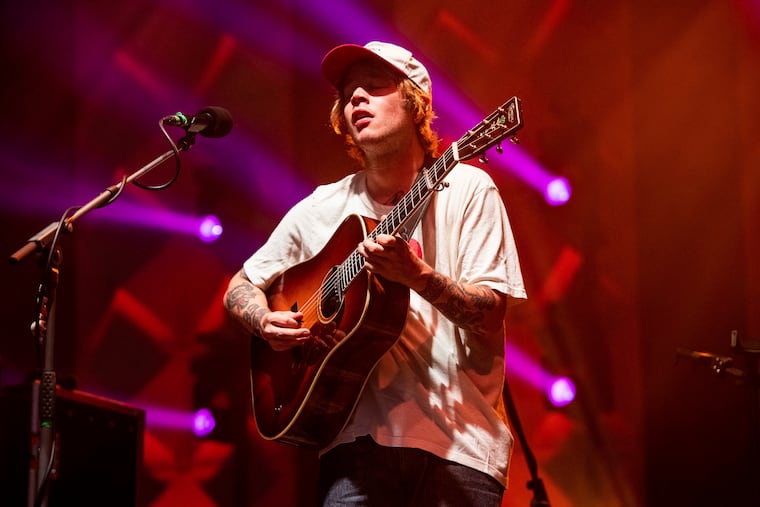
About an hour later, Nashville musician Billy Strings was deep into a brain-melting jam, fingerpicking his Martin acoustic guitar for about 15,000 people at the Bethel Woods Center for the Arts in New York. Mandolin, banjo, upright bass, and fiddle filled in around him, and I flashed back to a similar, much smaller jam I saw atop a Tennessee mountain years ago.
“I don’t know anything about music,” I said to myself as Billy blistered on.
People told me as much, way back in 2013, when I wrote a story for the Daily News about the rise of country music in the Philadelphia area and how it baffled me.
I was — forgive me — snarky.
“There’s plenty of songs about booze or guns or bonfires or getting muddy with carefree girls. Often, it’s a combination of all those things in one song, and America eats it up,” I wrote.
Rereading the piece now, in 2026, it’s not as bad as I remembered. I interviewed experts, fans, and radio personalities, and let them have their say.
“It’s mainstream. It’s rock ‘n’ roll now; it’s not that old twangy country people think of. It’s music people can understand and relate to,” one fan told me back then, during WXTU’s 29th anniversary concert in Camden.
Still, a few people came for me online.
Former conservative talk show host Chris Stigall brought me on his Philadelphia-based show, and I knew I was in trouble. I can’t find a recording, but I recall him calling me an “elitist” or “smug,” and he may have laughed when I told him my favorite band was Black Sabbath.
I took that same son, a middle-schooler back then, to see Sabbath in Philly that very year. Friends were hitting up Toby Keith and Kenny Chesney shows at the time, though, asking me to tag along. I was still very much listening to metal and indie rock, bands like Built to Spill, who I’ve seen live about two dozen times. I held fast.
“What’s next?” I wondered. “Jimmy Buffett?”
But then a few things happened that changed me, life events that cut me down a bit: my best friend died, I got divorced, and some of my snark just faded away. I was also sent out into rural Pennsylvania after the 2016 election to get a better understanding of the state for The Inquirer. I wrote about deer urine farmers, demolition derbies, transgender women, immigrant families, terrible internet service, the Amish, and even an elderly yodeler.
I spent a lot of time driving, my radio scanning from country to Christian, and interviewed Pennsylvanians in barns, old coal towns, campgrounds, and general stores. Many of these people had different concerns, backgrounds, musical tastes, and voting records than most Philadelphians. The more time I spent with them, the harder it was to label anyone, anywhere.
I also met my second wife, who was from Chattanooga, Tenn., around that time too, and she introduced me to a South I didn’t know. During one early visit to her hometown, she took me to the Mountain Opry, a little community hall atop Signal Mountain where they served popcorn and soda. The tiny show, with artists as talented as Billy Strings, felt like a treasure she gifted me, and I remain grateful for that.
We went to an Austin honky-tonk together too, where I may have hooted and hollered when the Beaumonts played their raunchy songs. Later, in 2019, we danced to Chris Stapleton in a former church in downtown Chattanooga at our wedding. I still have “Rocky Top” in my running playlist.
During all this time, I thought about that 2013 story I wrote, with growing regret.
My children finally tipped the scales when they got to high school and became adults, and some of the lyrics coming out of their speakers began to catch me off guard, artists like Lost Dog Street Band and Zach Bryan. I went looking for more and found Sierra Ferrell, Sturgill Simpson, Lydia Loveless, and Margo Cilker.
Was it country? Americana? Folk? Bluegrass? Who cares, I’m a fan of whatever it is, and now, as I hover close to 50, I couldn’t care less about who listens to what.
When I went to see Tyler Childers at the Highmark Mann Center for the Performing Arts, I was surprised to see how young the crowd was and remembered, fondly, getting busted for underage drinking there at a Metallica, Danzig, and Suicidal Tendencies show decades earlier.
Fast-forward a few years, and my son and I were camping along the Delaware River, fishing and eating kielbasa, ahead of the Billy Strings show. I hadn’t heard of Strings before I visited the Martin factory in Northeastern Pennsylvania last year, but my son is a devotee, and I’d dragged him to metal shows as a kid, and even a jazz show in Philly last year.
“It sounds like everyone in the band is playing a different song,” he said about the jazz.
From quick listens, I assumed Billy Strings was playing country music, but my son was right. It’s something different, something I don’t need to label. I’ve seen Strings described as psychedelic or “jamgrass,” and they both sound fine to me. The crowd — he sold out two nights at Bethel — was losing its mind, twirling around for hours on the grass like at the original Woodstock on the grounds, back in 1969.
We drove back to the campground with smiles stuck to our faces.
Later, when I got home, I learned Strings grew up in Michigan, in a household full of bluegrass and heavy metal. One of his favorite bands, it turns out, was Black Sabbath, just like me: further proof that we can like what we like, without labels.