At tiny Lau Kee, Chinatown’s most experienced duck chef delivers reliable excellence
As one of the very few chef-owners in the neighborhood, there's an exceptional consistency to Chuien Liu's Cantonese cooking — plus some hard-to-find specialties from his native Fujian Province.
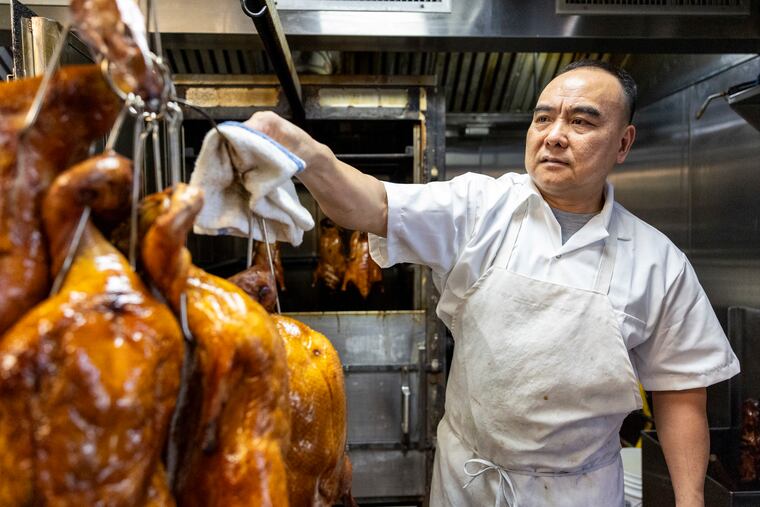
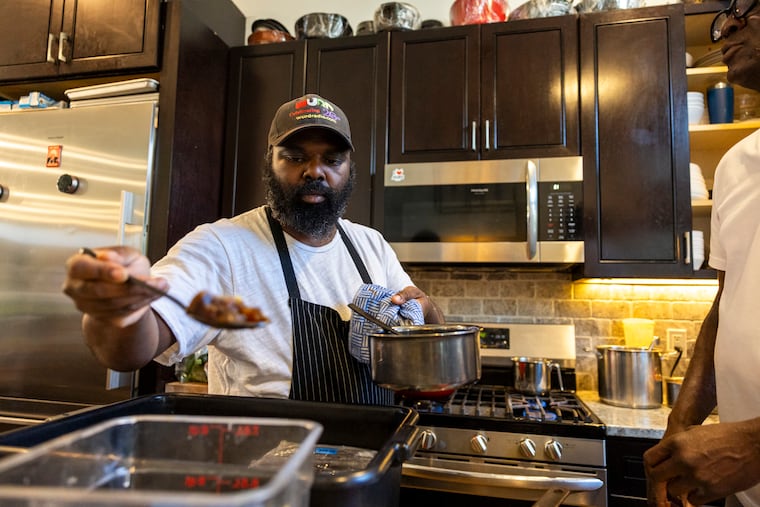
Chinatown’s Wizard of Ducks did not come from poultry royalty. Chuien Liu was born to a long line of Fujianese fishermen on a rural island beside the East China Sea.
“Going out every day to catch fish, shrimp, and crabs? That was a necessity,” says his son, Kenneth Liu, translating for his father. “But making duck was his passion, mostly because he liked to eat it.”
In that respect, Chuien Liu scored big-time when he came to Philadelphia in the mid-1990s, following a wave of immigration from Fujian Province, on China’s southeastern coast, to the United States. He landed a spot beside the roasting oven at Chinatown’s iconic Sang Kee Peking Duck House, and he remained there as the master of ducks, soy sauce chicken, and crispy pig for 25 years.
And then we, the voracious duck eaters of Philadelphia, became the lucky ones. Liu and his family went independent in 2019 to claim their own little slice of Chinatown at Lau Kee, a cozy 20-seater with no decorations on the walls, but an absolute masterpiece display of Cantonese-style roasted meats hanging in the spotless front window.
Lacquered brown ducks dangle temptingly from hooks beside paper-wrapped bundles of whole chickens, pink-edged hunks of sweet char siu pork shoulder, and tawny sheets of pork belly, whose slow-rendered layers of pale meat, pearly fat, and cracker-crisp skin are simultaneously so moist, tender, and shatteringly crunchy, taking merely one bite is not an option.
There are other, larger, better-known duck houses in Chinatown with long-established and devoted patrons, from Ting Wong to M Kee, takeout-only Siu Kee, and, of course, Liu’s alma mater, Sang Kee.
But with more than 31 years of experience and nearly half a million birds beneath his cleaver, Liu, now 55, is currently Chinatown’s longest-tenured duck chef — and also my vote for Philly’s best. As one of the very few chef-owners in the neighborhood, there is also an exceptional consistency in his insistence on doing things right.
Just preparing the ducks is a laborious, dayslong process, beginning with inflating them with air to separate the meat from the skin. A gingery marinade with chee hou sauce (a fermented bean paste that’s less sweet than hoisin) comes next, followed by a hot water bath to open the skin’s pores, then a dunk in a vinegar-sugar glaze that dries overnight. The following day, the ducks are hung in a vertical oven over an open flame to roast low and slow as juices collect below for a final basting. And that’s just for the Hong Kong-style roasted duck, which always comes chopped on the bone.
The Peking-style duck is yet another process, involving a slightly sweeter marinade with a more pronounced five-spice savor plus a longer roast time to give that skin a delicate snap. At $30 for a half duck or $47 a whole bird, the sliced meat, served boneless alongside pancakes and scallions, is a delicious centerpiece for a sharing meal.
If that’s too much of a commitment, Lau Kee makes appetizer-size duck rolls out of its copious duck trim — the perfect balance of tender meat, crunchy scallions, and dark hoisin — folded inside a soft pancake. A generous helping of shredded duck also stars in a stir-fry of snappy green beans tossed with ground pork and XO sauce. The earthiness of sliced duck and the roasted flavor of its skin also fully infuse the bowls of congee, whose rice porridge is regularly beaten to a snowy white mist and refreshed throughout the day so its texture remains airy and light. (“It’s almost fluffy,” opined my Inquirer colleague, Kiki Aranita, a noted congee scholar.)
Other popular congee combinations contain thousand-year egg and pork, or sliced flounder mingled with ginger threads and scallion — options that are standard at a dozen other Cantonese kitchens across Chinatown.
But it’s the subtle details of execution that make the difference in Lau Kee’s various soups, dumplings, stir-fries, and crispy delights. The battered crust on its salt-and-pepper shrimp in five-spice flavor might look heavy, but it’s as airy and crisp as tempura. Lau Kee’s juicy “salt-baked” chicken wings — which are actually perfectly fried — crackle with the spice of a crust infused with turmeric, cooking wine, and chili oil and easily rank among the city’s best.
The broth in Lau Kee’s wonton noodle soup is crystalline gold yet complex, drawing subtle smoky depth from a lightly charred salt fish that steeps for five hours with chicken bones. The poached yu choy greens that bolster the soup are snappy yet toothsome, and Lau Kee’s wontons, made by Liu’s wife, Fannie Qiu, are special. The addition of mushroom adds tenderness to a shrimp-and-pork stuffing that elsewhere can become overly bouncy. Top the soup with any of the meats, but char siu is my favorite, the star anise sweetness of the pork’s glaze adding even more layers to the brew.
Those wontons are also perfect splashed with the vibrant orange house chili oil, defined more by its fragrance of dried chilies than numbing Szechuan peppercorns.
Lau Kee’s shrimp dumplings are memorable, reminiscent of Sang Kee’s but softer, thanks to the addition of bamboo, and more fragrant from a pinch of curry. The West Lake beef soup is also one of my favorites, its hearty pairing of ground beef and silky tofu batons bobbing in broth sparkling with white pepper, delicate egg drop ribbons, and crunchy cilantro greens.
Lau Kee’s dry noodle dishes are solid, though less exciting. The minimalist scallion noodles, bright with shredded fresh ginger, is one of my two picks. The sesame oil-laced crispy noodle basket topped with morsels of flounder is another, notable for its delicacy and dual-textured noodles, both crunchy around the edges and soft in the middle from a velvety white gravy. Other noodle standbys were fine but forgettable: a serviceable Singapore noodles, and a beef chow fun that lacked the smoky singe of wok hei.
That whiff of caramelized char was absolutely present on the Mongolian beef, whose frizzled onion laces and dried chile heat added umami and sneaky spice to the sweet hoisin. It’s a specialty that traveled well by takeout, along with some good Americanized classics, including General Tso’s chicken, whose tender nuggets were glazed in a sweet sauce that also flickered with chili oil.
As a small business that needs every order (beyond the 250 ducks Chuien Liu sells each week), Lau Kee caters to the demands of a broad audience, and, to my mind, does many familiar dishes better than most.
But there’s an uncommon specialty on this vast menu that points to a niche of Fujianese specialties I wish Lau Kee would embrace more fully. Liu’s wife has mastered the Fujianese art of fermenting Qinghong, a wine made from sticky rice laced with red rice yeast.
As Kenneth Liu notes only half-jokingly, “My dad does not share his wine.” But the leftover lees, a crimson paste noted on the menu as “red vinasse,” is a valuable condiment that carries a fruity, fermented note and yeasty tang. It’s a transformative addition to Lau Kee’s stir-fry of chopped pig stomach with bamboo shoots. (The squeamish can order it instead with shredded pork meat.) There’s a toothy-yet-tender snap to the offal and an earthy undertone that harmonizes with the lightly boozy lees for a far more rewarding dish.
Considering the sizable community of Fujianese entrepreneurs who’ve moved to this region over the past two decades and opened everything from Americanized Chinese takeout windows to sushi restaurants and, yes, excellent Cantonese duck houses, there are precious few places showcasing traditional Fujianese food, an underrated regional cuisine. Since the closure of both Ming River Side Walk House and my other longtime 10th Street favorite, simply called “Chinese Restaurant” (aka Tai Jiang), I can no longer find delicate noodles in peanut sauce, fried taro cakes studded with pork, wok-fried baby oyster omelets, and Fujianese wonton soup with tiny dumplings no larger than a penny.
Lau Kee doesn’t make them either, sadly, and even recently dropped another Fujianese specialty, drunken ribs, when Qiu’s brother retired from their kitchen. “[Fujianese cuisine] is not the fanciest food, and not everyone is willing to try,” says Kenneth Liu.
And yet, perhaps Philly’s diners would try if only they knew more of Lau Kee’s abilities to so beautifully represent their home region? My own enthusiasm was at least genuine enough to convince chef Liu to share a sample of his Qinghong wine stash.
“Don’t drink it all at once — it’s strong!” he warned, showing me the small bowl from which he sips a chilled cup of Qinghong daily.
I took a sniff. It was tart like crushed red berries. I took a taste: a fruity tang but also dry and pleasantly funky, not unlike a refreshing sherry. I took another sip, and one more. And I understood. No matter what Lau Kee’s menu says, or how many perfect ducks Chuien Liu roasts for his adopted hometown of Philadelphia, this descendant of Fujianese fishermen will never forget the taste of home.
Lau Kee
934 Race St., 215-201-3511. Menu is posted on delivery apps.
Open 9 a.m. to 8 p.m. Tuesday through Sunday for dine-in; until 9 p.m. for takeout.
Wheelchair accessible via a small portable ramp.
Not ideal for gluten-free diners. A small portion of the menu can be made gluten-free, but none of the roasted meats.
BYOB
Menu highlights: Roasted meats: Hong Kong-style roast duck, (boneless) Peking duck, char siu pork, crispy pig, soy sauce chicken; Peking duck rolls; sliced beef in scallion pancake roll; wonton noodle soup with roast pork; shrimp dumpling noodle soup; West Lake beef soup; congee with roast duck; ginger-scallion noodles; shredded duck with string beans and XO sauce; Mongolian beef; pig stomach with red vinasse; salt-baked chicken wings.
Inquirer Food Festival
Get your ticket to Philly’s ultimate food party! Join top Philly chefs and bakers for one unforgettable day of food.