Missing paychecks, a staff walkout, and a menu overhaul: What happened at Soufiane at the Morris?
Owner Soufiane Boutliliss has taken over the kitchen at the restaurant following a payroll dispute that exposed conflicting accounts of what went wrong.
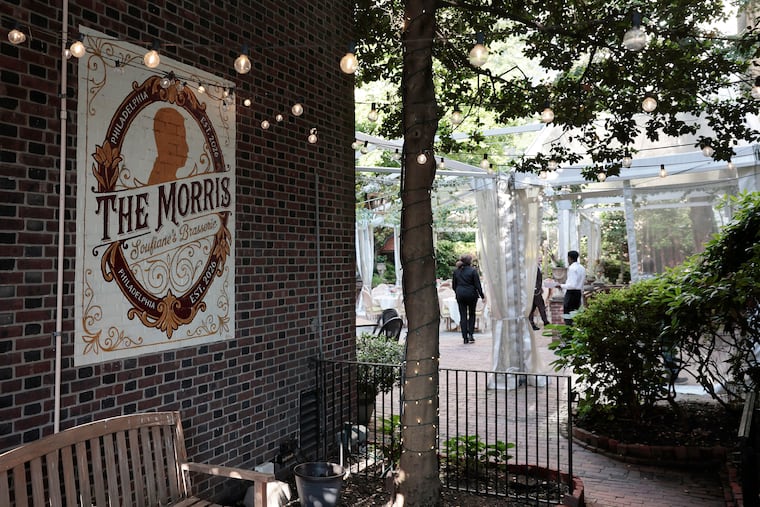
The French classics are gone from Soufiane at the Morris. So is the chef who made them.
Less than five months after opening, owner Soufiane Boutliliss has taken over the kitchen at the Morris House Hotel in Washington Square West, replacing much of the restaurant’s French-Moroccan menu with dishes rooted in his Moroccan heritage.
The abrupt transformation followed an Oct. 3 staff walkout that temporarily closed the restaurant.
Former executive chef Henry McGuigan and other employees said the walkout followed months of late and missing paychecks dating back to the restaurant’s opening in early June. McGuigan and two sous chefs were subsequently dismissed in what management called a financial and organizational restructuring.
Boutliliss acknowledged payroll delays but blamed administrative errors, excessive kitchen staffing, and his own failure to control labor costs. He said he had left too much responsibility to others.
“Maybe that was my mistake,” Boutliliss said. “I trusted people, and I paid a very high price for it.”
A turbulent start
Boutliliss, a Moroccan native raised in Paris, entered Philadelphia’s restaurant scene in September 2023 with Sofi Corner Cafe, a small, largely daytime restaurant on Locust Street. It developed a following for French café staples inspired by his Parisian husband, Christophe Mathon, and Moroccan specialties, particularly couscous and tagines.
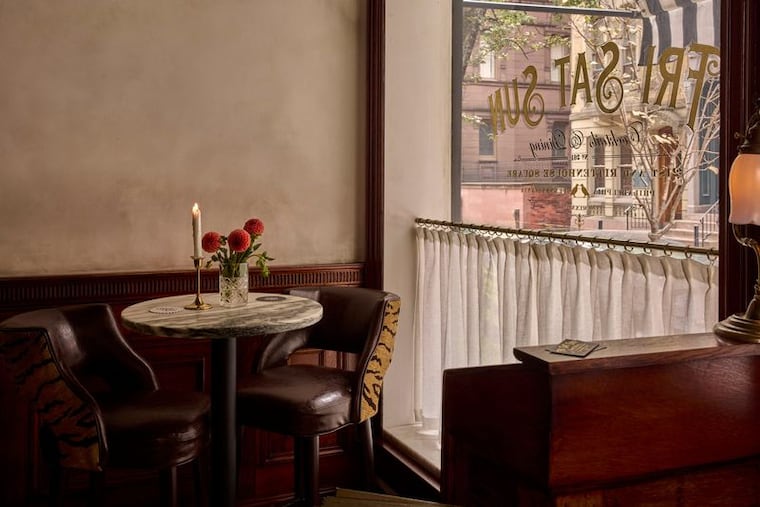
Soufiane at the Morris was a much bigger undertaking, with a full bar, 45 indoor seats, and 55 outdoors at 225 S. Eighth St. McGuigan, whose resumé includes Zahav, Laser Wolf, Lucky’s Last Chance, June BYOB, and Tavern on Camac, was hired in the spring to oversee a menu ranging from escargots and steak frites to chicken tagine and couscous royale.
Growing pains are common at new restaurants, and turnover is a fact of life. But behind the beauty and grace of Soufiane’s historic hotel setting and secluded courtyard, the operation over the summer and early fall was anything but tranquil. Accounts of what went wrong differ widely, from who controlled staffing and spending to what prompted the walkout.
Employees described bounced paychecks, missed direct deposits, and mounting frustration. “People were not being paid and were very upset,” said Matthew Morphet, who was hired in July to oversee payroll. “They were already on the verge of organizing a walkout by then.”
Payroll problems
While Boutliliss insisted that every Soufiane at the Morris employee was paid, several employees said otherwise.
McGuigan said pay had been unreliable almost from opening day. Direct deposits failed to arrive, he said, and replacement paper checks sometimes bounced.
“We’d tell the staff, ‘I promise you’re going to get paid today. They told us the checks are coming,’” McGuigan said, referring to himself and other managers. “Then the checks wouldn’t arrive, or the money wouldn’t be there.”
Some employees quit; others confronted their managers. Several former employees, who requested anonymity because of Philadelphia’s close-knit restaurant community, corroborated the payroll problems and shared with The Inquirer documentation of their filings with authorities.
One bartender filed a claim with the state Bureau of Labor Law Compliance, alleging being owed $4,109. A server filed a wage-theft claim with Philadelphia’s Office of Worker Protections, alleging being owed $3,500.
McGuigan said he is owed $5,000 to $6,000 and is seeking legal counsel.
“I don’t care about the money I’m owed anymore,” he said, adding that he was more concerned about the hourly workers.
Boutliliss attributed delays to a former top manager’s tip calculations and incomplete employee records, which he said disrupted direct deposits and required payments by check. He also said some employees were on the books but never worked.
The former manager, who requested anonymity, showed The Inquirer records of two of her own biweekly payments she received through Venmo. One, sent July 10 from an account she did not recognize and marked “payroll,” carried a 2.99% seller transaction fee that she said she was asked to absorb. She pushed back.
The former manager, who described herself as biracial, also filed a complaint with the Equal Employment Opportunity Commission alleging that she was paid less than her predecessor, a white man. Boutliliss denied discrimination, saying their duties differed. The former manager said last week that the EEOC had ended its investigation. She was issued a right-to-sue notice, allowing her to pursue the matter in civil court, and said she is consulting her attorneys about next steps.
Decision-making in dispute
Boutliliss said labor costs had grown unsustainable. During the restaurant’s first month, he said, payroll reached roughly $90,000 against $60,000 in sales.
At times, he said, 11 kitchen employees were working while the dining room had only four occupied tables.
He also questioned timekeeping practices, saying some employees recorded hours outside their assigned shifts or clocked in remotely. Some kitchen workers, he said, began at 7 a.m., although dinner service did not start until 4:30 p.m.
Boutliliss said he repeatedly asked McGuigan to cut costs.
McGuigan disputed that account, saying he kept kitchen labor costs at roughly 15% of sales — about half of the standard for a white-tablecloth restaurant.
He said Boutliliss received schedules in advance and regularly discussed staffing levels with him, including how hours were allocated among salaried and hourly employees. McGuigan said they frequently reduced staffing even after schedules were issued in order to control the cost of labor.
Boutliliss said he initially left scheduling to McGuigan and became more directly involved as problems mounted. Even then, he said, schedules that were supposed to arrive by Thursday frequently reached him as late as Sunday or Monday, leaving little opportunity for meaningful review.
He also said he saw employees working in the kitchen who had not appeared on the schedules submitted to him.
“Approving a schedule based on the information provided to me is fundamentally different from approving staffing arrangements that were never properly disclosed,” Boutliliss said.
McGuigan described Boutliliss as an absentee owner. “Not being there, you really can’t see what was going on day to day,” he said.
Boutliliss said he met weekly with McGuigan to address staffing and operational issues, only to be repeatedly assured that problems would be corrected.
The events also brought into focus another disagreement: how much responsibility Mathon, Boutliliss’ husband, had exercised over the business.
Public records identify Boutliliss as the restaurant’s sole owner. Boutliliss describes Mathon as an adviser at both Soufiane and Sofi Corner, not an owner or employee.
McGuigan and Morphet said Boutliliss routinely deferred to Mathon to deliver difficult messages and enforce decisions, casting Mathon in what McGuigan called a “bad cop” role.
The walkout
Then came Saturday, Oct. 3.
Two days earlier, the The Inquirer published a review by critic Craig LaBan noting much of Soufiane’s ambitious menu.
Come Saturday, the restaurant had 100 reservations on the books.
McGuigan and the former manager said they approached Boutliliss about payroll in the morning. Boutliliss said he was transferring funds to cover it and told McGuigan that employees would be paid the next day or by Monday at the latest.
McGuigan said that front-of-house employees refused to work, making dinner service impossible, and that he and the kitchen staff subsequently left around 1 p.m. Boutliliss maintained that most front-of-house employees were willing to work.
The restaurant closed for the night.
On Oct. 6, McGuigan said, he received notice through the scheduling system that his employment had been terminated, effective immediately. Two sous chefs received similar notices, he said.
A smaller operation
The walkout and dismissals left Boutliliss to rebuild.
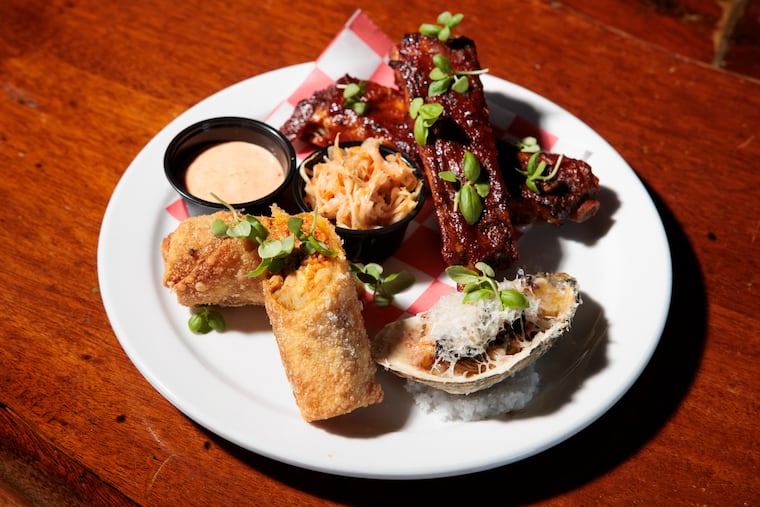
The restaurant now operates with a much smaller staff, and its menu reflects Boutliliss’ growing emphasis on Moroccan cooking, veering away from the French items — beef tartare, escargots, French onion soup, steak frites, and curried mussels — LaBan praised in his review. All have disappeared.
The chicken tagine remains, along with Moroccan pain perdu and lemon tart. Couscous royale, an elaborate platter of chicken, lamb, merguez, and vegetables, has given way to separate chicken and vegetable versions. Newer offerings include lamb and prune tagine, harira soup, and vegetable tagine. Quiche Lorraine and croque monsieur are among the few French holdovers.
Boutliliss recently added chicken pastilla, a savory-sweet Moroccan pastry, and plans to further explore Moroccan cuisine on future menus.
Asked whether he regretted taking on a project so much larger than Sofi Corner, Boutliliss acknowledged that the restaurant’s troubles had depleted his savings. With no outside investors, he alone bears the losses.
He hopes the leaner operation and a return to his Moroccan roots, which he said has been well-received, will put the restaurant on firmer footing.
“Sometimes you give someone a chance to build a career,” he said. “If you build your career and I build mine, we can grow together.”