Lights, cameras, recipes: Philly’s home cooks are creating the menu for a new Center City restaurant
Recipe Philly opens next month in Center City with a menu of family-favorite dishes and a reality TV series behind it.
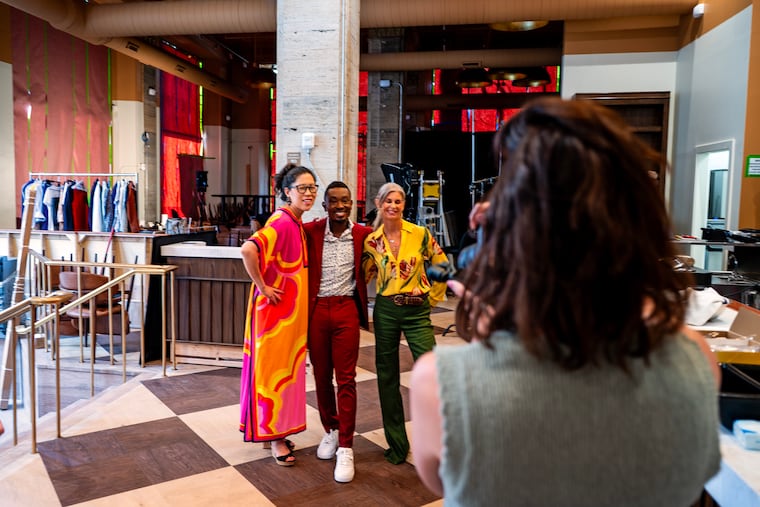
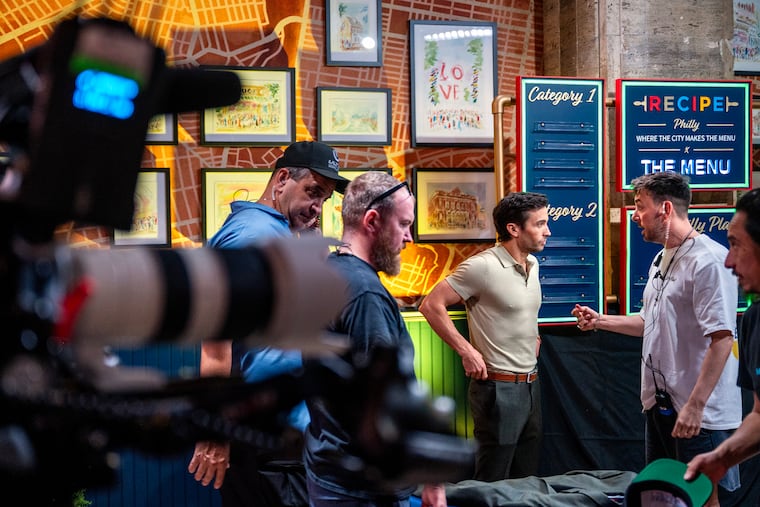
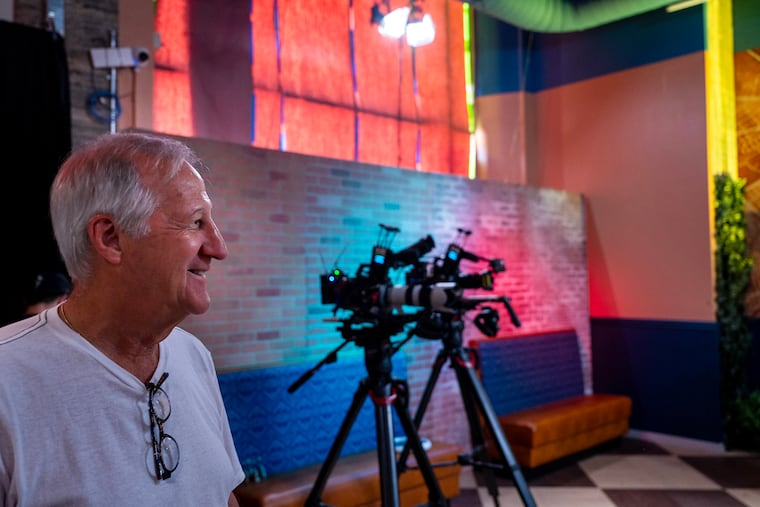
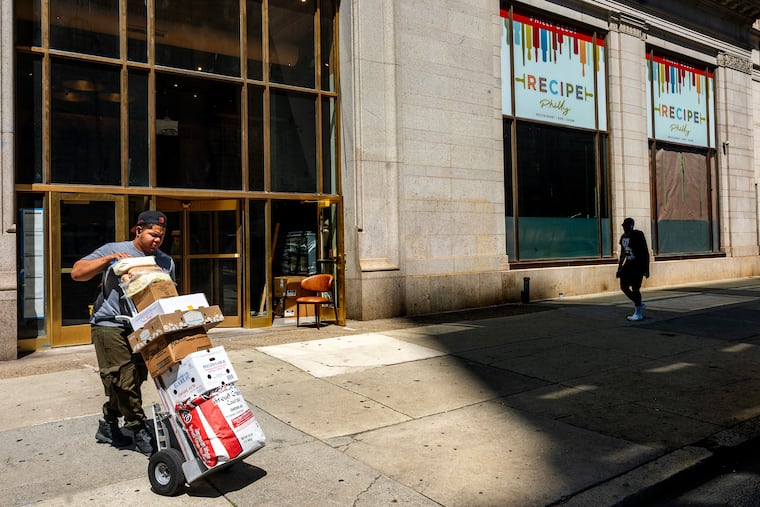
It’s three weeks before Recipe Philly’s opening day. The kitchen is finished, most of the 100 workers have been hired, and the dining room is a jumble of chairs, tables, and unfinished walls. But instead of construction crews applying finishing touches, cameras and lights have taken over.
Opening a restaurant has been likened to putting on a show, and Recipe Philly — on the site of the long-ago McDonald’s at Broad and Arch Streets — is exactly that.
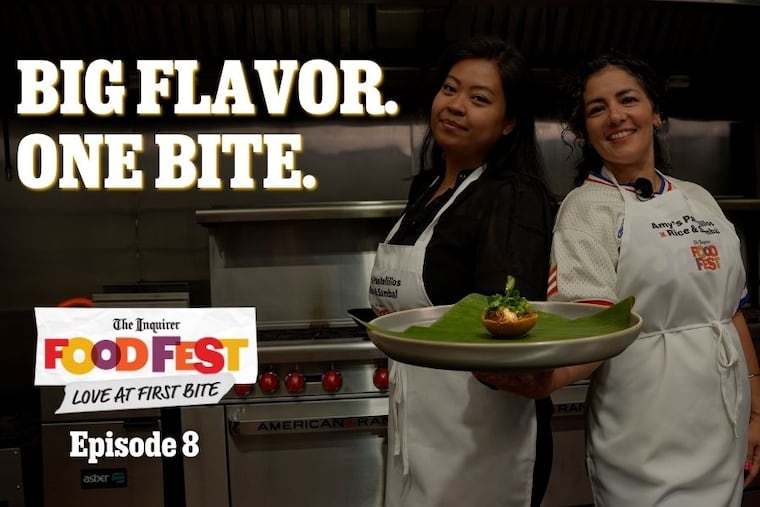
Its creator, retired corporate executive Ed Baumstein, decided to turn the making of the restaurant into a reality show. When Recipe Philly opens in mid-August, customers won’t be ordering entrees created by an executive chef. They’ll be eating dishes developed by home cooks across the Philadelphia region whose recipes survived months of auditions, judging, recipe testing, and filming for an eight-episode series that Baumstein is shopping around.
Everything is under wraps. The producers are keeping the outcome secret, declining to identify contestants or winning recipes.
Recipe Philly’s roots date to the 2008 recession, when Baumstein was running SolomonEdwards, the Philadelphia consulting firm he founded in 1999. As businesses tightened spending, his chief financial officer suggested canceling the company’s annual holiday party.
Instead, Baumstein invited employees to his suburban home for a potluck dinner.
“I was just blown away by the enthusiasm that our colleagues brought to the Christmas party,” Baumstein said. “They were super-excited about making their dishes. They watched the buffet table to see who was eating their dishes. We gave out little prizes, and just getting that three minutes of fame was unbelievable.”
When Baumstein, 70, sold his company and retired nearly four years ago, he decided to turn that idea into Recipe Philly — a $3.8 million investment and his first restaurant. At 150 seats in the dining room and 22 at the bar, “we decided to go big,” Baumstein said.
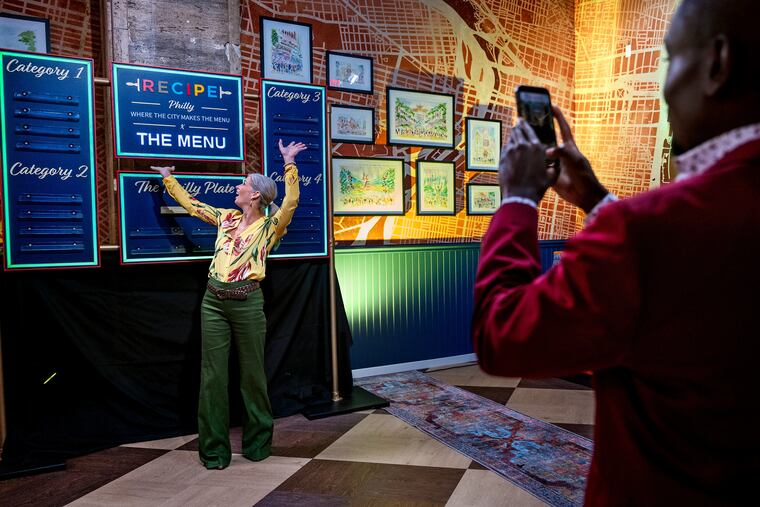
He announced the project last November with a casting call inside the Convention Center’s Broad Street atrium, where more than 1,000 people showed up to fill out recipe cards and share stories behind their dishes. Producers narrowed the field to 100 contestants, then further winnowed the competition to roughly 60 who advanced to the filmed cooking round.
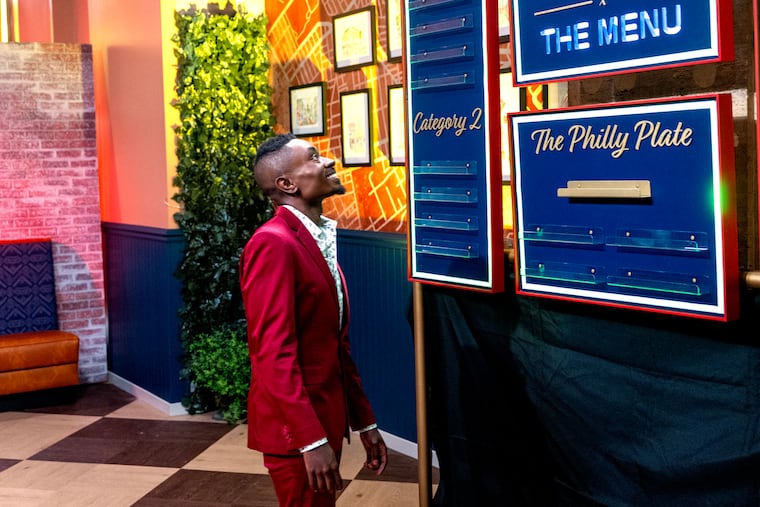
Contestants competed in categories including appetizers, soups and salads, poultry, seafood, pasta, meat entrées, desserts, and an “other” category for creative outliers. The process ultimately yielded 31 recipes that will appear on the restaurant’s opening menu.
The competition didn’t end there. The remaining episodes being filmed this month have shifted from building the menu to crowning a champion.
Sixteen contestants earned “silver spoons” from the judges and advanced into semifinal rounds devoted to particular categories. Those winners will compete for $70,000 in prize money — including one winner of $10,000. But regardless of who wins, the original 31 recipes will be served opening night.
“The city is building the menu,” said Josh Randall, a veteran casting producer for American Idol who is the show’s host and one of its producers. “These aren’t celebrity chefs. They’re neighbors, friends, brothers, sisters, parents — people who ordinarily wouldn’t have an opportunity to be on television.”
Randall said that distinction attracted him to the project. When Baumstein first approached him, the concept was still evolving.
“As a documentary, maybe it’s a 90-minute film,” Randall said. “As a competition, I thought it could sustain eight episodes.”
But he insisted that the show avoid the drama that dominates many reality competitions.
“A lot of reality television is cutthroat,” Randall said. “I was drawn to the chance to create something lighter that celebrates people rather than tearing them down.”
This might be the friendliest reality series ever. The judges — Jennifer Carroll, a veteran of Top Chef; Clara Park, a Chopped champion; and influencer Josh Moore, who goes by @josheatsphilly — say they’ve cried multiple times while hearing the stories. “You end up rooting for everyone,” Park said.
Carroll said nearly every contestant arrived with more than a recipe.
“Every contestant has a personal story behind the dish,” she said. “Some recipes have been passed down through generations. Others are completely original.”
She said the judges make a point of talking with contestants after judging because rejection can sting.
“This show is the opposite of a lot of competitive cooking shows,” Carroll said. “It’s not about tearing people down or humiliating them. It’s about lifting them up.”
Moore conceded that he expected more sentimental cooking than exceptional cooking.
“I wondered whether someone might show up with something very simple,” he said. “Instead, people have really brought their best.”
For Park, one of the biggest surprises has been watching Philadelphia’s diversity emerge through its food.
“You literally see all the different neighborhoods and ethnic communities of Philadelphia come to life through these dishes,” she said. “There are dishes I’ve never seen before that are emblematic of certain cultures.”
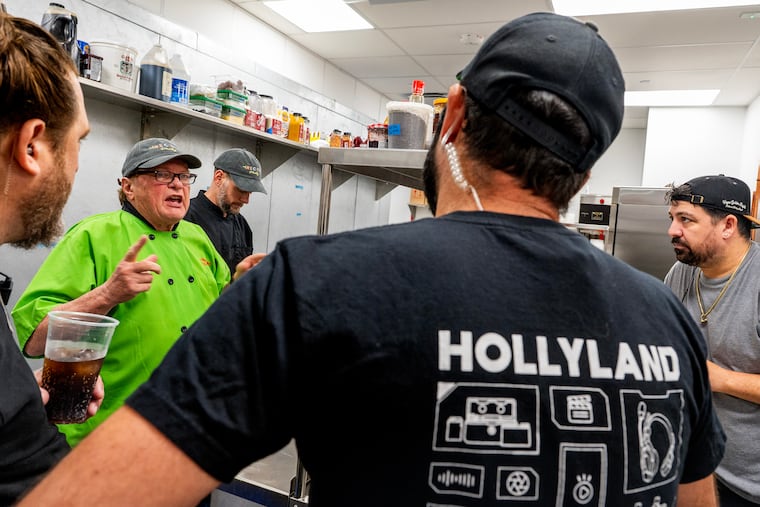
Behind the scenes, another challenge awaited. Home recipes are scaled to the dinner table. Some require elaborate preparation. Many rely on instinct rather than measurements.
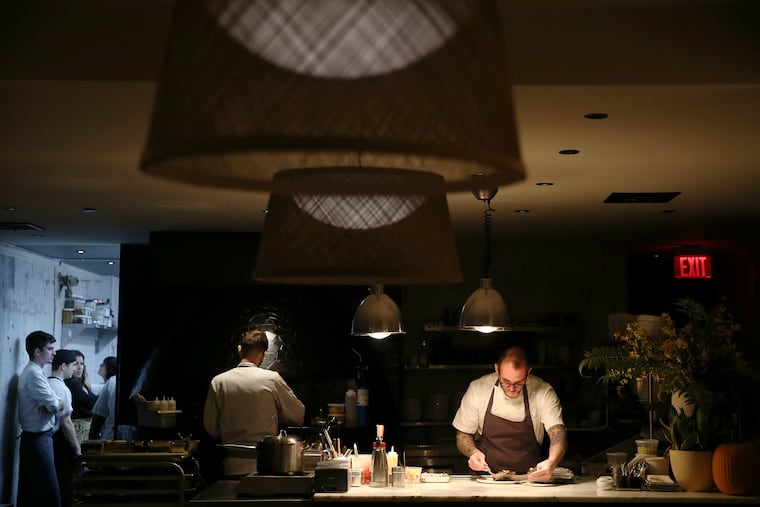
That work fell to chef Andy Revella, 74, the restaurant’s operating partner, whose resume includes Bennigan’s, Steak & Ale, Rainforest Cafe, and Harrah’s restaurants worldwide. Jarrett O’Hara, formerly culinary director of Federal Donuts, is vice president of culinary operations.
“We’re just going to take their recipe and say, ‘Here’s how we’d do it in a restaurant,’” Revella said. “The flavor, the taste, and the look stay the same. The process is different.”
The judges also had to consider labor, food costs, consistency, and whether recipes could realistically be reproduced hundreds of times.
“What one person can prepare at home is very different from what a restaurant can consistently reproduce for hundreds of guests,” Park said.
Even the kitchen itself departs from convention.
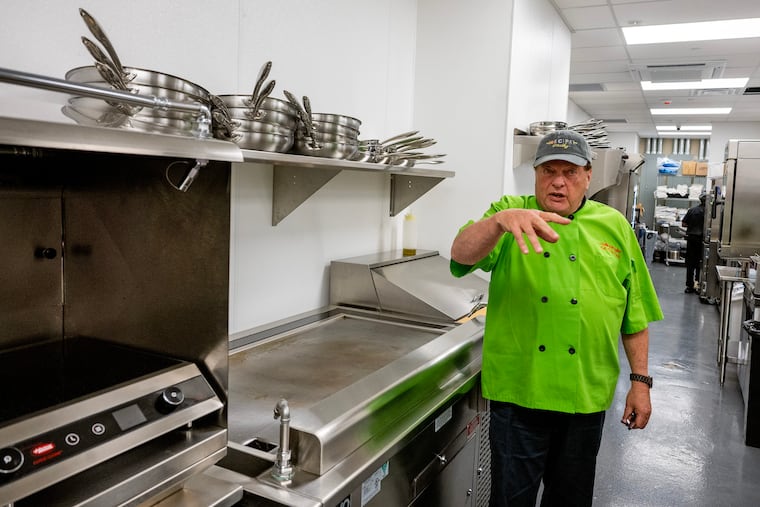
Revella has set up all-electric kitchen featuring self-contained filtration systems, advanced grease interception, and other technology designed to improve indoor air quality while reducing wastewater.
“When we talk about a green kitchen, the first thing you’ll notice is there are no traditional exhaust hoods,” Revella said. “We don’t put grease into the air.”
The flat-top griddle, which ordinarily would sit beneath a hood, is equipped with a device that traps grease and smoke.
Baumstein said the environmental approach mattered as much as the technology.
“I grew up with Earth Day and environmental awareness,” he said. “Doing something positive for the environment has always mattered to me.”
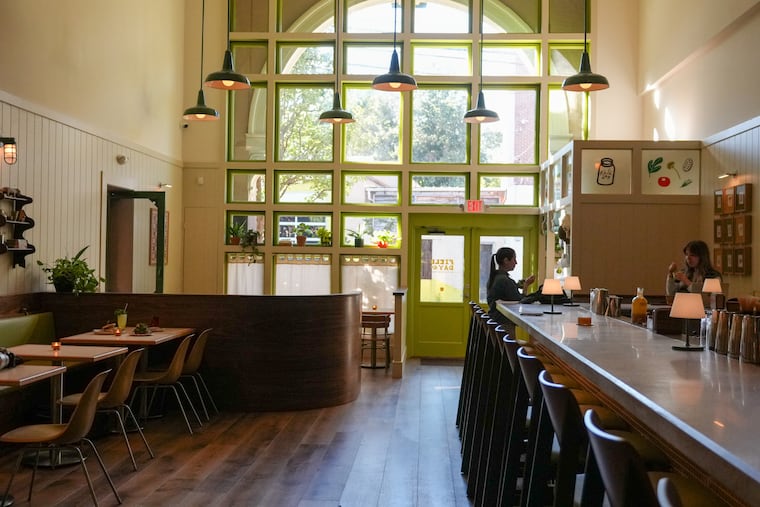
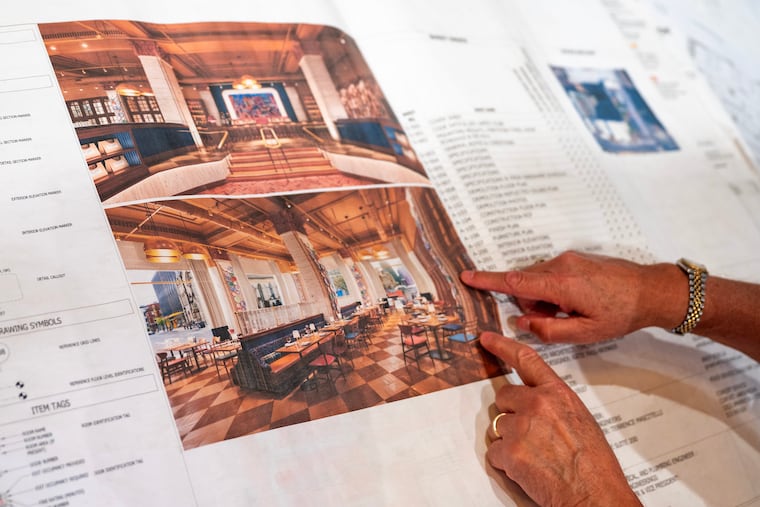
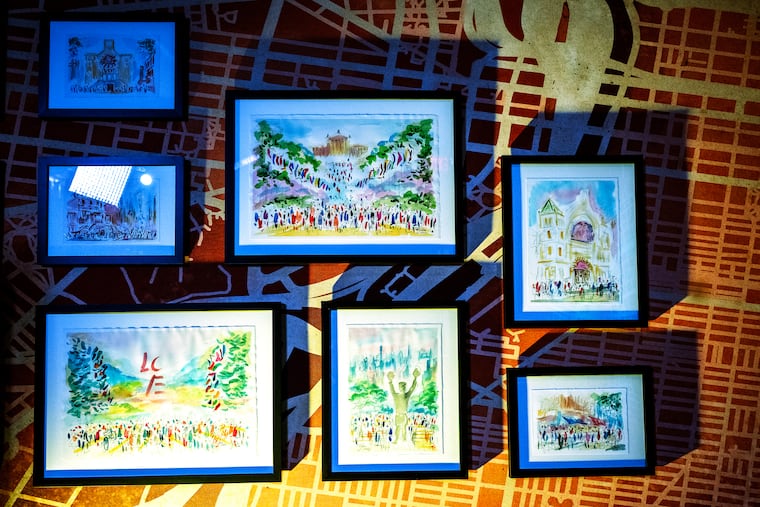
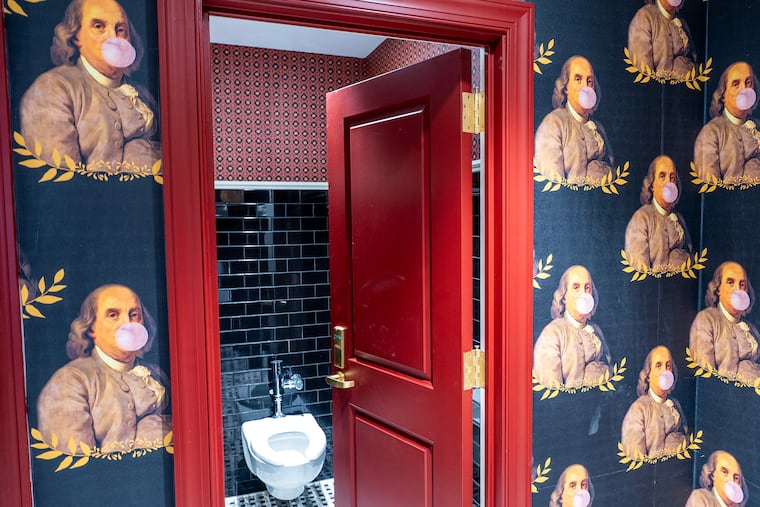
The restaurant, designed by Nelson Worldwide, aims to feel more like someone’s home than a television set. Warm wood tones, intentionally mismatched plateware, a mural of the Italian Market behind the bar, a wall of vintage rolling pins, and a 40-seat private dining room reinforce the idea that the menu began in home kitchens. The look is whimsical in the restrooms, with wallpaper depicting Ben Franklin blowing a bubblegum bubble.
“We wanted people to feel like they were walking into someone’s home kitchen,” Baumstein said. “Since the restaurant is built around home cooks, we wanted every aspect of the design to reflect that idea.”
Recipe Philly will serve lunch and dinner. Baumstein said entrees will be priced from $25 to $35.
Randall hopes diners eventually see past the television-production aspect and recognize something more enduring.
“I fell in love with the heart of the project,” he said. “Then I met the people from the city and realized they had stories that deserved to be told in a fun way.”