Sen. Dave McCormick calls for increased NIH funding, breaking with Trump in Washington Post piece
The column emphasized his disagreement with decisions made under President Donald Trump’s administration over the last year and a half that have disrupted billions in scientific funding.

U.S. Sen. Dave McCormick called for doubling the National Institutes of Health budget and prioritizing “merit-based science” in a Washington Post opinion piece published Wednesday.
The column emphasized the Pennsylvania Republican’s disagreement with decisions made under President Donald Trump’s administration over the last year and a half that have disrupted billions in scientific funding, prompting lawsuits and court reversals in certain cases.
“I’m a Republican senator. America needs more science, not less,” read the headline on McCormick’s column.
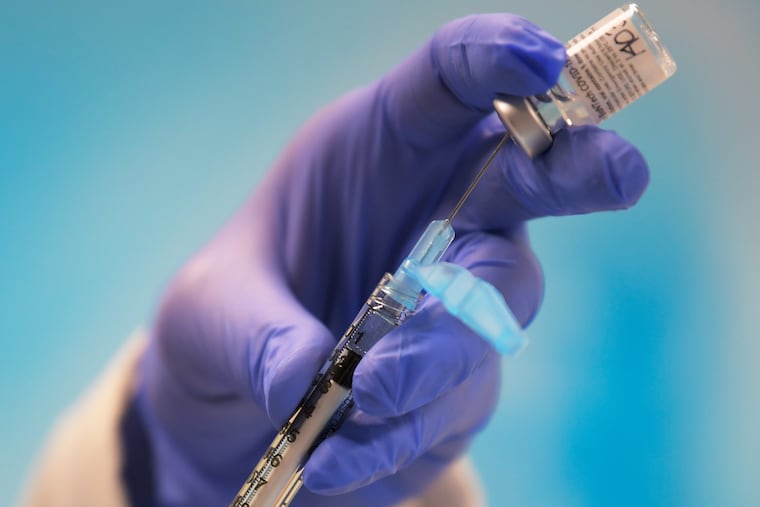
He opened with a reference to KJ Muldoon, a Philadelphia-area child whose life was saved by a personalized gene-editing therapy. NIH funding helped researchers at the Children’s Hospital of Philadelphia and the University of Pennsylvania develop the treatment. This work represents how federal investment can drive breakthroughs in American medicine, McCormick noted.
“Meanwhile, the U.S. is underinvesting in discovery,” he wrote, highlighting how the NIH budget has declined by more than 10 percent since 2003, adjusting for inflation.
Though McCormick has largely supported Trump’s agenda, he’s repeatedly pushed back on cuts to research funding.
His office last week publicized a letter authored alongside Democratic Sen. John Fetterman, in which both senators issued a bipartisan call for the federal government to explain recent cuts to healthcare research grants affecting Pennsylvania.
CHOP and Penn are among the institutions that had to shut down programs after the Agency for Healthcare Research and Quality stopped funding more than 100 grants nationwide in July, totaling hundreds of millions of dollars.
» READ MORE: Dave McCormick and John Fetterman press Trump administration for answers on health funding cuts
In his commentary, McCormick cited examples of NIH funding “saving lives and lowering the cost of disease.” Although less than 1% of federal spending goes toward NIH research, he said the investment delivers outsized returns.
The nation’s leadership in scientific innovation could slip if federal funding continues to fall, he added.
“Conservatives should recognize that basic research, like national security, is a public good that private capital rarely funds,” he wrote.
At the same time, he echoed some of the Trump administration’s criticisms of research funding, which it says overemphasizes diversity, equity, and inclusion.
The federal government has canceled nearly 1,400 grants midstream, many due to language referencing diversity, he said.
In the Philadelphia area, research on LGBTQ+ health and health disparities — how social factors like race, income, and living conditions affect health — has been particularly targeted by cuts.
“While some of these grants deserved to be canceled, some were legitimate research with buzzwords inserted to get approval from the Biden administration,” McCormick wrote.
» READ MORE: Philadelphia universities have weathered tens of millions of dollars’ worth of cuts to scientific research
A federal judge had ruled that some of the grant cuts targeting diversity-related grants were unlawful and discriminatory, after researchers and institutions pushed back through lawsuits.
McCormick said he has urged the government to let scientists revise their applications to continue their work, rather than wasting the investment in those canceled grants.
He also called for the government to double the NIH’s $48 billion budget within five years, rather than cut it by nearly 40% as the Office of Management and Budget had proposed last year. The proposed cuts were rejected.
“If we dare, KJ’s story can be the beginning of a new golden age of American science,” he concluded in the op-ed.