The new head of Philly’s Wistar Institute helped overturn an age-old belief about ovarian cancer’s origins | Q&A
As the Wistar Institute’s next CEO, Drapkin hopes to build partnerships across Philly's science ecosystem while continuing his research into ovarian cancer prevention, early detection, and treatment.

Ronny Drapkin won’t have to move his lab far when he becomes CEO of the Wistar Institute this month.
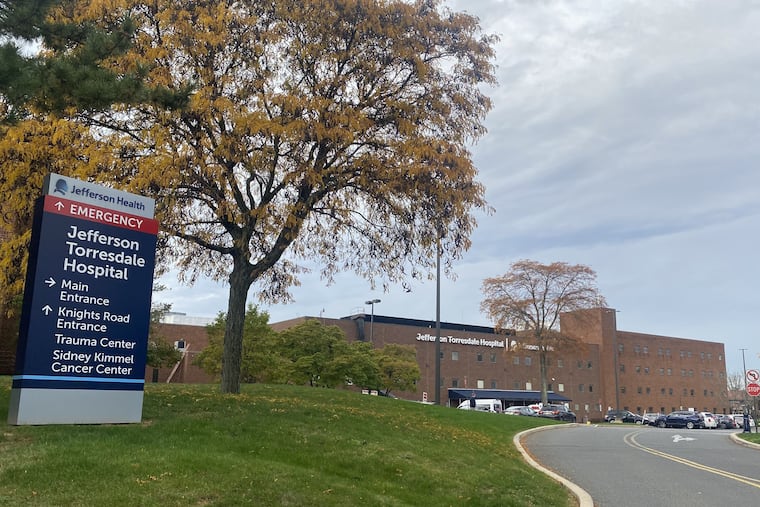
The longtime University of Pennsylvania scientist will succeed Dario Altieri on Nov. 30 as leader of the nation’s first independent biomedical research institute, located near Penn in University City at 3601 Spruce St.
He’s excited to build partnerships across Philadelphia’s scientific ecosystem and set the direction of Wistar’s research agenda spanning cancer, infectious diseases, immunology, and vaccines.
» READ MORE: With $30 million gift, Wistar Institute opens center dedicated to developing new medicines
Drapkin will also continue studying the biology of ovarian cancer, “a disease that, unfortunately, we still don’t have curative, durable therapies for,” he said.
His scientific accomplishments include advancing the so-called “fallopian tube hypothesis,” which dismantled long-standing misconceptions about ovarian cancer.
In the past, doctors and scientists assumed that ovarian cancer originated in the ovaries. But work led by Drapkin and other researchers in the last two decades has shown that most ovarian cancers likely begin in the fallopian tubes.
“If we understand how these cancers began, we could think about new approaches to prevention, to early detection, [and] ultimately to better treatments,” he said.
The Inquirer spoke to Drapkin about his vision for Wistar — and the future of his own research — in an interview lightly edited for length and clarity.
» READ MORE: Wistar scientists pinpoint a new approach to ovarian cancer treatment
What inspired you to want to lead Wistar?
I’ve spent my career as a physician-scientist trying to understand how cancers develop. Along the way, I’ve come to really appreciate how important scientific environments are in helping make discoveries.
I find myself gravitating toward building teams and consortia and collaborations, which have started locally, and ultimately become national and international. And I think the Wistar has this incredible history of doing this.
What are your priorities for Wistar?
Philadelphia has a tremendous concentration of academic institutions, hospitals, biotechnology companies, and scientific talent. Wistar’s uniquely positioned to connect to those communities, and be able to play an even bigger role in the Philadelphia ecosystem.
Will you continue doing research at Wistar?
I will be moving my entire lab. I definitely will continue advancing the work we’re doing on the Pre-Cancer Atlas to try to understand the early manifestations of ovarian cancer and how we can leverage those observations into better tools for detection and interception.
How did your pioneering work on ovarian cancer begin?
The fallopian tube was thought to be a simple tubal structure of little relevance to cancer. But by the early 2000s, people started to find abnormal-looking cells in the fallopian tube. It turns out no one had ever systematically evaluated it.
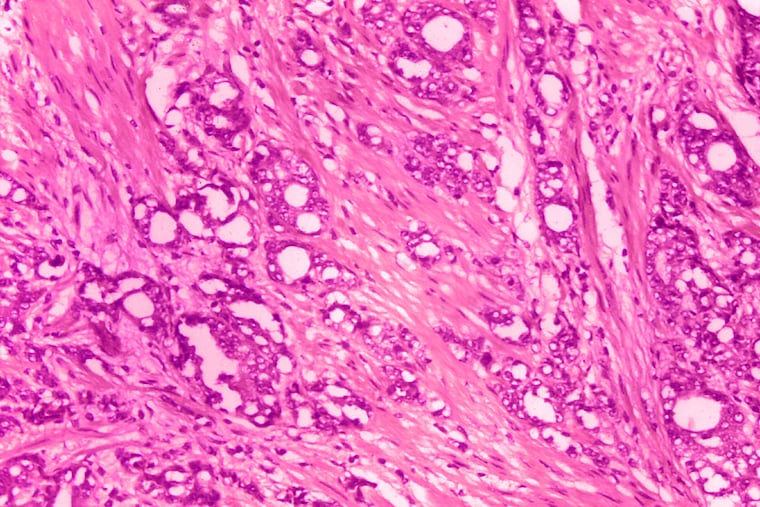
Enough of those papers got published that my mentor, Chris Crum, and a few of us decided to process these [fallopian tube] tissues for study. I still remember when the first set of slides came out. We sat there and it kind of dawned on us: Have we been looking at the wrong place the whole time? Is this where this cancer starts?
I started my own lab in 2007, and I made it my mission to study this. At the time, the fallopian tube had been so historically ignored, and, to be honest, female anatomy has been historically ignored.
Can you elaborate on that?
Claudius Galen, the famous Greek Roman philosopher-physician, is really the person that led Western medicine for 1,500 years. Everything we knew until the 16th century was really grounded on his observations. But most of the work he did was limited to dissections of animals, and usually male.
The female anatomy was assumed to be very similar to the male anatomy. No one had really ever carefully dissected and described the female reproductive tract.
It wasn’t until the 16th century when Gabriele Falloppio became the first to clearly describe what the fallopian tube looked like: a small brazen trumpetlike structure with fringes at the very end. So really, if you think about it, female anatomy had been ignored for the better part of 1,500 years.
What has your work found?
Because no one had really studied the tube, I spent my early career making all the model systems [cell lines, mouse models, etc.] that we didn’t have. We were among the first, if not the first, to develop and use them to try to understand what makes this cell so susceptible to becoming cancer.
More recently, we’ve created the Pre-Cancer Atlas, which is an international effort that we’ve organized collecting these precursors from all over the world. We have to have samples that are geographically, racially, ethnically diverse, or else we’re just looking at one piece of the pizza pie.
Now we’ve taken the data that’s emerging and nominated novel biomarkers for early detection and novel targets for cancer interception and therapeutics.
How could understanding the origin of ovarian cancer inform options for prevention?
What’s been shown is that if you take out the fallopian tubes in an average-risk woman — if she’s having, for instance, a hysterectomy for some reason — you reduce the incidence of ovarian cancer by 80%. That was from a study [in Canada] that followed a cohort of over 85,000 women who were having hysterectomies.
To me, it’s a validation of the whole tubal hypothesis.
Two of my colleagues are now rolling out a national program to advocate and train general surgeons to take out the tubes if they’re in the abdomen for any reason. So think about a gallbladder removal, an appendix removal, a hernia repair — any of the things that would potentially lead to general surgery.
What about the high-risk individuals? Right now there are three international trials — I’m the pathologist for one of them — in BRCA-mutation carriers. The hope is that removing the tubes is not inferior to taking out both the tubes and ovaries for risk reduction.
What future projects are you hoping to accomplish in your lab?
One of the things that emerged out of the Pre-Cancer Atlas is our understanding of how early the immune system is activated in cancer. This is a good thing, but it is also quickly shut off. We’ve been trying to figure out how we can leverage that understanding to reactivate the immune system.
The earlier we can do this, when the immune system doesn’t have to be thinking about billions of [cancer] cells, but maybe hundreds of thousands of cells, it has a better shot at eradicating the early manifestation of disease.
[We also found] that ovarian cancers are innervated by sensory nerves. This paper that we’re putting together is showing that [sensory] nerves are contributing significantly to tumor progression, and if we ablate these nerves, the tumors don’t grow nearly as fast. We think all these are going to be new therapeutic targets.