You are working two jobs. One of them is invisible.
The workforce problem we keep calling burnout — and why it is arriving at Philadelphia’s doorstep.

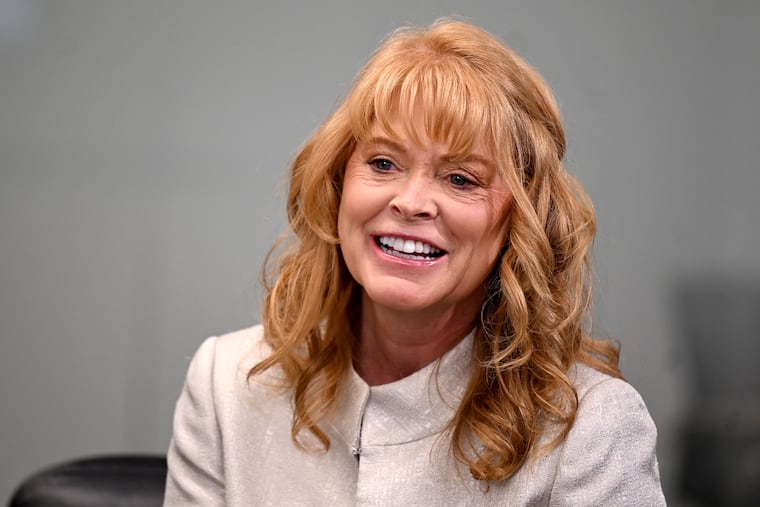
Kiplee Bell is a clinician, gerontologist, and care leadership strategist practicing in Cherry Hill and Pennsylvania. She is the founder of Impactful Caregiving, author of “The Work of My Mother’s Hands: A Caregiver’s Journey,” and originator of the double shift — a framework for understanding the collision of professional and caregiving labor in the longevity era.
The morning I came home from a 12-hour hospital shift wearing a Lidoderm patch for back pain and found my mother unable to stand, I did what I have been trained to do. I assessed her. Checked her stability. Made a plan.
As a clinician, responding to crises is familiar territory. But what no institution prepared me for was doing it twice in the same day, indefinitely, without relief. There was no transition between the two roles. There rarely is.
And I am not alone in this. I am not even unusual.
For years, we have talked about burnout as if it were the defining workforce crisis of modern life. But I have begun to wonder whether burnout is sometimes the wrong diagnosis — not because people are not exhausted, but because we have become remarkably skilled at measuring symptoms while ignoring the condition creating them.
Millions of Americans are carrying what I call the double shift: professional labor and unpaid caregiving labor performed simultaneously, without institutional recognition, structural support, or meaningful recovery.
The clinician managing a patient’s dementia while coordinating home aides for her own mother. The only son — a chief executive — monitoring his mother’s vitals between trading calls, learning to bathe and groom the woman who raised him, insisting on her dignity when no one else is left to. The teacher grading papers after spending the evening navigating a father’s cognitive decline.
Different professions. Different circumstances. The same collision.
We often describe these stories as personal situations. I believe that is our first mistake. They are workforce conditions.
This collision has a particular weight in the Philadelphia region. The nurses, physicians, therapists, and social workers holding together our hospitals and community health systems are going home to aging parents in Cherry Hill and Bala Cynwyd, in West Philadelphia and Camden.
The workforce our region depends on for its own care is the same workforce quietly absorbing the caregiving crisis at home.
The economic value of unpaid caregiving in the United States exceeds $600 billion annually — more than total Medicaid spending. Yet, most employers know their turnover rates, their productivity metrics, their engagement scores, and cannot tell you how many members of their workforce are simultaneously functioning as unpaid caregivers.
The absence of that data is itself a leadership decision.
One colleague, a cardiologist, is simultaneously navigating Parkinson’s disease in one parent and Alzheimer’s disease in another while continuing to care for critically ill patients. Another physician quietly schedules her father’s chemotherapy around clinic hours because reducing her workload would jeopardize a trajectory she spent decades building. Neither would describe herself as extraordinary. Neither would describe herself as a caregiver first.
Both would simply say they are doing what needs to be done.
That may be the most dangerous part of all. When people normalize carrying unsustainable burdens, institutions stop noticing them. Employees leave. Organizations call it burnout. Or disengagement. Or personal reasons.
But many of those departures are evidence of a structural reality: We have built workplaces around a worker who no longer exists — someone whose life outside work is administratively manageable and professionally irrelevant. No aging parent. No disabled spouse. No caregiving responsibilities competing for time, energy, and resources.
That worker does not exist. And yet, countless systems continue to operate as if they do.
What is needed is not empathy programming. It is architecture. Caregiver-aware leave policies distinct from parental leave. Protected flexibility that does not permanently derail advancement. Leadership training capable of identifying caregiving strain before it becomes a resignation letter.
This is not a caregiving issue. It is a workforce issue. A leadership issue. An economic issue.
And in a region whose economy runs on healthcare, education, and public service, it is, increasingly, a Philadelphia issue. The clinician helping her mother stand after a 12-hour shift is not an exception. The son bathing his mother between trading calls is not an exception. The teacher managing a parent’s dementia after school is not an exception.
They are not failing to balance work and life. They are carrying two jobs. America has simply decided to count only one of them.
About guest essays
Guest essays, or op-eds, are commentary pieces that present the opinion or perspective of the author. Many are submitted to us by Inquirer readers and writers with insight on the news, but we also solicit op-eds from authors on specific topics. For more information visit our guidelines.