New fees likely at Phila. health centers
To a generation of Philadelphians, they are known simply as "the free clinics" - city-run health centers where one can get care ranging from pediatrics to dentistry to OB-GYN.
To a generation of Philadelphians, they are known simply as "the free clinics" - city-run health centers where one can get care ranging from pediatrics to dentistry to OB-GYN.
But they may not be free any more.
Even as public-health officials consider massive disruptions in health care - among the options on Mayor Nutter's desk is closing the city nursing home and up to three of the clinics - one change is increasingly likely: Patients without insurance will face fees on a sliding scale at all the centers.
The fees won't be a lot - tentatively a $5 to $20 co-payment per visit - but no one knows the impact on people who are struggling.
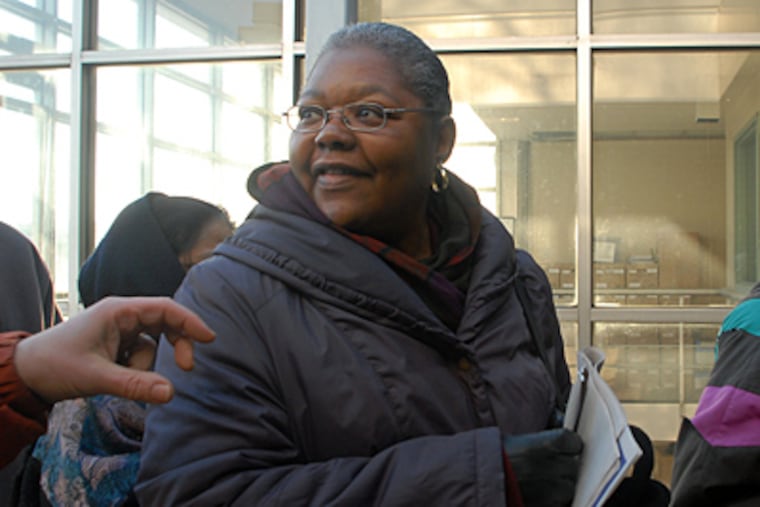
"Some will be happy to pay," said Cheryl Bettigole, clinical director of Health Center No. 10, in the Northeast, "but there's no question that it's going to be hard. It's a working-poor population. People are proud. If they can't pay, they might not come."
The line started forming on Cottman Avenue outside her clinic at 5:30 a.m. yesterday. The waiting list for new patients at this clinic, the city's busiest, is 195 days, which means that more urgent cases - as well as current patients who need to get in quickly - are treated as walk-ins.
Mary Marek, 84, needed a follow-up visit after being hospitalized with a stroke; her treatment would be billed to Medicare. Agnes James, 58, had just lost her prescription drug coverage, five years after she was found to have breast cancer; she estimated that her 10 drugs, all provided free by the clinic, would cost more than $600 a month.
Jean Cadeau, 30, had abdominal pains and no insurance. He said he had gone to Temple University Hospital's emergency room for the pain but left after waiting seven hours. Frankford Hospital's ER did tests and assured him his case was not urgent, he said, but he still is in pain.
A fee would be a hardship, he said, and he might put off problems longer.
The possibility that some health centers might close, however, is scaring people inside and outside the Philadelphia Department of Public Health.
Commissioner Donald Schwarz, like other department heads, has had to present the mayor with scenarios for cuts of 10 percent, 20 percent, and 30 percent to make up for huge shortfalls in revenue for the fiscal year that will begin July 1.
Years of funding decreases, said Schwarz, appointed a year ago, have already left the department so lean "that if you cut one person in vector control, it would affect the rat population."
His 10 percent option calls for the fee schedule (estimated savings: $1 million); reductions in over-the-counter drugs, with fees for the first time ($2 million); and other measures.
Twenty percent calls for also closing the city nursing home ($2.25 million) and one of the eight primary-care health centers ($2.35 million). Thirty percent would close two more of the health centers ($4.71 million more).
The nursing home presents particular problems: Half its 430 residents are younger than 60; most are disabled, many with head injuries.
"We would need to come up with community placement or transfer them to other nursing homes," Schwarz said, neither of which is currently feasible.
Schwarz said all eight health centers technically were vulnerable, although the Cottman Avenue center, which is the only city clinic in the Northeast and is up to 62,000 patient visits a year, is unlikely to be shut. His spokesman, Jeff Moran, said last night that a ninth center, the STD clinic on South Broad Street, would not face cuts.
"I think the strain would fall on emergency rooms," Schwarz said.
Emergency-room directors warned that closing health centers would inevitably send more uninsured primary-care patients to already overcrowded ERs, causing longer waits for everyone.
The city health clinics served 87,000 people last year. Nearly 53 percent had no insurance, a rate that has been rising.
Other health centers in the city would be hard-pressed to take up the slack.
"It would be horrible," said Natalie Levkovich, executive director of the Health Federation of Philadelphia, which represents health centers. "It's not like you turn off demand by limiting supply."
At Covenant House Health Services' Germantown clinic, the rate of uninsured patients rose from 41 percent in 2007 to 61 percent last year, chief executive Rosetta Smith said.
Covenant House is one of two clinics in the region that were awarded federal stimulus money this week to open new centers. Covenant's, at Stenton and Mount Pleasant Avenues, would serve 1,000 patients in an area that is increasingly elderly.
The other new center, part of Chester-based ChesPenn Health Services, will open in Upper Darby.
When the Maria de los Santos Health Center at Fifth Street and Allegheny Avenue expanded a year ago, patient visits shot up 26 percent. "Almost the second we provided a little more capacity, everybody showed up," said Patti Deitch, chief executive of Delaware Valley Community Health, which runs the clinic.
Deitch said her experience with changing fees several years ago had led her to suggest the city start charging.
Like other clinics - but not the city's - hers had always charged uninsured patients for care on a sliding scale, but the staff did not always enforce the policy, she said.
Facing financial problems, her staff got serious about collecting. "We taught them to say, 'Your fee today is $20. Will that be cash or check?' "
Cash collections skyrocketed 300 percent in a year, and virtually no patients left.
Kusema Warrakah, who chairs the community board that oversees the city's Strawberry Mansion Health Center, has his doubts.
"When you are poor, $5 is a real lot of money," he said.
So far, though, he and others are more worried about possible closings of centers than about new fees.
"Why are you looking to cut essential services when there are billions of dollars in revenue that you are not even looking at?" asked Neil Herrmann, head organizer for Philadelphia Acorn, a community organization.
Nutter will present his budget to City Council on March 19. Schwarz, who is a deputy mayor in addition to health commissioner, said he has no clear sense of which budget-cutting option the mayor would demand.
At a series of citizen forums held by the Penn Project for Civic Engagement and summarized for the mayor this week, however, Philadelphians made clear that closing health centers was about the last thing they wanted - less, even, than cuts in police - and adding fees for services was something to be avoided if possible.