Loughner needed a doctor
Health care has often been thought of as the problem in recent years: too error-prone, too costly, too inaccessible. But sometimes health care is the solution.
Health care has often been thought of as the problem in recent years: too error-prone, too costly, too inaccessible. But sometimes health care is the solution.
On Jan. 8, 22-year-old Jared Loughner allegedly shot 19 people at a public gathering in Tucson. Six were killed, including a 9-year-old girl, and 13 were injured, among them Rep. Gabrielle Giffords (D., Ariz.). At a memorial event last week, President Obama said, "None of us can know with any certainty what might have stopped those shots from being fired or what thoughts lurked in the inner recesses of a violent man's mind."
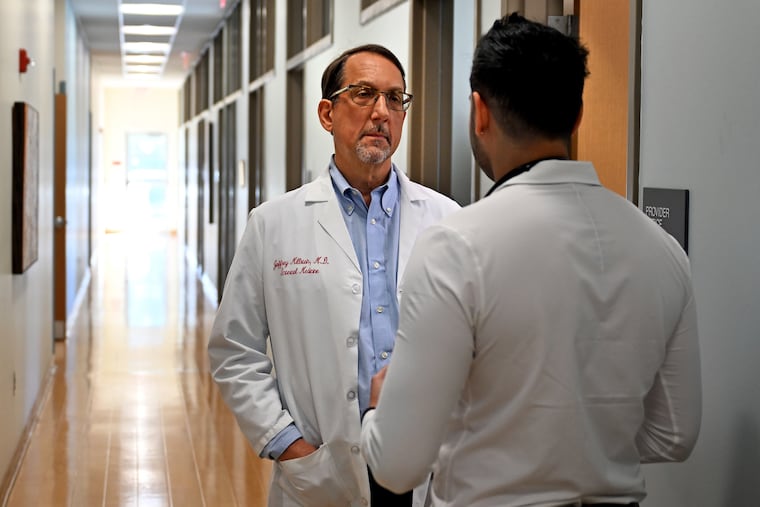
But the reality is that we do know what could have helped this apparently disturbed young man and maybe even prevented this tragic, senseless loss: a doctor. Loughner needed a primary-care doctor who worried about and took responsibility for his health, including his mental health. He needed to be seen regularly, and, when his mental condition set off alarms, he needed the services of mental-health professionals.
Fingers have been pointed in many directions since the shooting. Some have blamed the accessibility of handguns that can fire multiple rounds quickly. Others have blamed political divisions and incendiary rhetoric.
There is no simple answer. But high-quality primary and mental-health care can reduce the suffering of mentally ill patients - and the suffering they cause for others. Programs integrating primary care and mental-health services have proven particularly successful and are gaining traction in many of the nation's highest-performing health-care settings, including the Veterans Health Administration.
Maybe regular, reliable primary and mental-health care would not have helped Loughner or prevented this horrible event. But it's likely that he simply did not have access to that kind of care. The New York Times has reported that so far there's no record of "Loughner's seeking or receiving mental health care."
According to last year's National Health Interview Survey, more than a third of men ages 18 and 24 do not have access to regular health care. Access is even lower among the nearly 40 percent of those men who don't have health insurance. Chances are that Loughner was in that high-risk group.
Ironically, the Tucson shooting led to the postponement of a House vote to repeal health-care reform, which is now expected this week. To my thinking, the tragedy showed that putting high-quality health care within reach of all our citizens is one of our greatest and most important challenges. Because health care touches so much of our lives, the costs of failure are high. The costs were very high on Jan. 8.
The death of Christina Taylor Green, the 9-year-old girl killed in Tucson, has deeply shaken many Americans. Repealing health-care reform would not be the memorial she or the nation deserves. Let's take the opportunity forced on us by this unspeakable killing to remember a goal we share: making this a safer, better country for all.