‘We weren’t building power’: Inside the takeover of an influential Philadelphia labor council
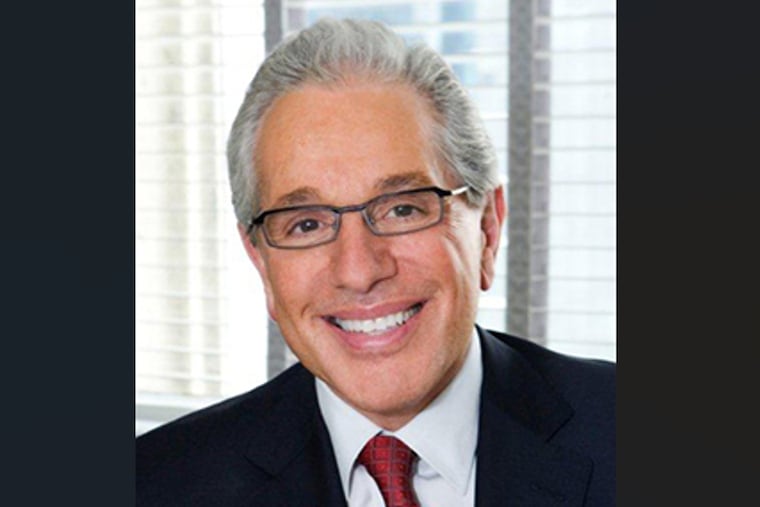
James A. Williams Jr., general president of the International Union of Painters and Allied Trades, said leaders of District Council 21 were “operating outside of our own laws and our own rules.”

James A. Williams Jr. walked his first picket line when he was 8, growing up in the 1980s in Northeast Philadelphia as the son of a labor leader.
He followed in his father’s footsteps, joining Glaziers Local 252 — the same union of which his great-grandfather was a charter member when it was founded 100 years ago. Also like his father, Williams rose to the top of the 140,000-member International Union of Painters and Allied Trades, becoming general president in 2021.
Yet, even as Williams, 48, known as Jimmy, has broadened his focus to national issues — including Trump administration policies he sees as anti-labor — his attention diverted back to the city this summer when he ordered a review of his union’s regional governing body in Philadelphia, District Council 21.
Seeking to evaluate DC 21’s recent merger with its counterpart in North Jersey, Williams says he found declining membership, excessive compensation for certain staff, and a lack of transparency.
“It was obvious that we weren’t building power,” he said in an interview. “If anything, we were operating outside of our own laws and our own rules.”
So Williams appointed a trustee to take control of the district council, removing the union’s elected business manager, Bernie Snyder, from his position and suspending other officers. Williams’ trustee on July 24 hand-delivered a letter — a copy of which was obtained by The Inquirer — with this news to DC 21’s union hall on Southampton Road in the Far Northeast, citing “widespread financial malpractice” and other governance issues.
Williams said his review did not find evidence of theft or fraud: “The case you have here is mismanagement.” Snyder could not be reached for comment.
Such trusteeships are not unheard of. They have been imposed on more than 20 Philadelphia-based unions since 2000, according to U.S. Labor Department records.
But DC 21 — which is affiliated with 11 unions in Pennsylvania, New Jersey, and Delaware representing 5,600 painters, glaziers, drywall finishers, wall coverers, and glass workers — is not just any union. It is one of the largest members of the politically influential Philadelphia Building and Construction Trades Council, which is a close ally of elected officials ranging from Mayor Cherelle L. Parker to Gov. Josh Shapiro. In 2023, President Joe Biden and Vice President Kamala Harris each visited a training site affiliated with DC 21.
Adding to the intrigue is the international president’s close ties to the district council and the broader Philly labor movement. His father, James Williams, once led Glaziers Local 252, and his uncle Ralph Williams was business manager of the Philadelphia building trades council in the 1980s. Beyond his family ties, Williams has described former DC 21 business manager Joseph Ashdale, a fellow glazier, as his mentor.
“It had to be serious for him to have done it [taken control of DC 21],” said a local building trades source who spoke on condition of anonymity to speak candidly about a sensitive labor issue. “It’s drawing attention to his home local. It’s personal when it’s your own local.”
Some in the world of organized labor did not see it coming. “That’s shocking to me,” State Sen. John Kane (D., Delaware), a former business manager of Plumbers Union Local 690, said of Snyder’s ouster.
Susan Schurman, a professor at Rutgers University’s School of Management and Labor Relations, said oftentimes one faction of a union will level accusations of wrongdoing against a rival group in an effort to gain power.
But Schurman, who reviewed Williams’ letter at The Inquirer’s request, said she was “inclined to think” that is not the case here. “Assuming what is said in the letter is accurate, when you have a declining membership and you’re raising the compensation and other things for officers and staff, you got a problem,” Schurman said.
Williams said he was not motivated by politics. “It was difficult because of relationships and, you know, long-standing roots,” he said, adding that he had worked with Snyder, a painter by trade, for 25 years. “But it was also more necessary in order to change the culture for our membership here.”
‘I’d be angry’
That change — to center the organization around members, not staff — is needed not just in Philadelphia but across the union, Williams says. He wants members to become “active participants” in the organization.
“As a whole, people need to be held accountable and kicked in the a— to push forward, represent the labor movement, and display their potential power,” Gregg Smith, the Hanover, Md.-based union’s general secretary-treasurer, wrote in an internal newsletter this summer.
But as Williams seeks to empower members, some in DC 21 say they are not getting enough information from leadership. “Everybody’s pissed off,” one member told The Inquirer, speaking on condition of anonymity out of fear of retribution.
Williams has held several meetings with members in recent weeks, including one at the Northeast Philly union hall on Aug. 5. “They basically avoided any questions,” the member said. “Where did all the money go? Nobody will tell ya nothing.”
When DC 21 posted about the trusteeship on Facebook, one member responded, “How many times does our membership have to be victimized[?]”
That frustration is understandable, Williams said. “There’s some angry members,” he said. “And think about it, I’d be angry. I’m working my a— off every day, and I expect that those that I elect are capable and are following the rules, right? And it’s just not what happened here.”
19% decline in membership
The takeover comes after DC 21 lost 19% of its membership in just two years, falling from 6,977 in 2023 to 5,621 last year, according to U.S. Labor Department data.
“That’s huge,” the building trades source said. “You don’t see drops like that, that quickly.”
Painters unions in other big cities did not see a similar drop-off over that two-year period. In New York, membership in District Council 9 held steady around 7,600 people. In Chicago, DC 14’s membership fell by 4% to about 3,900. DC 51 — which represents workers in Washington, D.C., Virginia, and Maryland — saw a 37% increase to 1,600 members.
In his July letter to members announcing the takeover, Williams said DC 21’s organizing department “has no discernible targets, strategic plans, or campaigns while membership declines and trade jurisdictions are undefended.”
In the interview, he also pointed to a slowdown in regional construction. But the problem runs deeper, he said. Going back to 2010, Williams said, the union’s membership in Pennsylvania and New Jersey has declined by 2,000 people.
Even in a region known as friendly to organized labor, more work is being performed by “open-shop” contractors that hire both union and nonunion labor, he said, adding that workers are increasingly being “misclassified” as independent contractors.
“Philadelphia, New Jersey are right in the crosshairs for where organized labor needs to organize power and grow,” Williams said.
Allegations of excessive pay
Even as DC 21 lost members, it provided compensation packages to officers and certain staff that were inconsistent with the union’s bylaws, the letter said. That included $300,000 for elected staff over a two-year period in excess of what was allowed under the bylaws, according to Williams.
Labor Department records reviewed by The Inquirer shed additional light on the union’s spending.
The DC 21 staff’s average gross salary was $116,000 last year, a 14% increase from 2023. DC 21 employees’ average salary for 2025 was the highest of any of the 10 district councils in IUPAT’s Eastern Region, including New York, which paid an average of $109,356.
DC 21 had been facing challenges even before the recent shake-up.
Membership had been sliding for years when the union merged in 2022 with District Council 711 in North Jersey. (DC 21 already had a presence in South Jersey.) At the time, DC 21 was led by Ashdale, a former longtime chair of the Philadelphia Parking Authority.
Ashdale retired in 2023 and was succeeded by Fran McLaughlin. Snyder was elected business manager the following year and served in that role until his ouster by the international union in July.
The newly appointed trustee is Brian Courtien, a former business manager of District Council 51 in Maryland.
He has to do two things, said Rutgers’ Schurman: dig into the union’s books and fix anything that was done “inappropriately,” and then try to ease rank-and-file members’ concerns about how their dues are being spent.
“The trustee has to kind of manage a process of bringing calm and order back to the organization,” she said.
Once that work is complete, the union will elect new leaders.
For Williams, effecting change starts with ensuring members understand they have agency in the organization. “Their bylaws are theirs; they’re not their leaders’. Their contracts are theirs. They’re not their employers’ or their leaders’.” he said.
“Having our rank-and-file at the center of everything we do,” he said, “from political endorsements to contract negotiations to union governance, that’s the culture we’re trying to build within our organization.”