The National Constitution Center has named a new president
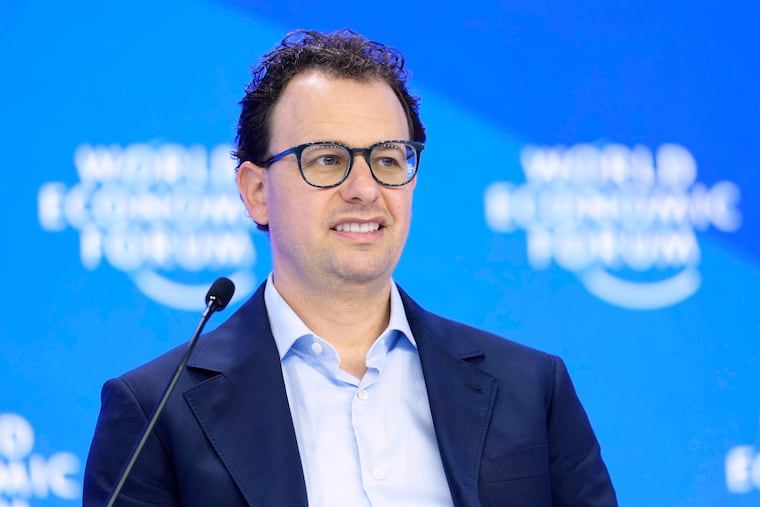
Hiram E. Chodosh, president emeritus of Claremont McKenna College, will be the center's new president and chief executive officer. Vince Stango will be co-president and deputy CEO.
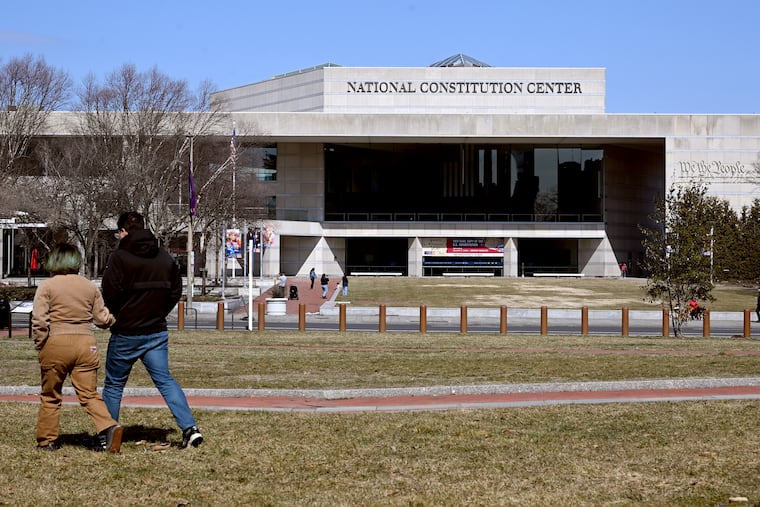
The National Constitution Center has named Hiram E. Chodosh as its new president and chief executive officer.
Vince Stango, interim president and CEO who led the center’s ambitious initiatives commemorating America’s 250th birthday in 2026 — from major exhibitions to presenting Pope Leo XIV with a historic Liberty Medal — will transition into a new role as deputy chief executive officer and co-president.
Chodosh, 64, a legal scholar, judicial reform export and president emeritus of Claremont McKenna College, brings a formidable reputation as an institution-builder, fundraiser, educational innovator, and committed defender of free speech.
He has a personal story that lends those accomplishments a deeper resonance: that of a disengaged public school student from Elizabeth, NJ, who eventually became a Yale-trained lawyer and one of the most respected college presidents of his generation.
Mike George, chair of the National Constitution Center’s Board of Trustees, said in an interview that the leadership change comes at a critical time for the center as it seeks to vastly expand its national influence, reach, and impact.
“Hiram is a transformational leader with a rare combination of intellectual distinction, entrepreneurial vision, and an extraordinary record of institutional achievement,” George said.
During a phone interview from California on Wednesday, Chodosh praised the center as “a world-class museum in Philadelphia.”
Now it falls to him, he said, to transform center’s programmatic reach and impact amid the country’s roiling political landscape.
“We’re focused on what the country needs from us,” he said. “It’s a big moment of challenge and opportunity — so transformation and nothing less.”
A sudden departure and a national search
The announcement comes after a nearly 10-month national search stemming from the sudden departure of Jeffrey Rosen, who stepped down as the center’s chief in January after 12 years.
Rosen, 61, a legal scholar, journalist, and author — and regular fixture on C-SPAN — is credited with resuscitating a once struggling museum that for years drifted toward financial uncertainty and institutional drift. His unexpected exit on the cusp of the national milestone — and amid accounts of an escalating management dispute and chaotic board meeting — raised questions of a “constitutional crisis” at Philadelphia’s cathedral to the nation’s founding ideals, and its lasting arguments.
At the time, the nonprofit, nonpartisan museum and event forum, which opened on Independence Mall in 2003, framed Rosen’s shift as a desire to devote himself to “scholarship and public dialogue.” He remains the center’s emeritus.
The New York Times reported that friction had developed over how Rosen’s responsibilities intersected with Stango’s role managing day-to-day operations. The Guardian reported that Rosen’s ouster was internally viewed by at least one board member as a move to curry favor with President Donald Trump.
George, who is also board chair of the QVC Group social shopping company, denied reports of a crisis.
“By any objective metric, this was the most successful year in the NCC’s history in terms of reach, impact, engagement, donor network, and growth of philanthropic support,” he said, noting that the center surpassed its 2026 fundraising goal of $13.4 million by more than $5 million.
George added, “The one thing we are resolute about and will never wave on is that politics will never enter into any conversation we ever have in the boardroom of the NCC.”
Chodosh and Stango, who joined the Constitution Center in 2000, before the museum opened, will not be pigeonholed into rigid leadership roles, George said. Both will be expected to help lead the center’s operations and philanthropy, as well as its more public-facing educational and scholarly initiatives.
A free-speech advocate
A public school graduate raised in working-class and diverse Hillside, NJ, Chodosh’s humble origins stand in contrast to the prestigious institutions he would later lead. He credits his grandmother, Rose Goldberg, who fled the persecution of the Jews in a village near Odesa, in present-day Ukraine, for instilling the values of perseverance, responsibility, and freedom that have guided his career. The family dinner table – and the robust world debates he found there – were his first real classroom, he said.
“She was the oldest of her generation in my extended family, and I was the youngest of mine,” he said of his grandmother in a 2013 interview. “We spent a lot of time together, playing cards at the table in her kitchenette. She told me lots of stories in order to make me understand how fortunate I was, stories about what little she had, stories about the violence she fled in the early 20th century, stories about the importance of family.”
After graduating from Yale Law in 1990, he practiced law in New York before working on major legal reform projects in more than a dozen countries. He has served in advisory roles with the World Bank, International Monetary Fund, and U.S. State Department. He received the Gandhi Peace Award in 2011.
He has made free speech and intellectual diversity a linchpin of his 13-year tenure as president Claremont McKenna College, a highly-selective liberal arts college outside Los Angeles recognized for his commitment to preparing students for public service.
“The last 12 years have seen extraordinary threats to free speech on campus, along with a sharp decline in public trust in higher education,” said Jonathan Haidt, social phycologist and author of The Anxious Generation and co-author of The Coddling of The American Mind. “One of the few leaders who navigated through the turbulence and gave their institutions a better speech climate and greater national respect was Hiram Chodosh.”
It was also at Claremont McKenna that Chodosh honed his skills as a fundraising powerhouse. Under his leadership, the college completed a record-breaking $1.076 billion fundraising campaign and championed a $400 million sciences center.
“He is, in my view, far and away the best college president of his generation,” said Guido Calabresi, a senior circuit judge of the United States Court of Appeals and former dean of Yale Law.
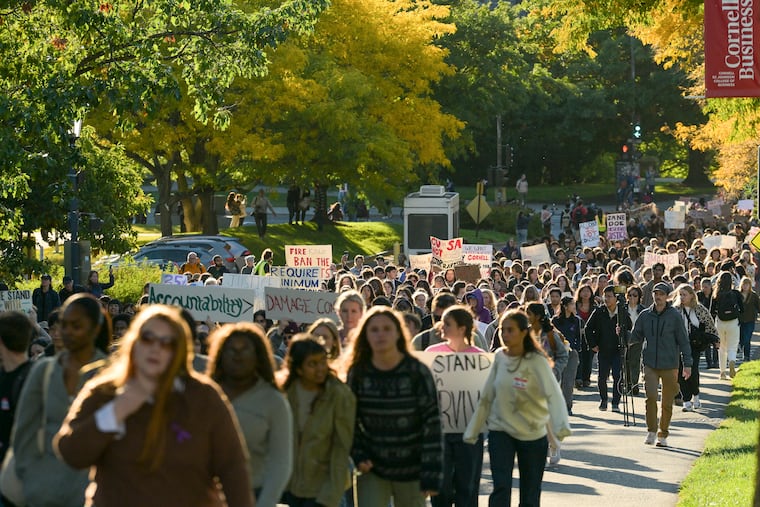
In 2017, his administration suspended five students who blocked access to a campus lecture by Heather Mac Donald, an advocate of “zero-tolerance” policing.
“We kept everybody safe, and I was committed to hold the students accountable,” Chodosh said in the interview this week.
What does this mean for the Constitution Center?
Chodosh and Stango’s vision for the future of the Constitution Center is ambitious.
“We have in this country lost a good sense of ourselves,” Chodosh said, “We’ve lost a large amount of focus on civic life in our approach to education, and I think that we’ve created tremendous vacuums and a sense of division.”
The goal is for the Constitution Center to fill those voids. That means building partnerships and collaborations at every civic level — and across partisan divides.
“It’s about making sure that whatever we’re doing is reaching all communities,” he said. “We have to make sure whether rural America or whether it’s the confines of our major cities, we have to look far and wide to make sure that we’re reaching people.”
It doesn’t mean being a sparring partner with President Donald Trump, he said.
“The role of the center is not to adjudicate major controversies,” he said. “The NCC is not the Supreme Court. It’s not Congress.”
Neil M. Gorsuch, associate justice of the Supreme Court of the United States, and honorary co-chair of the Constitution Center, said he is optimistic about Chodosh’s ability to lead.
“Hiram Chodosh brings an unparalleled record of educational leadership, a deep commitment to lifelong learning, and a demonstrated ability to bring people together around serious questions and constructive dialogue,”
More than ever, Chodosh said, he wants the Constitution Center to be the national forum where everyday citizens from all over can find common ground on the issues rivening them.
“We need to bring back that set of mutual commitments that are so central to the values that are expressed in our constitution,” he said.
This is a developing story.