Lawmaker requests emergency hearing as Kennedy Center remains closed
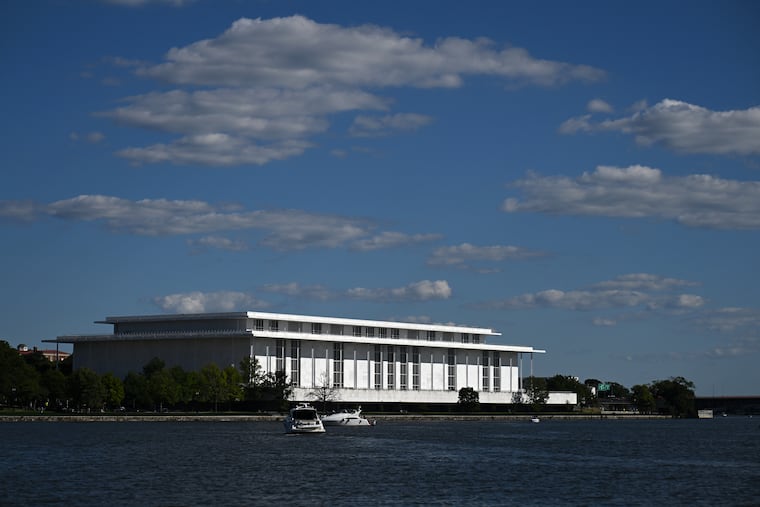
The Kennedy Center’s decision to immediately close its doors for roughly two years of repairs is facing a new legal challenge Wednesday, escalating the fight over President Donald Trump’s transformation of the national cultural institution.
The Kennedy Center’s decision to immediately close its doors for roughly two years of repairs is facing a new legal challenge Wednesday, escalating the fight over President Donald Trump’s transformation of the national cultural institution.
Rep. Joyce Beatty (D., Ohio), a Kennedy Center trustee who has repeatedly challenged Trump’s transformation of the institution in court, filed a motion requesting an emergency hearing so center officials can explain the closure despite a federal judge’s instructions hours earlier that he needed to approve it.
“It seems Defendants may be violating the ‘clear and unambiguous order of the Court,’” lawyers Nathaniel Zelinsky and Norm Eisen wrote in the emergency motion.
The challenge puts the question of the Kennedy Center’s physical future back before U.S. District Judge Christopher Cooper barely 24 hours after he blocked another attempt to put Trump’s name on the building. It also escalates a legal battle that has come to encompass nearly every element of Trump’s transformation of the national cultural institution: its name, its finances, the condition of its aging building, and now whether its doors can remain closed while its Trump-appointed leadership pursues a roughly $250 million renovation.
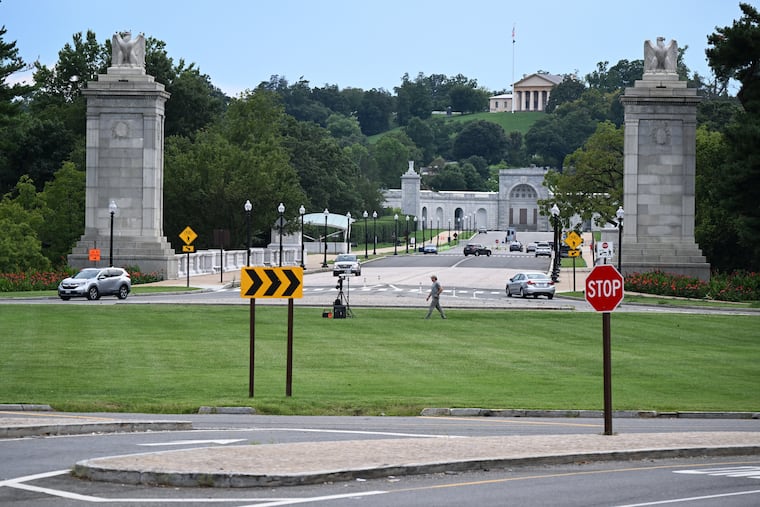
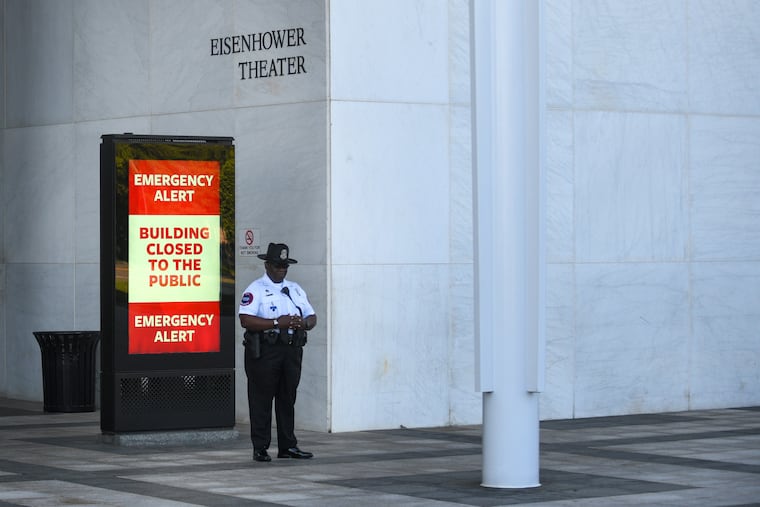
The center remained closed Wednesday after trustees voted Tuesday afternoon to shutter its main building “forthwith.” At about 4:30 p.m. Tuesday, a message played over the center’s speakers announcing the closure and security guards escorted visitors out through the Hall of Nations. By about 6 p.m., all of the doors were locked.
On Wednesday, fencing went up around the main building and security guards continued to turn away visitors.
The Kennedy Center did not immediately respond to a request for comment on the motion.
The closure came hours after Cooper addressed the issue in court Tuesday morning. Although the proceeding was largely intended to deal with scheduling in Beatty’s lawsuit, the judge confronted a rapidly changing situation: Center management had recommended an immediate shutdown after a section of ceiling plaster fell about 60 feet into the Grand Foyer during a Sept. 4 storm, and trustees were preparing to vote on the proposal later Tuesday.
The proposed closure carried particular significance because Cooper had already blocked an earlier version of it.
In May, Cooper overturned a March board resolution to close the building, finding that trustees had acted on insufficient information and failed to adequately consider the consequences. But he did not prohibit the center from ever closing. Instead, while his order remains in place, he left trustees free to reconsider the issue after conducting a more thorough review.
Trustees returned to the question in August and approved a roughly two-year shutdown. On Tuesday, they went further, voting to make the closure immediate.
Center officials say new evidence made the acceleration necessary. During the Sept. 4 storm, according to the center, a roughly 4-by-5-foot section of plaster broke loose from the Grand Foyer ceiling. No one was injured. Inspectors subsequently found at least seven other areas with visible water-related deterioration.
Management has cited those findings, along with water intrusion into electrical areas, deteriorating parking-garage steel, and aging mechanical and theatrical systems, in arguing that the building cannot safely remain occupied during construction. Center spokesperson Roma Daravi said Tuesday that the board had demonstrated “a clear prioritization of safety above all else.”
Beatty’s lawyers have challenged that characterization. In a filing Monday, they said Delta Consulting Group, which reviewed the center’s renovation plans, had expressly disclaimed concluding that the building was “unsafe for continued occupancy.” They have accused center leaders of using long-standing maintenance problems to justify a closure the Trump-led board already wanted.
Tuesday’s court hearing also produced a decisive ruling in a separate part of Beatty’s case. Cooper barred trustees from carrying out their Aug. 13 plan to add an inscription reading “Restored and Renovated by President Donald J. Trump” to the facade and rename the grounds “President Donald J. Trump Plaza.”
“Simply put, Defendants cannot install memorials for President Trump or anyone or anything else at the Kennedy Center without Congress’s blessing,” Cooper wrote, reiterating his May conclusion that Congress reserved the national memorial for honoring President John F. Kennedy.
Hours later, Trump tied the renovation directly to that legal fight. He said the building would close immediately but that construction “cannot begin until such time as the D.C. Circuit rules on the Board’s approved name.” If the center ultimately loses the naming dispute, including at the Supreme Court, Trump said, “the Reconstruction and the Renovation of The Kennedy Center will not take place.”
That leaves the Kennedy Center in an unusual position: Its main building is closed because trustees say an immediate shutdown is necessary for safety and renovation work, while the board chairperson says that renovation may never proceed if the center loses the name dispute.