ICE’s policy to detain nearly all undocumented immigrants is unlawful, a Philly-based federal appeals court ruled
The Third Circuit is the eighth federal appeals court to rule that Trump's administration's mandatory detention policy is unconstitutional.

U.S. Immigration and Customs Enforcement’s controversial policy mandating detention for nearly all undocumented immigrants is unlawful, a split Philadelphia-based federal appeals court ruled Friday.
In a 2-1 ruling, the U.S. Court of Appeals for the Third Circuit held that ICE violated the federal immigration law and the Fifth Amendment of the U.S. Constitution by holding undocumented immigrants who have been in the country for years in detention without a hearing. The policy, enacted last summer, has been a key part of efforts by President Donald Trump’s administration efforts to ramp up deportations across the country.
The ruling will take immediate effect in Delaware, New Jersey, Pennsylvania, and the U.S. Virgin Islands.
Undocumented immigrants who have lived in the United States for decades “are entitled to due process rights beyond those provided to noncitizens at the border,” Circuit Judge Patty Shwartz wrote in the majority opinion.
The government has a legitimate interest in keeping dangerous noncitizens in custody, the judge said, but a “neutral decisionmaker” should make that assessment on a case-by-case basis — rather than a practice of detaining all undocumented immigrants indefinitely.
Circuit Judge Theodore A. McKee, who was appointed by Bill Clinton, joined the opinion written by Schwartz, who was appointed by Barack Obama.
In a dissent, Circuit Judge Jennifer L. Mascott said the ruling was inconsistent with federal immigration law.
“A bond hearing focused on flight risk and dangerousness would generate irrelevant facts, not material to individual determinations,” wrote Mascott, who was appointed by Trump.
The Justice Department disagrees with the ruling and believes its position will “ultimately be vindicated,” a spokesperson said in a statement.
“This is a huge win for due process,” said Rachel Rutter, a lawyer and executive director of Project Libertad, a Phoenixville-based nonprofit that provides free legal and social services for migrant youths facing deportation. “The Third Circuit has joined a chorus of other circuit courts striking down the Trump administration’s inhumane practice of mandatory detention of people who have spent years building lives in the U.S.”
The decision “reaffirms decades of case law stating that these people have the right to challenge their detention through a bond hearing,” Rutter said.
Nine other circuit courts have issued rulings on mandatory detention, and seven found the policy unlawful. The Justice Department petitioned the Supreme Court in June, asking the high court to resolve a split it said was “disrupting the orderly administration of immigration law.”
The mandatory detention policy was rolled out by the Trump administration last year, and has led to an avalanche of lawsuits by immigrants who challenged their incarceration and demanded a bond hearing.
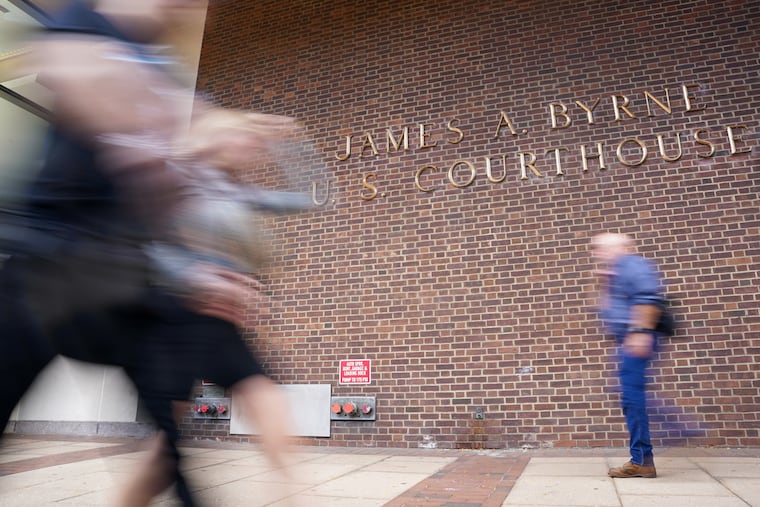
These requests, known as habeas corpus petitions, were rare not long ago, but since the policy change, they’ve dominated the docket in Philadelphia’s federal courthouse. More than 1,100 such petitions have been filed since September. Between 2020 and 2024, by contrast, only 11 such suits were filed.
Philadelphia’s federal judges have granted these requests at near-universal rates, often chastising ICE for continuing the practice despite the overwhelming judicial pushback.
The Third Circuit case involved two undocumented immigrants who have been in the United States for over a decade and were picked up by ICE after the mandatory detention policy took effect. Neither has a criminal history. Federal judges in Philadelphia ordered their release, finding their detention was unlawful.
Christopher Casazza, a Philadelphia-based immigration lawyer who represented one of the immigrants at the center of the case, called the court’s decision a “great ruling that will help thousands of people.”
The benefit for immigrants, he said, would come primarily in two forms: Anyone still being detained in the region after being arrested under the Trump administration policy can now apply for a bond hearing. And going forward, anyone who is arrested will be able to ask an immigration judge for bond.
That doesn’t guarantee release, Casazza said, but it provides people the opportunity to make a case to an immigration judge, as had been the practice before the new policy took effect after Trump began his second term.
“We’re going back to the rule of law that’s been the case for 30 years,” he said.