In Trump Gaza deal, Hamas disarms, Israel withdraws. Neither wants to go first.
Analysts cautioned that there seemed to be a substantial gap between Israel and Hamas on a path forward.
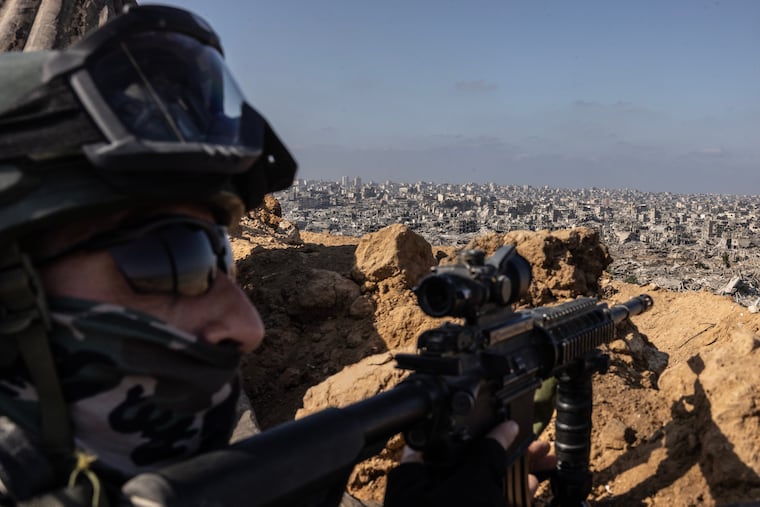
TEL AVIV — President Donald Trump this week touted “a HISTORIC agreement for the COMPLETE DISARMAMENT” of Hamas. But after his Board of Peace released the text of the 15-point plan Friday, analysts cautioned that there seemed to be a substantial gap between Israel and Hamas on a path forward.
Under the agreement, the sides have 14 days to agree on the “timetable and implementation mechanisms” for the disarmament of Hamas and the withdrawal of Israeli forces from Gaza. But there was already disagreement on the order in which each should happen.
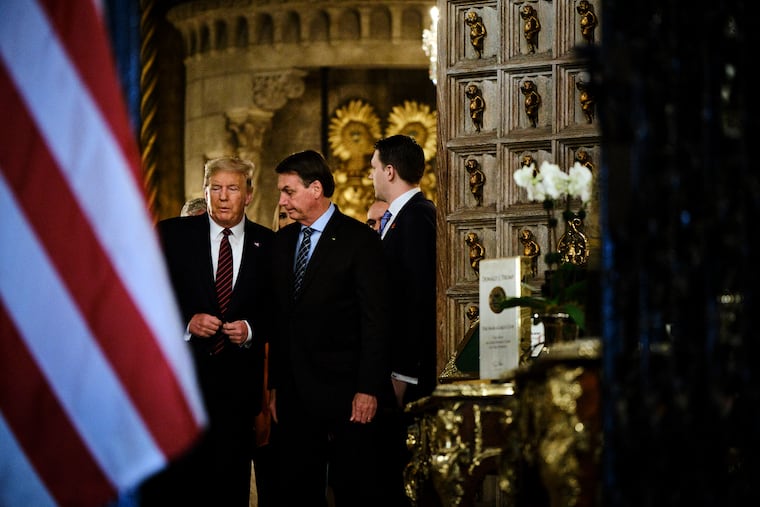
Israeli Prime Minister Benjamin Netanyahu, who met with Trump on Tuesday, has been silent on the deal. In a statement to the Post, an Israeli official reiterated Israel’s long-standing position: “Israel demands the complete disarmament of Hamas, including the removal of weapons from Gaza and the full demilitarization of the Strip, as a prerequisite for any process.” The official spoke on the condition of anonymity to discuss the highly sensitive subject.
Hamas, meanwhile, said Israel must end its military campaign in Gaza as a “first step.” The Israel Defense Forces on Friday announced the killing of men it described as a Hamas commander and a Hamas arms smuggler. Hamas also said that its agreement to surrender heavy weapons was contingent on Israel’s “cessation of all forms of hostility,” among other variables.
Jonathan Rynhold, a senior researcher at the Begin-Sadat Center for Strategic Studies at Bar-Ilan University, said the effort to move toward disarmament and demilitarization in phases represented “some kind of progress,” but obstacles remained.
“On a practical level, what Israel wants is for Hamas to disarm, and then for Israel to withdraw. Hamas wants the opposite,” he said. “Israel does not believe that Hamas will voluntarily disarm in a material sense.”
Under the agreement, the weapons Hamas surrenders are to be held by the National Committee for the Administration of Gaza, run by Palestinian technocrats. The fear in Israel, Rynhold said, is that the militants, who led the surprise attack that killed about 1,200 people in Israel on Oct. 7, 2023, will retain the ability to intimidate whoever is in the government in Gaza.
Israel responded to the Hamas attack with a military campaign that has killed more than 73,000 people, according to the Gaza health ministry.
“The bottom line,” Rynhold said, “is that Israel doesn’t think that Hamas has changed its DNA.”
There will be “no Israeli withdrawal from the Yellow Line before Hamas is disarmed and the Gaza Strip is demilitarized,” the Israeli official said. The line marks territory controlled by Israel since the sides agreed to a ceasefire in October. The territory amounts to about half the enclave.
Ibrahim Al-Madhoun, a Gazan political analyst seen as close to Hamas, said the plan “represents significant political progress” toward an end to the war.
“But optimism must remain cautious,” he said in a statement. “Israel has not finalized its position, and Netanyahu is evading and trying to evade the deal’s entitlements.”
A month ago, Hebrew University political scientist Gayil Talshir noted, Netanyahu was boasting that Israel controlled 70% of the Gaza Strip — implying that the IDF had gone beyond the yellow line.
Talshir predicted the IDF would first withdraw to the yellow line. Later, “if Hamas is indeed disarmed,” she said, “the IDF will gradually withdraw to the perimeter.”
With elections in October, Talshir said, Netanyahu doesn’t want to give opponents the opportunity to say he has approved the withdrawal of military forces in either Gaza or Lebanon, where Israel is fighting Hezbollah. Israel has in fact withdrawn from several villages in southern Lebanon, ceding control back to the Lebanese army, and Trump’s announcement suggested more to come.
There appears to be “a gap between the facts and how Netanyahu is presenting them,” Talshir said. Netanyahu, she said, is trying to portray himself as close to Trump but also able to stand up to him.
“This is the narrative he sells in Israel — that only Netanyahu can say ‘no’ to an American president. This is both contradictory and makes Trump’s blood boil.”
Right-wing National Security Minister Itamar Ben Gvir said Friday the agreement will allow “Hamas to organize for the next massacre.”
Madhoun, the Gazan analyst, said the Israeli elections will complicate implementation of any agreement. “The Gaza war has turned into political and electoral material,” he said.
Gadi Eisenkot, a leading challenger to Netanyahu, said, “The infuriating gap between [his] promises and reality has been exposed.” The deal stems from his “political weakness,” the former IDF chief of staff said, and will leave Hamas in power in Gaza.
Michael Milstein, a former adviser on Palestinian affairs to the Israeli military, said there appeared to be a gap between Netanyahu’s claim of an “excellent” meeting with Trump and the details of the agreement. But he said he doubts Trump is “set on the details” of the deal.
“I say this cautiously, but it seems that what is happening aligns with Hamas’ interests, which is mainly the growing pressure on Israel to begin the withdrawal,” said Milstein, who is now at the Moshe Dayan Center at Tel Aviv University. “No one is conditioning every single bit of progress [in the agreement] on complete disarmament.”
The government’s mistake, he said, was refusing to “engage with a political track.”
“The deal ends up being forced on you from the outside.”
For Netanyahu, he said, the timing is a “nightmare scenario.”
“If Trump is determined to push this forward — realizing he isn’t securing achievements in Iran, Lebanon, and Ukraine — and Netanyahu remains extremely stubborn about not complying with anything, this opens the door to friction.”
The question, Madhoun said, is whether the Trump administration can “oblige Israel to implement what is agreed upon.”
Hussam Al Hwaiti hoped so.
“After three years of war, killing, destruction and siege, I say ‘enough,’” the Gaza merchant said Friday.
“We don’t want to resist,” he said. “Hamas is weak now. They are not in a position to continue the fight. ... It’s time to return back to our normal life, travel, and send our children to school.”