25 years later, the anthrax threat not only has not gone away — it may be worse
We need stronger safeguards around AI systems and biological design tools. We need to recognize that biodefense is national defense, writes former Gov. Tom Ridge.
Twenty-five years ago this month, America was still reeling from the attacks of Sept. 11 when another, quieter threat arrived in our mailboxes.
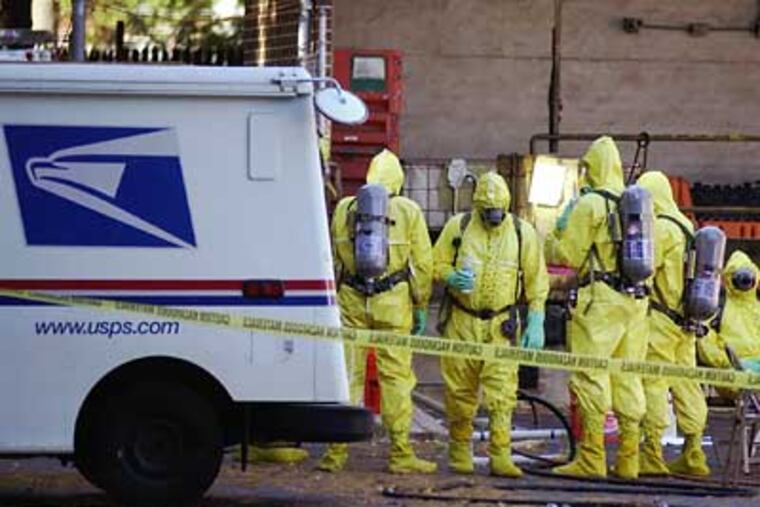
Letters laced with anthrax spores were sent to news organizations and members of Congress. The weaponized anthrax in those letters killed five Americans and sickened 17. And a nation already on edge confronted a terrifying new reality: Someone could use an invisible biological agent to attack Americans in their workplaces, in their homes, and through one of the most stalwart institutions in our society — the U.S. Postal Service.
I remember those days vividly.
I had only recently arrived in Washington to serve President George W. Bush as his homeland security adviser. The U.S. Department of Homeland Security was brand new, created in the immediate aftermath of Sept. 11, 2001. We focused on preventing and protecting Americans from other catastrophic terrorist attacks and events affecting our national security.
Then came anthrax.
Suddenly, the question was not how terrorists might hijack airplanes or attack buildings. We had to confront the possibility that a small amount of biological agents could create fear and disruption far beyond the physical damage it caused.
That experience has stayed with me for 25 years.
It is also why I, along with my colleagues at the Bipartisan Commission on Biodefense at the Atlantic Council, remain deeply concerned about the biological threats facing America today.
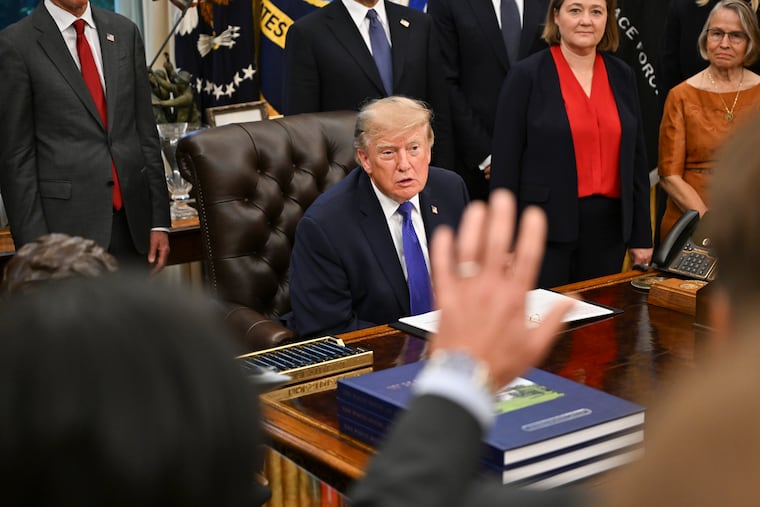
In some respects, the threat remains the same. Bad actors still send white powder letters through the mail (some containing ricin) to threaten others, including elected officials like President Donald Trump and former President Barack Obama. In other respects, the challenge is more difficult than it was in 2001.
Science has advanced dramatically. Biotechnology produces extraordinary breakthroughs in medicine, agriculture, and human health. And now we have artificial intelligence accelerating biology and every other field of science.
AI can analyze enormous datasets, identify patterns, model structures, and assist with design at speeds that were unimaginable when those anthrax letters arrived in 2001.
The National Academies of Sciences has warned that AI-enabled tools can accelerate biological discovery and design while creating new opportunities for misuse. That should concern every American.
The danger is not that an AI system will suddenly decide to manufacture a biological weapon on its own. The danger is that AI can lower the barriers that once separated a determined individual, terrorist organization, or hostile government from highly specialized biological knowledge.
Fewer people, with less time and greater computational assistance, can now accomplish what once required teams of scientists, years of research, and enormous resources.
That is the vulnerability we cannot afford to ignore.
Our commission made artificial intelligence a major new priority in the Apollo Program for Biodefense precisely because the technology is changing both the offensive and defensive sides of biological security. Our latest issue brief released this summer warned that AI can compress timelines and make sophisticated biological capabilities more accessible, while also offering powerful new tools for surveillance, diagnostics, medical countermeasures, and attribution.
The answer is not to stop AI or biotechnology. That would sacrifice enormous benefits to humanity.
The answer is to get ahead of the threat.
We need stronger safeguards around AI systems and biological design tools. We need better screening of synthetic DNA. We need dramatically improved disease surveillance to detect unusual outbreaks before they become national crises. We need to ensure federal, state, local, tribal, and territorial governments, academia, and industry are prepared to respond together.
We need to recognize that biodefense is national defense.
Twenty-five years ago, anthrax arrived in envelopes. We could see the envelope, but not the danger inside it.
Tomorrow’s threat may be far less visible.
It may emerge from a laboratory, criminal network, terrorist organization, or hostile nation-state, aided by technologies that did not exist when I started at the White House in 2001. Those possibilities should not paralyze us. They should motivate us.
The lesson of those anthrax attacks is not simply that biological weapons are frightening. It is that threats that seem remote can become real with astonishing speed.
I learned that lesson personally a quarter century ago.
I have not forgotten it.
Neither should America. Our responsibility now is to make sure that when the next biological threat emerges — whether natural, accidental, or deliberate — we are not looking backward and asking why we failed to prepare.
Tom Ridge is cochair of the Bipartisan Commission on Biodefense at the Atlantic Council, part of the Scowcroft Center for Strategy and Security. He served as the first secretary of Homeland Security from 2003 to 2005, the first homeland security adviser from 2001 to 2003, and the 43rd governor of Pennsylvania from 1995 to 2001.