E-scooters are too dangerous to recommend, Consumer Reports says
E-scooters are inherently less stable than e-bikes because of their narrow platforms, smaller wheels, and riders are standing, experts say.
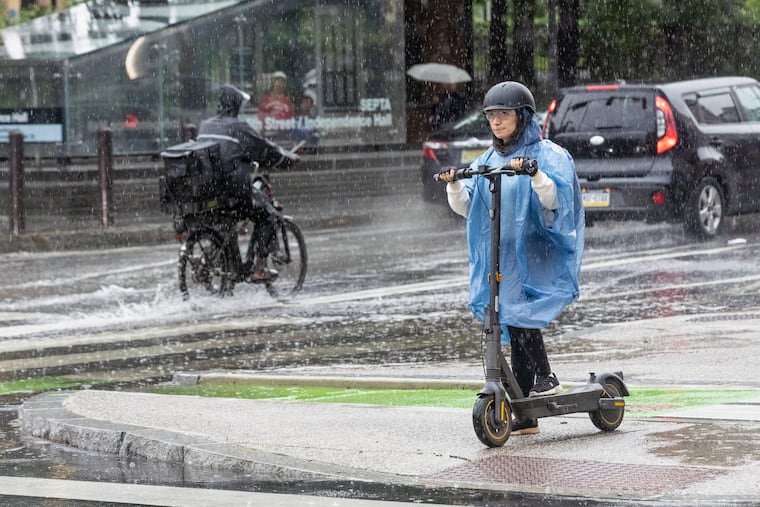
Consumer Reports said it no longer recommends any brand of e-scooter, citing higher top speeds for the popular vehicles and a sharp nationwide increase in rider injuries.
In 2017, about 10,500 people were injured on e-scooters, and by 2024 there were nearly 80,000 injuries — a jump of 662%, according to the U.S. Consumer Product Safety Commission.
Children account for more than 45% of all e-scooter injuries, according to a study published by Johns Hopkins Children’s Center researchers.
Consumer Reports tested 13 e-scooter models in August, and said they were much faster than in 2002, when it first tested the devices.
“The most common top speed for e-scooters now is 20 mph,” said Bernie Deitrick, a Consumer Reports engineer who oversees e-scooter testing. One model had a top speed of 28 mph, “almost twice as fast as the models we tested in 2022,” he said.
Four years ago, the top speed for the scooters Consumer Reports tested was 15.5 mph.
Some e-scooters on the market today, called hyper scooters, can hit speeds of 75 mph or more. Consumer Reports did not test them and says they shouldn’t be used.
People took 58 million trips on shared e-scooters in 2025, an increase of 29% year over year, the National Association of City Transportation Officials found in a survey of 31 cities where the public can rent the devices per ride, along with shared bicycles and e-bikes.
That doesn’t count the millions of e-scooters sold to private owners, estimated at about 1.4 million last year.
» READ MORE: Philly’s e-bike and e-scooter boom comes with a more dangerous price than traditional cycling
The federal government has not established safety rules for e-scooters sold to consumers. Consumer Reports found that there is no comprehensive voluntary standard from manufacturers of e-mobility devices, and independent industry laboratories have not developed one either.
“Consumers simply cannot trust that manufacturers are putting safety first as long as e-scooters come with such glaring hazards,” William Wallace, CR’s director of safety advocacy, said in a statement.
“If this industry is going to help reduce injuries, they need to agree on a set of strong baseline standards to make sure all e-scooters are designed and built to be safe,” Wallace said.
States have varying regulations for e-scooters and e-bikes and some allow municipal governments to establish stricter rules.
Since electric scooters are not defined in Pennsylvania law, it is illegal to operate them on public highways, including sidewalks, bike lanes, and roads, according to PennDot.
People can ride e-bikes in Pennsylvania as long as they have electric motors smaller than 750 watts and do not exceed 20 mph.
New Jersey rolled out the toughest laws in the nation this summer for e-bikes and e-scooters, requiring licenses for riders based on age, vehicle registration, and even liability insurance for faster models.
Electric scooters that have a top speed of 19 mph are treated as bicycles and do not require licensing or registration under New Jersey law.