A former Philly-based sports gambler pleaded guilty in gambling scandals targeting the NBA, NCAA, and Chinese league
Also known as "Sugar Shane," he could face years in prison for his role in sports betting schemes targeting the NBA, NCAA, and Chinese professional league.
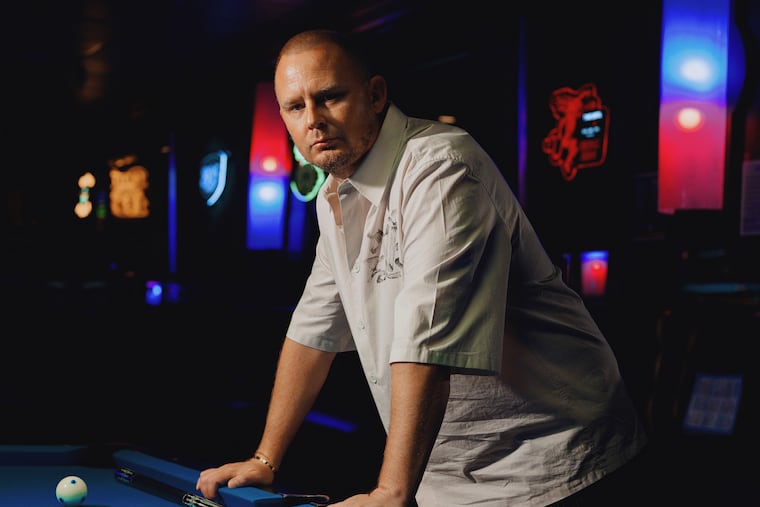
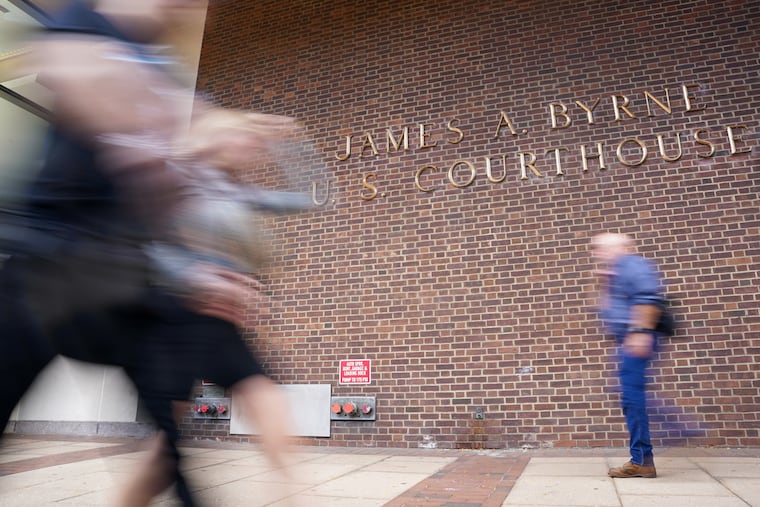
A former Philadelphia-based professional gambler pleaded guilty in federal court Wednesday to helping engineer two separate betting schemes: One in which he bribed players to underperform in the NCAA and Chinese professional league, the other in which he placed bets on NBA contests using inside information about player injuries or performance.
Shane Hennen, 41, said little beyond answering routine legal questions while admitting to crimes including bribery and wire fraud. He declined to comment afterward.
But the pleas were a significant development for Hennen, who became a central figure in several high-profile betting prosecutions over the past year. This summer, he also pleaded guilty in a third gambling case, one in which he provided rigged card-shuffling machines to mafia-affiliated poker games in New York City — high-stakes contests that also involved former NBA players.
His connection to each of those schemes made Hennen — known as “Sugar Shane” in gambling circles — one of the more prominent players in scandals that shook the sports world and led to questions about the explosion of legalized sports betting. Hennen now faces the prospect of years behind bars.
For a while, Hennen was unrepentant, saying it was normal for gamblers to use any available method to find an inside edge, comparing his methods to those used by financial professionals on Wall Street.
“There ain’t one stockbroker who became rich just by guessing right all the time,” he told the New York Times this summer. “This is what the United States of America has revolved around, for hundreds of years.”
Such bravado may have helped contribute to his downfall. In text messages he sent to co-conspirators in one of the schemes in 2023, Hennen boasted about how bribing a star player for the Jiangsu Dragons was providing clear and easy winnings on bets his group could place in Philadelphia.
“Nothing gu[a]rantee[d] in this world,” Henner wrote, ”but death taxes and Chinese basketball.”
In the scheme targeting games in the NCAA and China, prosecutors said, Hennen and another professional gambler, Marves Fairley, launched the operation in 2022.
That year, prosecutors said, the pair approached Antonio Blakeney — a former NBA player who became a leading scorer in the Chinese Basketball Association — to deliberately underperform in games in China.
In return, prosecutors said, Blakeney received bribe money. Hennen and Fairley, meanwhile, placed large bets against Blakeney or his team, including at the Rivers Casino sportsbook in Fishtown.
In one instance in 2023, prosecutors said, the men wagered nearly $200,000 on the Guangdong Southern Tigers to beat Blakeney’s team, the Jiangsu Dragons.
Blakeney averaged 32 points per game that season, prosecutors said. But in the game the bettors targeted, he scored just 11 points, and his team lost by nearly 30.
Following their success in China, Hennen and Fairley went on to expand the point-shaving operation to target NCAA games.
With the help of so-called fixers — typically basketball trainers or others with connections to NCAA players — the men used the same template: Players were recruited into the conspiracy with the prospect of bribe money, while bettors would then place wagers against the players or teams they paid to underperform.
Prosecutors said the scheme became unusually large in scope. Over the course of two NCAA seasons, prosecutors said, the operation impacted at least 29 games involving 17 universities, and caused gamblers to place more than $3 million in illicit bets.
In the NBA scheme, meanwhile, prosecutors charged players including Terry Rozier and Jontay Porter with deliberately underperforming in games to benefit gamblers. And Hennen, prosecutors said, often received tips from those players’ associates, including that they planned to play poorly or even find ways to remove themselves from upcoming contests.
Hennen then went on to place large bets against Rozier, Porter, or their teams, prosecutors said.
Prior to his time as a high-stakes sports gambler, Hennen was convicted in a smaller-scale gambling operation, receiving probation in 2006 in Allegheny County for using a magnetic device to rig illicit dice games.
After that, he served two-and-a-half years behind bars after he was convicted of stabbing a Duquesne University basketball player in the neck over a dispute about a card game, and later getting caught with cocaine in his car near a Pittsburgh-area casino.
For his most recent gambling cases, U.S. District Judge Nitza I. Quiñones Alejandro said Hennen faces a maximum sentence of decades in federal prison.
He is scheduled to be sentenced in the poker case in New York in January.
Quiñones Alejandro said she would then sentence Hennen for the two basketball gambling cases in February.