Reading Terminal Market’s efforts to prevent food waste get the attention of the EPA
The market has managed to keep more than 1 million pounds of organic waste from the trash fields over two years.
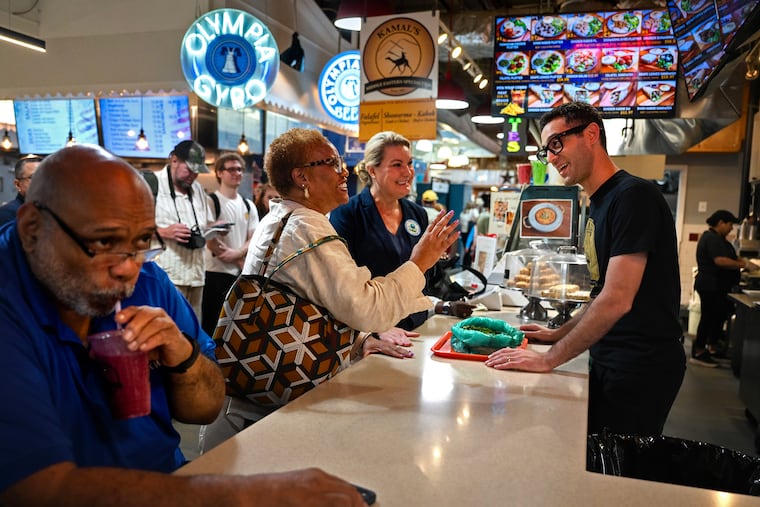
The Reading Terminal Market is often bustling with voices and populated hallways. But on Monday, the real motion was behind the scenes, between trash cans and scraps.
After two years of diverting as much food waste from landfills as possible, the market has managed to keep 1,045,931 pounds of organic waste from the trash fields.
A pilot program began in April 2024, through a partnership with the composting service Mother Compost, and 10 of the market’s sellers. Now, as part of the celebrations for the nation’s 250th, the Environmental Protection Agency’s Feed it Onward program is highlighting initiatives that ensure food resources are redistributed instead of wasted.
EPA officials toured the market’s facilities on Monday, getting a behind-the-scenes look at how the composing and other recycling and reuse programs work.
“We are not just one organization championing for change, but more than 80 small, family-owned businesses under one roof who have the potential to make a difference,” said Annie Allman, Reading Terminal Market CEO and general manager.
Kamal’s Middle Eastern specialties is one of them. Its owner Adham Albarouki’s has been in the market for 45 years and sees in the composting program a way for his juice bar to give back.
“We produce about 15 to 30 pounds of waste per day, being part of something a little bit bigger here we can contribute a lot more,” Albarouki said. “It’s something to give back to mother nature.”
The process is easy, Albarouki said. He or his workers run the vegetables and fruits through juicers. The juice goes to the customers, while the peels, fiber, and leftover organics are taken to a merchants-only area.
Behind closed doors, 20 Mother Compost green trash cans are lined up, waiting to be fed scraps.
Miguel Servellon, the market’s assistant general manager, runs a tight machine to ensure the compost doesn’t get contaminated.
On Monday morning the cement room smelled like orange peels, as one trash can had already been loaded with the citrusy scraps ahead of an early pick up, Servellon said.
Fruit and vegetable peels, meat, eggs, cheese, milk, coffee grinds, and even fish all go inside the green containers.
“The smell is not so inviting, occasionally it can be a challenge,” Servellon said.
The organic waste is layered on top of each other.
Mother Compost takes as much as 1,300 pounds of composting per pickup, which happen three times a week, Servellon said. The waste then goes to be repurposed at Linvilla Orchards, in Delaware County.
But organic waste is not the only thing being recycled.
At the other end of the room, two big gray containers sat full of vegetable oil waiting to be picked up by LifeCycle Renewables.
Since 2022, the market has gathered 100,209 gallons of oil from sellers to be used as heating fuel in commercial buildings, Allman said.
And since 2023, the nonprofit Sharing Excess has been working with the market’s sellers to redistribute surplus food.
Earlier this year, Sharing Excess got its own fridge inside the market where sellers can deposit their donations to be redistributed in places with food insecurity.
“We come by five days a week, and our driver weights them and tracks who donated each so we can give them their proper tax credit,” said Braden Walper, Sharing Excess retail rescue manager.
The food goes to stock food pantries and provides as much as 100 meals a day for people experiencing food insecurity, Walper said.
These Reading Terminal Market programs are crucial to inspire businesses across the region to reuse and recycle their food, said EPA Mid-Atlantic regional administrator Amy Van Blarcom-Lackey.
“More than one million pounds diverted from landfills is an impressive milestone, but what really stands out to me is how the merchants made these practices part of their everyday operations,” Van Blarcom- Lackey said. “It’s important to continue because it’s good for the community and better for the environment.”
Inquirer Food Festival
Get your ticket to Philly’s ultimate food party! Join top Philly chefs and bakers for one unforgettable day of food.