A fugitive pornographer, his troubled son, and missing women: 5 takeaways
Despite the disturbing evidence found in the Olney home, the investigation is clouded by the unusual lives and predilections of Eugene Horsch and his late father, Raymond.
What started as a routine car stop in Philly quickly evolved into a mystery concerning the fate of two missing women — and a boarded-up home in Olney that contained a confounding set of clues.
In June, police encountered 44-year-old Eugene Horsch with a woman near Independence Mall, carrying drugs, illegal guns, and fake IDs. One of them featured the name of Blair Tonzelli, a woman who has been missing for three years.
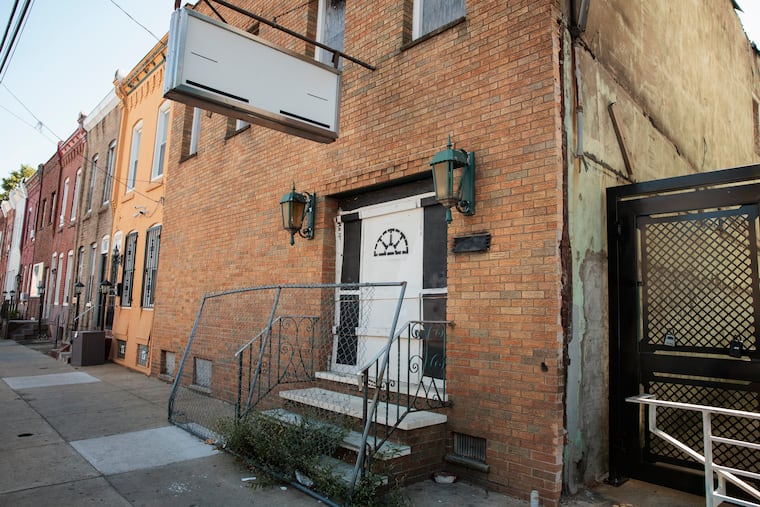
That led local and federal investigators to Horsch’s twin house in Olney, where they unearthed an array of disturbing evidence, including vats of chemicals, notes describing serial killings, and Tonzelli’s bank cards. Tonzelli’s case also resurfaced questions about Amy McHale, who was last heard from at the Olney house in 2016 and is the ex-wife of Eugene Horsch’s deceased father, Raymond “R.C.” Horsch.
Eugene Horsch remains in jail on illegal gun and drug charges, as well as one count related to carrying fake federal law enforcement credentials. No bodies have been found, and police have not charged him with any crimes related to the women.
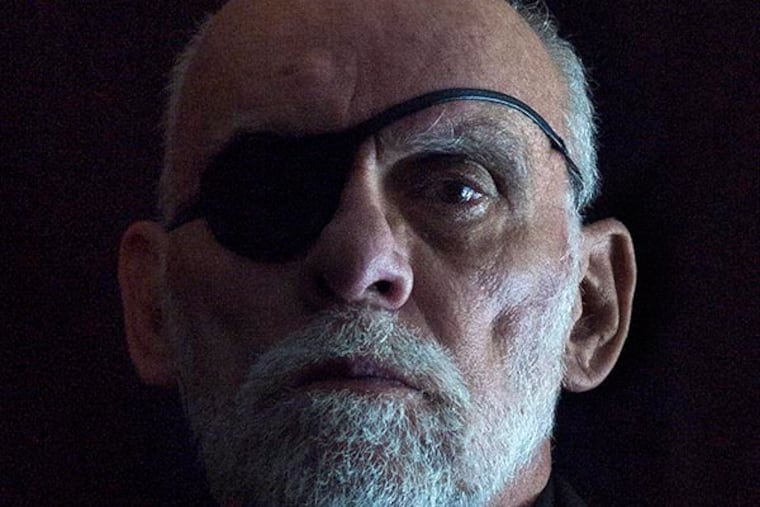
Despite the disturbing evidence found in the Olney home, the investigation is clouded by the unusual lives and predilections of Eugene Horsch and his father, who was an erotic filmmaker and photographer obsessed with depicting sexualized violence against women in addiction — many of whom he lured to his home studio with drugs.
To unravel the backstory behind the case, The Inquirer interviewed more than 30 people familiar with the Horsch family, reviewing hundreds of pages of police documents, court records, newspaper clippings, and archived interviews. The result is a portrait of a thrill-seeking criminal artist and his son as they navigated seaside New Zealand, rural Bucks County, and the drug markets of Kensington.
Here are five takeaways from our weeks of reporting:
Raymond ‘R.C.’ Horsch’s directorial debut was a violent pornographic film financed by a Philly mob associate.
Raymond Horsch was a bookish engineer from Bucks County who underwent a sexual awakening during the so-called Golden Age of Porn in the 1970s. His 1973 film, The Erotic Memoirs of a Male Chauvinist Pig, was financed by Philly mob associate Sam “The Barber” LaRussa, a nightclub owner and friend of Nicodemo “Little Nicky” Scarfo, who went on to run the Philadelphia-area Mafia.
The low-budget movie depicts rape, bondage, underage sex, and the titular character’s violent relationship with a drug-addicted woman.
These hypersexualized themes would become a constant fixation of Raymond Horsch’s later life and artistic works.
Raymond and Eugene Horsch have long criminal histories.
In the late 1970s, Raymond Horsch was busted for printing counterfeit money, and then a few years later for running a methamphetamine lab. He skipped bail after the second arrest and absconded to coastal New Zealand after stealing the identity of a real-life chemist.
He married a longtime girlfriend, who gave birth to his son, Eugene, while Raymond Horsch was an international fugitive. Raymond Horsch worked in the port city of Timaru at a chemical plant thanks to his adopted alias and a forged Stanford diploma.
He was ultimately caught in New Zealand with five fake passports and fled back to the U.S. He was apprehended in Florida and returned to Philadelphia, where he was sentenced to federal prison.
Raymond Horsch recruited dozens of women in addiction by trading drugs if they agreed to appear in his pornographic art.
Between stints as a porn actor and director, Raymond Horsch searched the streets of Kensington for women in addiction to use, in his description, as models. He asked one of his son’s high school friends to star in one of his films. He recruited another woman with a classified ad for a housekeeper. He offered them cash and drugs in exchange for sexual favors and to appear in films or photographs, which often featured simulated acts of violence or death.
After he was arrested in the 2000s on another drug charge, he lost his home in Chalfont. Both father and son moved into the home in Olney, which they had inherited from relatives, and Raymond Horsch allowed some of the women he recruited to reside in the home, sometimes for years.
At least five women connected to Raymond Horsch died of accidental drug overdoses.
Krista Killen lived off and on in the Horsches’ Olney house from 2016 until her death last year at the age of 47. Killen, who had been estranged from her family, told friends that Raymond Horsch was never violent toward her and that she cared deeply for him.
But she told friends that she was scared of Eugene Horsch. She told two friends that one night, she was asleep when Eugene shattered her bedroom door and threatened to kill her. Raymond, then 80, had to pull his son away.
In late 2024, within a span of a few months, doctors had to amputate part of Killen’s leg, her beloved tabby BabyCat died of a brain tumor, and Raymond Horsch died of a lung condition, leaving her alone in the Olney home with Eugene. Three months after Raymond’s death, Killen died of an overdose. Eugene Horsch shared the news on Killen’s own Facebook page. He wrote that he and Killen were in love and had planned to get married, something her friends said was not true.
» READ MORE: A woman missing since 2016 had close ties to the Olney house that’s now the target of a massive investigation
Raymond Horsch said his art blended facts with his violent fantasies, and he wanted people to wonder what was true.
Investigators are reviewing Raymond Horsch’s films and self-published novels, some of which depict various ways to murder women. He casts himself in some of the stories as an “empathetic” serial killer who preys on addicted women and kills them to end their suffering. The books are billed as true stories that include both real details from Horsch’s improbable life story and passages that he concedes are fictitious — noting that he wanted readers to parse fantasy from reality.
In a scene from one of his novels, Raymond Horsch describes how he dissolved a body with chemicals in a bathtub. Is it just another of his violent fantasies? Complicating that question is the fact that a woman told investigators that Eugene Horsch told her he knew how to dissolve a body with chemicals, making it small enough to flush down a toilet.
Read the full story here.

The Inquirer’s journalism is supported, in part, by the Lenfest Institute for Journalism and readers like you. News and editorial content are created independently of The Inquirer’s donors. Gifts to support The Inquirer’s high-impact journalism can be made at inquirer.com/donate. A list of Lenfest Institute donors can be found at lenfestinstitute.org/supporters.