Surprised by the 15% increase in property taxes in Kensington? You shouldn’t be.
Community members and neighborhood organizations have long warned that both inaction and actions taken by the city have been driving the displacement of existing residents.
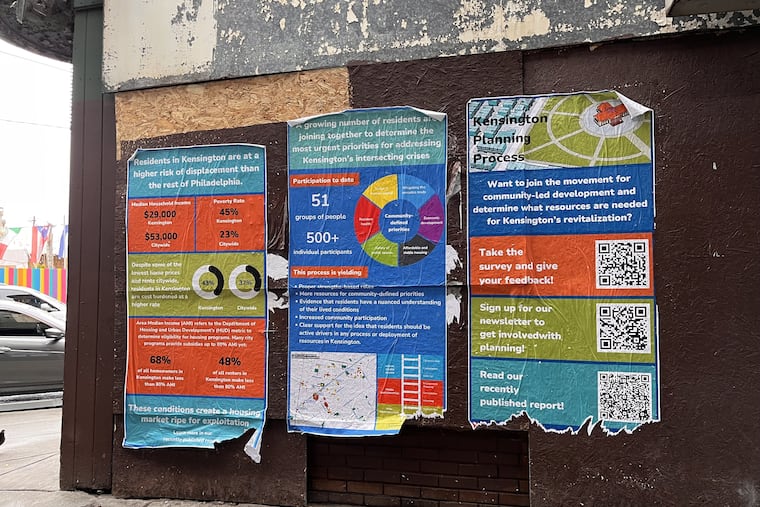
Last month, housing valuations, and therefore property taxes, increased by 3% across the city. Valuations in Kensington, however, went up an average of 15%, with Mantua, Grays Ferry, and Kingsessing not far behind.
What do all of the latter communities have in common? They are all under pressure from rapid gentrification, and they are all communities where residents are the least equipped to pay the property taxes associated with the increased home valuations.
Response across the city was surprise — as if the warning signs had not been there all along.
Some people have remained willfully ignorant about the pressures of gentrification in Philadelphia’s neighborhoods because they don’t want to acknowledge that long-standing city programs were not built to prevent this moment from occurring.
» READ MORE: Current plans to ‘fix’ Kensington won’t work. Here is what will. | Opinion
Another set of people are feigning surprise, but are not really surprised at all, because this was the plan all along and part of the displacement strategy of “fixing” these neighborhoods.
And then there are those who are honestly surprised because they simply weren’t paying attention.
While we have acted surprised, we have missed the point that the system that created these conditions is operating exactly as it is intended to function, and that without addressing the city’s reliance on property taxes and its detrimental impact on those least able to pay, we won’t find a way forward and dangers foretold will progress.
Challenges foretold
We should not be surprised.
As a Kensington resident, and the executive director of New Kensington Community Development Corp., I — along with many others — have been sounding the alarm, ringing the warning bells about the likely displacement of long-term community residents for years.
In 2018, I made clear to Philadelphia’s managing director that without a clear plan that addresses the unsheltered population in Kensington, there would be both long- and short-term impacts for the greater community as we went from “camps of unsheltered citizens to the construction of $369,000 homes mere feet away.”
The cycle repeated again in 2024, with new public officials in charge, embarking on their latest plans to “fix” Kensington.
After a period in 2017-2018 that left Kensington ripe for massive investment by prospectors and developers, I warned in an opinion piece in The Inquirer that without a greater plan cocreated with the community, “Kensington will be turned over to privatization and the free market — neither of which have ever been kind to people of color and those with limited means.”
In 2024, while the opportunity was there, it was critical that “any effort to fix Kensington should not just be about eliminating the drug economy or ending Kensington as a containment strategy for the city; it should be about preserving a community,” and that “if none of these answers exist, the second stage of displacement — this time of long-term residents — is already underway” and that “without a greater plan to address the long-term needs of residents that’s cocreated with the Kensington community, my neighbors and I could be cheering our own demise.”
» READ MORE: It’s essential that Mayor Parker’s H.O.M.E. plan prioritize resources for ‘people-first’ housing | Opinion
In 2025, I warned of not only the corporate commodification of our community’s housing stock and the detrimental effects that has on communities, but also how in communities such as Kensington — with high rates of poverty and old housing stock — we would see increases in purchases of homes by private equity. Those would then be turned into rentals where new corporate landlords would evict tenants from previously owner-occupied homes at three times the rate of small investors.
At the time, my organization saw that 70% of the more than 500 evictions we had prevented over the last few years were in properties owned by LLCs — many of which were from out of state.
Others issued warnings, too.
In 2025, the Reinvestment Fund reported that corporate investors are most active in Black and brown neighborhoods where they are responsible for more than one in four residential purchases, therefore “creating more extraction through landlords rather than creating and maintaining wealth among homeowners.”
Missed opportunities, new crisis moment
Because we did not act when we were warned or take advantage of the opportunities presented to us, the system is working exactly as it was designed to function — and that has created additional pressures and crises.
Rather than addressing the core problems of poverty and extraction from our most vulnerable, we chose single-issue approaches. How will someone who earns the area median income in Kensington — $30,000 a year — pay for a 15% increase in property taxes, while also trying to survive after cuts to Supplemental Nutrition Assistance Program benefits, to Medicaid, and an underfunded transportation system?
Longtime residents of Kensington are nothing if not resilient, but they cannot absorb injury after injury to their already difficult daily circumstances. After this property tax increase, more of them will find themselves considering moving out of their homes.
Like my neighbors in Kensington, I receive five or six calls, emails, and texts every week asking to purchase my home. As the Reinvestment Fund indicated, communities under pressure — like mine — are at the greatest risk from outside investors.
A different path forward
I acknowledge we have a number of existing programs to provide relief to homeowners feeling the pressure of increases to property taxes, such as the homestead exemption, the Longtime Owner Occupants Program, tax freezes, and filing appeals. These programs should be utilized, modified, and expanded, but none of them will solve our greater problems.
We have left housing solutions to the free market, where the goal is to maximize profit and therefore displacement.
We need to address the city’s overreliance on, and benefit from, the $2 billion in property taxes, much of which is also levied from the most vulnerable residents of the city — and we need to develop a comprehensive affordability plan that is cocreated with the community and those actually implementing anti-displacement strategies.
There are a variety of approaches we can take that mitigate impacts on its low-income residents, and that will counter the rush to displacement:
Address poverty by advocating for the state to finally adopt an increase to the minimum wage so that our working poor are less exploited for their labor, and so they have the money to address these property tax and social safety net changes.
Continue exploring and implementing some of the emergent basic income programs that have shown success.
Expand home repair programs such as Built to Last, which make necessary repairs to prevent homeowners from selling their homes to investors, as well as making their homes more affordable through green upgrades.
Utilize city revenue that doesn’t burden the most vulnerable and truly makes a difference to the budget. If 10,000 homeowners in upper Kensington all receive an annual increase of $250 to their property taxes, the burden is significant to low-income residents, yet only generates $2.5 million for the city.
Eliminate the recent reductions in the Business Income and Receipts Tax (BIRT), which cut as much as $300 million annually in revenue for the city.
Hospitals, universities, and churches should pay property taxes, too. More than a third of all of the property in the city is owned by hospitals, universities, and churches that don’t pay property taxes due to their nonprofit status while accumulating massive endowments and limiting access to healthcare as they shift from serving as charitable organizations to corporations. As a result, we receive only about two-thirds of the possible revenue from property taxes, leaving at least $1 billion on the table each year.
The wealthiest should pay their fair share. Philanthropy is part of the social contract within capitalism that tries to maintain a balance between extraction and a point of collapse of the host, the city. It is clear the extractors must do better. We allow people to profit immeasurably from others’ labor and consumption as long as they give pennies back on the dollar. Philanthropic entities are only required to, cumulatively, give 4% of what they have gleaned from earned and unearned income sources to recipients of their largess. It is not enough. The host is not going to survive; the contract has been broken.
We are currently at the front end of the budgeting season, when we have the ability to use our collective brain power to develop and implement a strategy that will prevent anyone from ever having to say “I told you so” again — and for residents to not be victims of the shortsightedness of the city they reside in.
I have just identified billions of dollars in revenue that does not come from the city’s most vulnerable — and there is much more than what I quickly listed. I write this as an invitation to work with others so we can collectively attack the disease of willful ignorance and the displacement of our most vulnerable with a cure of cocreated solutions.
At this moment of surprise, despair is not a strategy — and change is possible. We must have the courage to share or take the power necessary to implement these very actionable solutions.
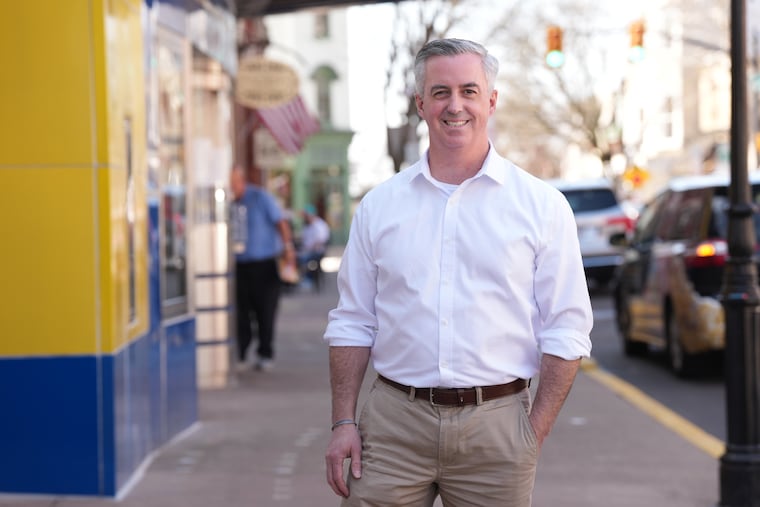
Bill McKinney is a Kensington resident and the executive director of the New Kensington Community Development Corp.