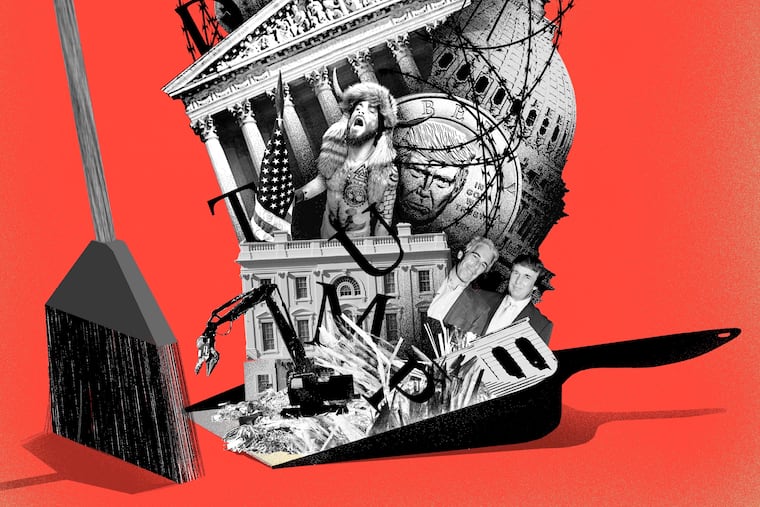
Trump’s tariffs prove even Canada can’t afford to be nice to the United States anymore | Editorial
As the president’s costly and counterproductive trade war squeezes our northern neighbor, Prime Minister Mark Carney’s defiance is an example for other world leaders.
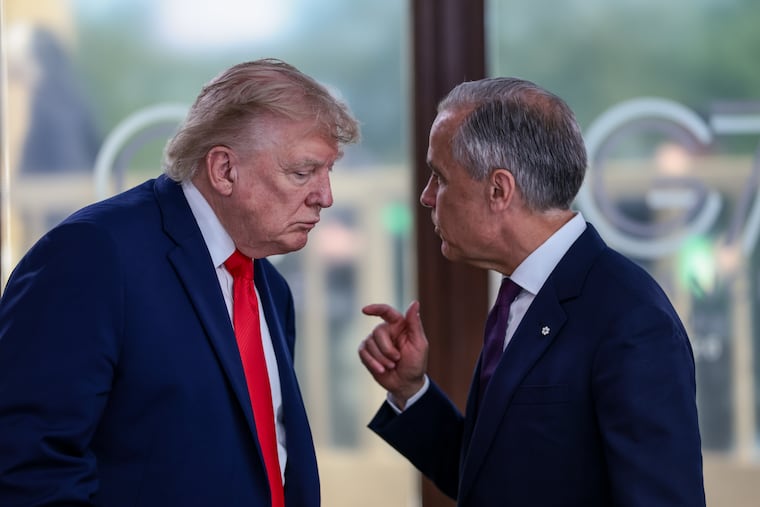
It fell to Canada, a country famous for friendliness, to demonstrate the limits of an age-old friendship with the United States. After a decade of dealing politely with President Donald Trump’s manic ricocheting between trade agreements and trade warfare, supplies of northern niceness are sorely depleted, and rightly so.
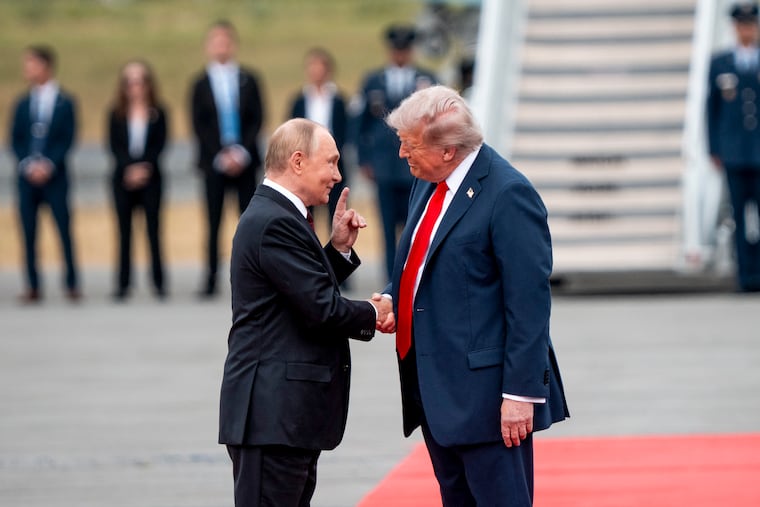
Prime Minister Mark Carney’s defiance in the face of his neighbor’s unprovoked bullying should inspire other traditional American allies to abandon appeasement and stand up for their values, the only response to Trump that has ever been effective.
Negotiations to avert the president’s latest threat to impose punishing tariffs against one of our largest trading partners broke down last week after Canadian officials withdrew from the talks. Already contending with an untrustworthy U.S. government whose “signature is written in pencil,” as Carney put it, Canada appears to have been pushed too far by inconsistency within the Trump administration and demands that infringed on its sovereignty and identity.
American officials reportedly tried to dictate restrictions on Ottawa’s trade relations with other countries and limit requirements to comply with Canada’s official recognition of French as well as English, one of its most sensitive domestic political issues. Carney instead opted to “hit back” against Trump’s 50% taxes on Canadian whiskey, plywood, and other goods with levies on American dairy, steel, and appliances, among other exports.
» READ MORE: Shapiro deserves kudos for data center regulation efforts. But he can’t do it alone. | Editorial
So has Trump managed to end more than a century and a half of peaceful trade relations in favor of costly and counterproductive trade hostilities? “You’re at war when you’re attacked,” Carney said last weekend, “and we got attacked.”
It’s a preposterous turn of events by any rational analysis.
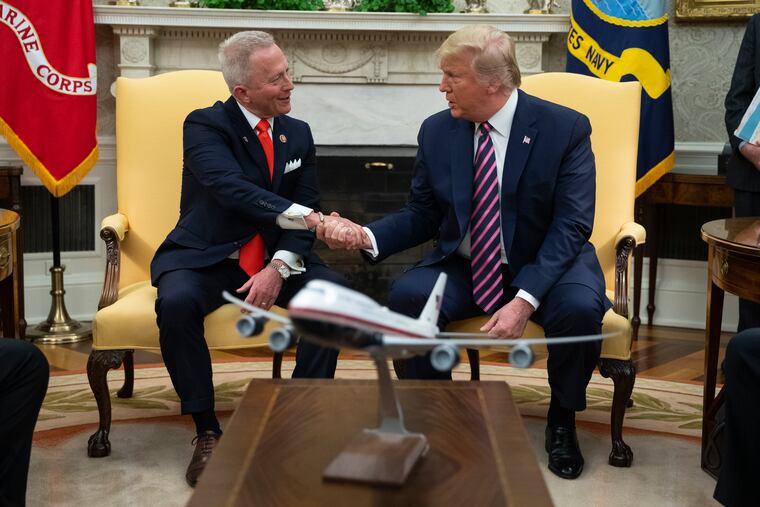
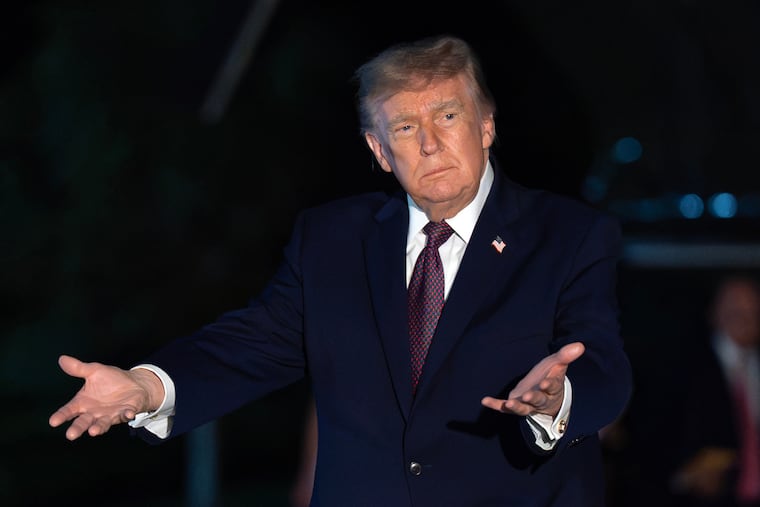
Having endlessly demagogued the North American Free Trade Agreement (NAFTA), Trump renegotiated and rebranded it in his first administration as the United States-Mexico-Canada Agreement, which he declared “the largest, fairest trade agreement ever achieved.” Having never been particularly hung up on consistency or coherence, he proceeded to violate his own NAFTA 2.0 soon after returning to the White House, threatening Canada with tariffs over fentanyl smuggling, wildfire smoke, and other nonsensical grievances. He imposed the latest import taxes after Canada had the temerity to retaliate against U.S. tariffs levied last year.
Trump’s repeat economic assaults on the Great White North are at least partly a manifestation of his antiquated authoritarian obsession with territorial expansion. He has menaced Canada with annexation, griping during the latest standoff that it can’t enjoy the free trade benefits a U.S. state does while refusing American dominion. As is typical of his blinkered ideology, this completely misses the reality that the two countries’ more than $700 billion trade relationship is by definition mutually beneficial, a basic economic principle he seems incapable of grasping.
» READ MORE: Trump’s war of choice in Iran is straining the armed forces for nothing | Editorial
Carney, by contrast, has been more perceptive than most world leaders. While other longtime allies have tried to preserve good relations through submission, the Canadian prime minister understood that those alliances have effectively ended.
In January, he noted that the world is “in the midst of a rupture, not a transition,” one that his and other less powerful countries must recognize and adapt to. His insight was probably informed by the circumstances of his own election, which Trump inadvertently assured by angering Canadian voters, causing a surge of support for a liberal expected to be less friendly to the president. Carney continues to give his outraged public what it wants.
The ensuing standoff could make Canadians’ lives more difficult, but it will also hurt Americans already weary of tariff-fueled inflation, which is the opposite of what Trump’s campaign promised. Given the potential repercussions for the midterm elections, the president could soon face more opposition not just from Canada’s government, but also from ours.