I went to the Flight 93 memorial and witnessed a spirit of unity that’s hard to find elsewhere
On the 25th anniversary of 9/11, Americans of all political persuasions came together near Shanksville, Pa., to mourn — a reminder of how rare that kind of cohesion has become.
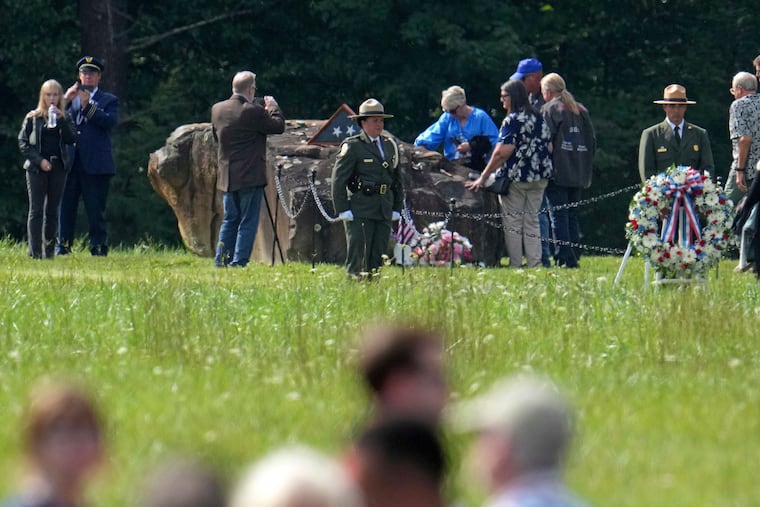
STOYSTOWN, Pa. — There was almost no shade for the thousands who gathered Friday at the memorial plaza near the field where United Airlines Flight 93 crashed on Sept. 11, 2001. The sun was merciless as Red Cross and Salvation Army volunteers handed out water, and people sought refuge amid a few trees by the side of the road.
But along with the heat, attendees felt something that has become quite unfamiliar for many Americans 25 years after 9/11: unity.
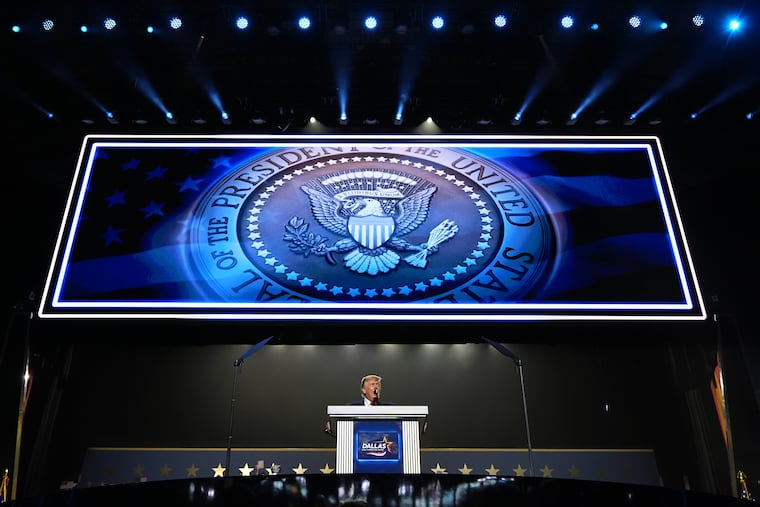
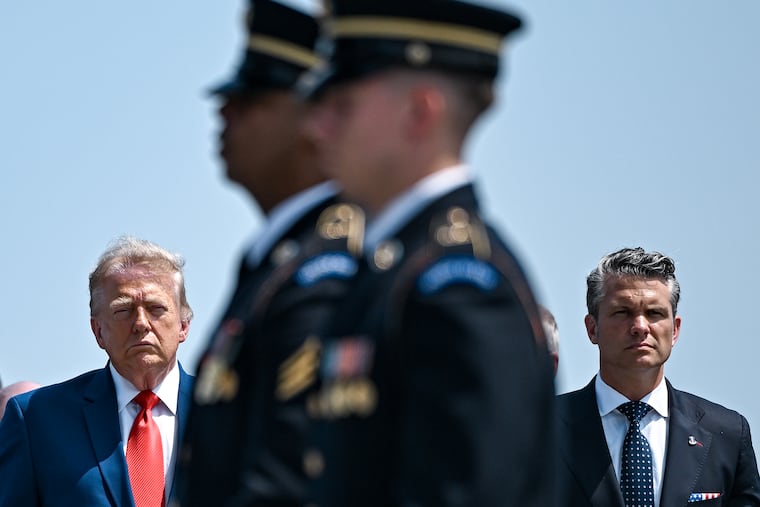
While the spotlight was on larger events in New York City and Arlington, Va., they saw some of the conflicts we’ve all grown accustomed to. President Donald Trump refused to join his predecessors at ground zero, reportedly because he wouldn’t be allowed to speak. He opted for the Pentagon remembrance instead, where he and Defense Secretary Pete Hegseth gave speeches trying to tie the Iran war to the attacks of a generation ago.
In Lower Manhattan, former New York City Mayor Rudy Giuliani — who had called for current Mayor Zohran Mamdani to stay away from the event, claiming Muslims “want to dominate us” — at least had the courtesy to shake Mamdani’s hand at the ceremony.
None of that animus seemed to be present in rural Pennsylvania.
» READ MORE: In a deeply divided nation, remembering a time of unity | Editorial
The speeches by senior National Park Service officials, Gov. Josh Shapiro, and Secretary of the Interior Doug Burgum were civil and shared a common theme: The heroism of the passengers who fought back against their hijackers. Flight 93 never made it to its intended target, believed to be the White House or the U.S. Capitol. Instead, it crashed into a desolate field about 90 minutes outside of Pittsburgh.
There was no ego on display, no inflammatory rhetoric — Democrat Shapiro and Republican Burgum even stood together at the wreath-laying ceremony in a rare show of political unity. The only comment that could be read as political came from Stephen Clark, superintendent of the National Parks of Western Pennsylvania and thus responsible for the Flight 93 memorial, when he reminded people that “history is shaped not only by the powerful, but by everyday individuals who decide to act with courage.”
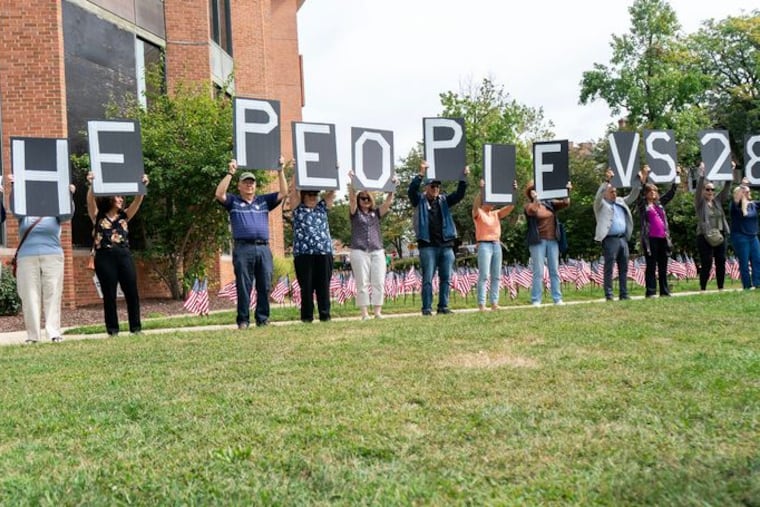
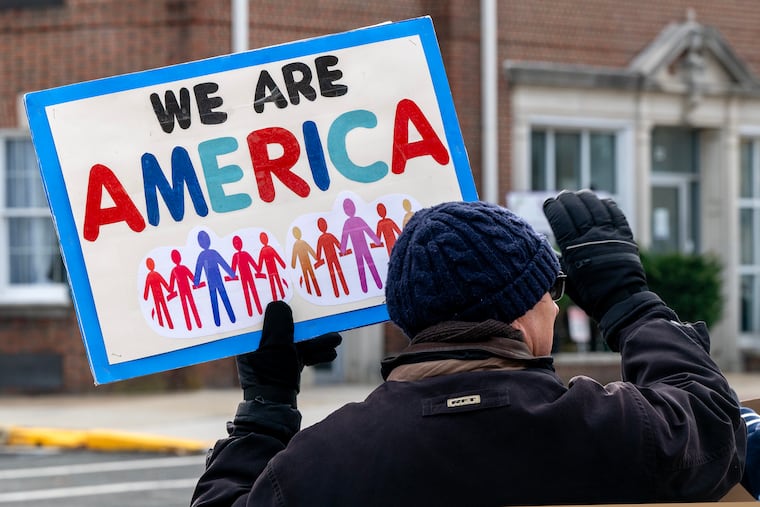
In keeping with that sentiment, it wasn’t just those on stage who kept a unifying tone, as people from all walks of life, diverse ages, and across political persuasions came together in Stoystown to mourn and remember.
I spotted a lone MAGA hat, and spoke with a woman who claimed 9/11 had been an “inside job,” arguing it was only logical because “the CIA killed JFK, too.” However, there were no loud political outbursts, and in talking with people, the same sober sentiment as from the official speakers was evident.
Tom and Ryan, who preferred not to share their last names, were among the millions of Americans who learned of the attacks in school and watched the second plane hit the south tower in their grade-school classrooms. While they said they consider themselves conservatives, they felt strongly about not making the memorial a political battleground.
» READ MORE: After 25 years, hers is the 9/11 story I can’t let go of | Paul Davies
Speaking to other visitors, a few made comments about the president or Democrats, but the major sentiment surrounding the remembrance stayed clear. They were not there to argue about politics. People were there to remember those who perished on 9/11, particularly the heroes of Flight 93.
Stoystown was not just a contrast to what we regularly see across the U.S.; it also reminded me how difficult it is to come together even in times of tragedy. In my native Germany, recent terror incidents include the 2016 attack at a Berlin Christmas market by an Islamic extremist, a similar attack in Magdeburg in 2024 by a Saudi Arabian refugee (who described himself as an “ex-Muslim” and expressed far-right sympathies when questioned by authorities), and, most recently, an attack on the Berlin Pride parade in July, this one again being linked to Islamic terrorism.
While decried broadly, none of these events managed to create the unity I felt in Stoystown. On the contrary, every incident in Germany seems to spark new debates about former Chancellor Angela Merkel’s policy of welcoming migrants during the refugee crisis of the mid-2010s. Even years later, populist parties and their supporters make it mostly about Islamophobia and dividing rhetoric instead of uniting to mourn as one people.
These ugly, divisive sentiments are present in the U.S., of course, but at least for one day in a field in Pennsylvania, the memory of 9/11 still strengthens a bond that has not been erased by terror, populism, or party politics.
Wim Orth is a journalist with WELT in Berlin and an Arthur F. Burns fellow at The Inquirer.