Violence toward journalists is a symptom of a terminally ill U.S. democracy
From Trump’s unhinged outbursts to calling the cops on a student journalist, a free press dies in tandem with the American Experiment.

Some days it’s hard to know what’s worse for America: the wars that Donald Trump is losing — most notably in Iran, as U.S. motorists pay painful reparations at the gas pump — or the ones that he’s winning, like his onslaught against a free press.
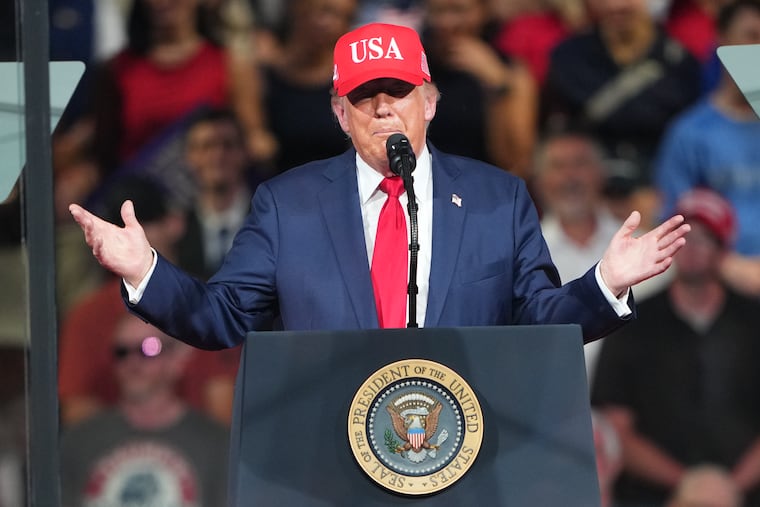
This February will mark 10 years since the president first declared that journalists are “the enemy of the people,” and he has spent much of the last decade making good on his threat — in constant lawsuits, on wielding federal licensing power like a nightstick, in criminal investigations, and in verbal assaults on journalists that have escalated to lunging.
Americans are sadly used to such appalling behavior at the White House, but what’s much more alarming is the countless ways that hostility, contempt, and Trump-flavored threats to a free press have filtered down to town halls, college campuses, the football field, or other mileposts of Main Street U.S.A.
One glaring example: Tensions between student journalists asking the right questions about labor disputes and other problems at Southern Illinois University at Edwardsville and the school administration escalated to the point where officials demanded to sit in and monitor interviews by reporters for The Alestle. When the paper’s editor complained in an email, a top university official called the cops and triggered a university police investigation. SIUE’s Nicole Franklin had reported that a journalist questioning school policy “has become an unsafe environment for me.”
Another: A bad on-the-field encounter between ESPN sideline reporter Holly Rowe and Texas football coach Steve Sarkisian was made much, much worse when, a) some knucklehead on social media used AI to alter the footage to end with the Longhorns’ coach slapping Rowe and, b) their highly touted quarterback Arch Manning told a news conference he found the video “hilarious,” prompting laughter.
The fact that Manning later apologized for the incident, and that the Edwardsville cop who had to go out and interview Alestle editor Dylan Hembrough was embarrassed by the probe, only means that respect for the First Amendment and the humans struggling to uphold it 235 years later is hanging by a thread.
The stinking fish at the head of all this — Trump — hasn’t physically attacked a White House reporter ... yet. But he sure came close last weekend, lunging at ABC News’ Rachel Scott as she tried to ask the president about his harebrained scheme to send every American a $5,000 check, wagging his finger and screaming, “Not you!”
But out in the American streets, actual violence — as well as unconstitutional arrests and other restraints — is happening on a routine basis. During Trump’s first year back in office, 2025, the Freedom of the Press Foundation found a massive upsurge in assaults on journalists. It said the 170 incidents was roughly equal to the prior three years combined. The attackers ranged from federal immigration agents to riot cops under the control of big-city Democratic mayors.
But things were deteriorating well before Trump became the 47th president on Jan. 20, 2025. The year before, a survey of working U.S. journalists by the International Women’s Media Foundation revealed that 36% have experienced either physical threats or actual violence.
I’m publishing this piece on Constitution Day, and a nation that has long touted the guarantees of its then-landmark 1791 First Amendment as proof of American Exceptionalism ought to be ashamed that our current press freedom ranking from Reporters Without Borders has plunged to 64th out of 180 nations, the lowest ever.
But I’m also writing this column now because, a) I’m terrified that the climate where everyone laughs at AI videos of a journalist getting slapped is the prelude to somebody getting killed in the real world and, b) I, and it’s safe to say most of my colleagues, feel an increasing climate of contempt toward just the day-to-day stuff of answering a reporter’s questions or providing basic information about how our government is spending our tax dollars or policing our streets.
I’ve been a full-time journalist for 45 years now — a half-century if you throw in high school and college — and the changes that I’ve witnessed over the course of a lifetime have been remarkable, epitomized by the evolution from phone books that listed almost everyone’s number to call-screening and spam filters that make it virtually impossible to connect with people and tell their stories.
When they threw me onto the night shift at the Washington (Pa.) Observer-Reporter in September 1981, the job consisted of calling hospital ER nurses who’d happily volunteer the names and conditions of that night’s car-crash victims, and then police desk sergeants who’d chit-chat and tell you about any major crimes.
It’s good, actually, that HIPAA was enacted and medical information can’t be volunteered to the public, but it’s bad that police departments — whose track record for honesty runs neck-and-neck with the current administration in the White House — now dole out as little information as possible through stage-managed press releases.
I thought a lot about those hazy days as a rookie reporter out in western Pennsylvania this summer as I tried to report on local police cooperation with federal immigration agents, on this side of the state. Police chiefs and township officials batted 1.000 when it came to not returning phone calls or emails. In person, they insisted the federal government told them not to divulge how much of their taxpayer-funded time is spent on busting immigrants instead of protecting neighborhoods.
Whatever your personal opinion toward journalists, the arrogant and autocratic stance of today’s public officials is spreading to what they think of you, the everyday citizen, and your right to know. This was summed up this week by the police chief of Pitcairn, Pa., who after listening to public complaints that his 287(g) cooperation pact with U.S. Immigration and Customs Enforcement was reached without a council hearing or vote, said “I’ve been listening to this crap all night.”
A couple of important points: Like so many of my colleagues, I’ve felt the growing threats firsthand, from various efforts on social media to map where I live or describe my house, to the time someone drew a bullet hole on a sheet of paper and mailed it to my home.
But, as a white man, I know things are many, many times worse for my friends and colleagues who are Black or brown or women or in the LGBTQ community.
It’s no accident that the worst invective gets slung toward a female sideline reporter like Rowe, or that Trump goes out of his way to abuse Black women journalists like ABC’s Scott. It’s impossible to draw the boundaries between media hatred and the racism and misogyny that fuels American fascism. That also clear in the Trump regime’s unconscionable targeting of on-the-ground journalists from immigrant communities like Nicaraguan exile Luis Galeano, detained this week by ICE in Florida.
It’s all connected.
Second, my love for journalism and the role we must play in a healthy democracy is exactly why I also believe the media deserves tough scrutiny for the many times that we get it wrong. (And I have my receipts from CNN, the New York Times, Washington Post, etc., etc.). The back-and-forth of media criticism is also the mark of a healthy society in every way that anti-media violence and government officials’ contempt for your right-to-know is not.
We can acknowledge that we live in a world where our privacy is under constant assault and needs to be protected — yet also believe at the same time that there’s no excuse for government officials or police to hide information that needs to be in the public domain, such as whom they’re arresting and why.
» READ MORE: In LA, police nightsticks are clubbing press freedom to death | Will Bunch
That requires a vibe shift from all of us — whether it’s not laughing at a video of a woman journalist getting slapped, or not dialing 911 when a journalist asks a well-intended question. It means privileged white reporters need to object and walk out of the room the next time Trump verbally assaults a Black woman reporter.
But that also means we need to be as vocal in praising the times that journalists get it right — ProPublica’s scoop about Vladimir Putin’s pal paying for the president’s son’s wedding springs to mind — as we are in carping at the many peccadillos of elite media.
What’s scary is that all of this is happening at a time when vulture capitalists are cutting news orgs to the bone, especially in rural and small-town news deserts. The fewer working journalists that are left, the easier it will be to crush what remains.
That’s why I was so taken by what a Lexington, Ky. city council member, Emma Curtis, just said about destructive layoffs at her local paper by the corporate pooh-bahs at McClatchy.
“All of us who sit up here have been held accountable at one point or another by the Herald Leader,” she said. “Not everything that they have ever written about me is stuff that I’ve liked, but our community is better for it. We are smarter, more informed citizens because of it.”
I wish more of our leaders — and heck, more regular folks — would talk about this more often. Any attack on a journalist — whether it’s physical or verbal or some ridiculous AI video posted on X, and whether it comes from the president of the United States or a college quarterback — is ultimately an attack on our sick, barely breathing democracy.

Sign up for the Will Bunch Newsletter