Krasner hasn’t said a word about a growing exoneration controversy — but his own court filing does
The 47-page filing paints a picture of a district attorney unbowed by the controversy that has roiled his office.

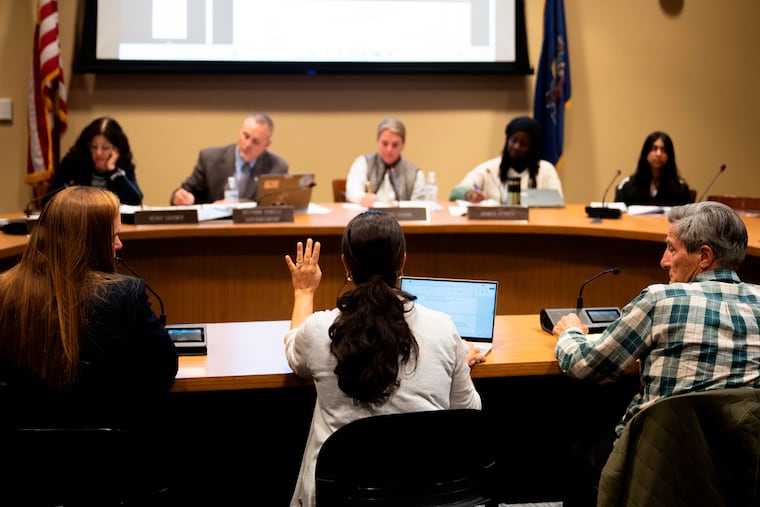
District Attorney Larry Krasner didn’t attend the dramatic three-day evidentiary hearing recently where four supervisors from his office testified about his conflicts of interest, job threats, and other inappropriate steps, following efforts to overturn a murder case.
But Krasner’s take on the imbroglio can be found throughout a recent 47-page federal court filing by his office.
The filing paints a picture of a district attorney unbowed by the controversy that has roiled his office. Krasner’s handling of the exoneration case has prompted one prosecutor in his office to step down following what they described as a loss of confidence in Krasner’s leadership. A federal judge presiding over the case also voiced concern about possible obstruction of justice, perjury, and criminal conspiracy.
Despite admitting “serious errors” in the original motion that said Dennis Johnson was entitled to a new trial, the filing contains no contrition or introspection by Philadelphia’s DA.
In the world according to Krasner, he’s right and everyone else is wrong.
Krasner’s worldview is hardened by his decades as a public defender and criminal defense attorney before getting elected district attorney in 2017. In the second paragraph of the filing, Krasner’s office blames prior district attorneys for violating “their constitutional duties” to secure convictions.
The filing makes no apologies for how Krasner’s office handled the appeal by Johnson, who was found guilty of second-degree murder in 2009.
After arguing for four years to overturn the verdict, Krasner’s office did a 180 in June, claiming its initial concession was “legally erroneous” and “not supported by the record.”
The reversal came after U.S. District Judge Paul S. Diamond ordered an evidentiary hearing in May. That prompted supervisors in Krasner’s office to take a closer look at the case, where they discovered “material omissions” in their initial concession claim.
» READ MORE: The day Larry Krasner’s office was put on trial — by his own prosecutors | Paul Davies
The blunder stems from the failure of Krasner’s office to fully investigate Johnson’s appeal and its willingness to go along with the arguments put forward by his defense attorneys.
Here’s the bigger problem: That appears to be the way Krasner’s office has handled other post-conviction cases. Under Krasner, more than 60 people convicted — mainly of murder — have been set free or had their sentences reduced following concessions despite no incontrovertible proof of the person’s innocence.
Instead, Krasner’s office has conceded other cases by not mounting a substantive challenge to the arguments put forth by defense lawyers. In many exoneration cases, defendants claim that their cases were harmed by their own ineffective lawyers or by prosecutors who withheld evidence; the latter, known in legal circles as a Brady violation, constitutes a major breach of the court’s rules.
Full steam ahead
Judge Diamond has yet to decide if Krasner’s office can continue handling Johnson’s case or if it should be turned over to the state attorney general because of the issues aired during the evidentiary hearing.
Regardless of the outcome, Krasner appears determined to keep conceding cases.
“The current [District Attorney’s Office] administration will continue to do its duty under Brady and to self-correct moving forward, regardless of how the instant matter resolves,” the filing said.
The full-steam-ahead approach seems obtuse given the controversy that has engulfed the office’s handling of several post-conviction cases.
In recent months, supervisors in Krasner’s office have been disbarred and suspended for lying in federal court while seeking to overturn the death sentence of a man convicted of killing a couple in their home in East Mount Airy.
In June, the state Supreme Court ordered judges to ask the state attorney general’s office to review any cases where Krasner’s office wants to alter a sentence or overturn a past conviction.
That unprecedented ruling came after the high court found prosecutors in Krasner’s office misled judges in several post-conviction cases. The court said it could no longer trust the word of Krasner’s prosecutors.
Office strife
Amid that major setback came the Johnson case, which has splintered Krasner’s office.
After Judge Diamond ordered the evidentiary hearing in May, Katherine Ernst, the chief of training in the law division, reviewed the initial motion to concede Johnson’s conviction and found multiple errors.
Ernst worked with three other supervisors, Steven Wildberger, David Napiorski and Peter Andrews, who all agreed the motion needed to be withdrawn.
They met with Jaclyn Mason, the assistant district attorney who signed the original motion, and urged her to withdraw the concession and apologize to the judge. Mason argued that her supervisor, Matthew Stiegler, was largely responsible and should also have to sign the motion.
Fearing she would be forced to take the blame, Mason quit in June. That set off a chain of events that exposed the sloppy handling of the matter.
Mason testified in July that Stiegler, the head of the office’s Conviction Integrity Unit, colluded with defense attorneys to develop the legal rationale to have Johnson’s case thrown out.
Mason, who was new to the DA’s office at the time of filing, testified that she took direction from Stiegler who told her if Johnson’s claims were “good enough for the Innocence Project, it’s good enough for me.”
To be sure, Mason bears some responsibility because she signed the motion and failed to fully investigate the defense claims. But her instinct that she would be thrown under the bus proved correct.
The four other prosecutors testified last month that Stiegler proposed reviewing Mason’s other cases to find errors and tell the judge she was a “rogue” actor.
Krasner backed that plan, telling the prosecutors Stiegler had a good idea.
In the end, Krasner’s filing largely blamed Mason and said the judge “should not credit” her testimony.
“Mason signed and filed a brief rife with errors that supported the defense’s request for a new trial,” the filing said. “Mason has admitted that she did not review the relevant records, including the trial transcripts, before supporting overturning a murder conviction; she may have simply cribbed and modified the filings of the defense attorneys.”
The filing said Stiegler “failed” to detect the errors but largely lets him off the hook. Krasner even went out of his way to change a footnote in an earlier motion that initially said Stiegler “edited several drafts” of the original Johnson filing to instead say he “supervised its preparation.” Stiegler remains in charge of the Conviction Integrity Unit even after other supervisors voiced concerns about him.
What conflict?
Meanwhile, Krasner remains adamant his office has no conflict of interest in the Johnson case even after four supervisors withdrew from the case arguing that they and Krasner had conflicts after the internal machinations went from the legal merits of Johnson’s case to the self-interest of protecting the office.
Krasner’s filing waved away their arguments and said the prosecutors who left the case acted “without authority or a reasonable legal basis to do so.” He added that he “did not appreciate” his team’s “repeated, unsolicited, and wavering advice” to refer this case to the state attorney general.
The filing said any potential conflicts have been resolved by Krasner’s recent hiring of an outside attorney, Jean Peters-Baker, a longtime prosecutor from Missouri, to handle Johnson’s case. The AG’s filing argued that Krasner’s conflict can’t be cured by handpicking an outside prosecutor.
» READ MORE: Krasner’s candor problem started with his first exoneration win | Paul Davies
Krasner’s filing did not address the testimony from his own prosecutors who said he warned them that there would be “consequences” if they raised the conflict issue with the court.
The prosecutors also said that Krasner refused to refer the case to the state attorney general because he wanted to “protect the office.” Krasner’s filing said his efforts to maintain control of the case were “entirely appropriate.”
The filing did not specifically address Krasner’s comments revealed by the supervisors who testified that he called prosecutors in the attorney general’s office “Nazis.” But it shed light on his hatred for the state AG’s office.
The filing explained that Krasner had a “general mistrust” of prosecutors in the AG’s office “based upon decades of observing their work.” Indeed, several prosecutors Krasner pushed out after he was elected now work in the AG’s office.
The filing added that “any animus he may have towards individual employees of that office based upon their own actions and inactions has nothing to do with whether he correctly declined to refer a case.”
Krasner is also apparently not a fan of Diamond, whom he views as a hostile judge, according to people familiar with the matter. Krasner’s contempt stems in part from the fact that Diamond spent four years in the DA’s office in the late 1970s and early 1980s and was nominated to the federal bench by former President George W. Bush, a Republican.
So, by Krasner’s logic, is everyone who ever worked in the DA’s office before him tainted?
Krasner’s filing contained a footnote complaining the judge only provided a week, which included a holiday weekend, to address the disqualification issue. The filing added that any ruling that removes his office from the case would be “an abuse of discretion.”
That seems like a particular failure to read the room given the credibility issues exposed in Krasner’s handling of exoneration cases.
Judge Diamond’s ruling will likely have a lot to say about this fiasco.
I’m not a lawyer, but Krasner’s filing doesn’t even seem like the way to win friends and influence people, let alone succeed in a legal argument.