Trump’s oil deal with Venezuela is an imperialistic pipe dream | Editorial
The plan tramples Venezuela’s sovereignty, benefits corrupt interests, and will likely fail to deliver for the American people.
As a businessman, Donald Trump often cut corners, broke promises, and made bad deals. Now that he has the power of the U.S. government at his disposal, the submission of Republicans in Congress, and a pliant U.S. Supreme Court, the only difference is the scale of the abuse, corruption, and foolishness he brings to his ventures.
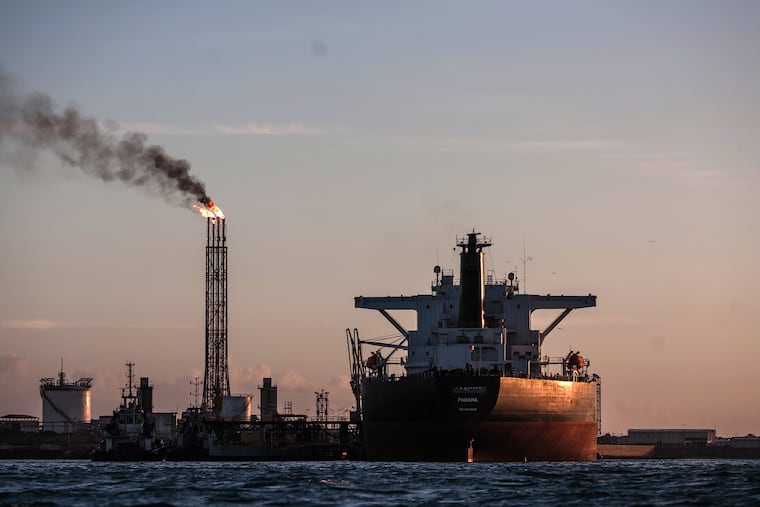
Late Friday, the president announced on Truth Social that he had reached an agreement with Venezuela to secure more than 65 billion barrels of oil. “This Historic Transaction MORE THAN DOUBLES American Oil Reserves, greatly increases our Oil Supply, and will substantially lower Gas Prices for all Americans, long into the future,” he wrote.
The deal, such as it is, is, in fact, very significant, as total proven U.S. reserves are about 81 billion barrels. But the rest of Trump’s claims, and the agreement itself, should be buried under caveats.
Trump noted that this comes “at no expense to the American taxpayer.” This is true unless you count the roughly $5 billion the U.S. has spent on military operations around Venezuela since August of 2025, including extrajudicial killings at sea and the illegal invasion that ended with the kidnapping of President Nicolás Maduro and his wife on Jan. 3.
» READ MORE: Trump’s Supreme Court is still helping him try to steal elections | Editorial
There is also the incalculable reputational cost as the United States’ revived imperialistic push into Latin America mirrors the president’s transactional nature and authoritarian bent.
The deal was reached with the unelected Venezuelan President Delcy Rodríguez, who took office after Maduro was taken. Never mind that she was part of the same repressive socialist regime that is accused of rampant corruption and human rights abuses; she has proved a lot more willing to work with the Trump administration than her predecessor.
Reports out of Venezuela find some people are hopeful U.S. investment will benefit the nation, yet under a government rife with cronyism, only a select few will likely reap any reward. Although details are still scarce, the agreement already sees the U.S. partner with a private company run by Alejandro Betancourt, an ally of Rodríguez, who has been under investigation by prosecutors in Zurich.
Trump’s assertion that gas prices will drop thanks to this deal is delusional, at least any time soon, as it would take years for this Venezuelan oil to have any impact on costs at the pump.
And that’s if the deal comes to fruition at all. The risks, at home and abroad, are significant.
» READ MORE: Trump’s tariffs prove even Canada can’t afford to be nice to the United States anymore | Editorial
The agreement would reportedly give Betancourt’s company access to 17 oil fields that are said to contain 65 billion barrels of oil. Development would cost billions of dollars and could take more than a decade. The Pentagon would finance the plan, but the legality of its participation is in question — as well as how the deal was crafted in the first place — meaning court challenges may be inevitable.
There are also political realities to contend with.
With Maduro gone and Trump threatening use of force, the Venezuelan government changed its position on working with the U.S. overnight. That could change just as quickly once Trump leaves office and if the new occupant of the White House has different priorities or if the current government of Venezuela is replaced and decides to honor the country’s 1999 constitution, which states that oil reserves belong to the nation and cannot be sold.
The high investment cost and political volatility are why U.S. oil companies have been reticent to enter Venezuela, even under pressure from Trump. According to the Wall Street Journal, Exxon and other energy interests are in talks to expand operations there, which is the prerogative of any private company that is willing to roll the dice on long-term investment, but should be far from the purview of the U.S. government and its taxpayers.
Trump’s half-baked oil agreement in Venezuela tramples that country’s sovereignty, benefits corrupt interests, and will likely fail to deliver for the American people. The art of the deal strikes again.