How to give up your car (sometimes), save money, and save the planet
It’s a big life change, so take things one step at a time.
If you have ever considered giving up your car, now is the time.
There’s the price of gasoline, which has shot up by more than 35% since President Donald Trump launched the war against Iran in February. Even if you never start the ignition, simply owning a car will now set you back an average of $8,000 a year in insurance, maintenance, and loan payments.
And those are just the immediate costs. As a major source of greenhouse gases, cars contribute significantly to climate change, which is already pushing up the price of food and everyday purchases.
So, let’s say you’re ready to ditch your money pit on wheels. Then what?
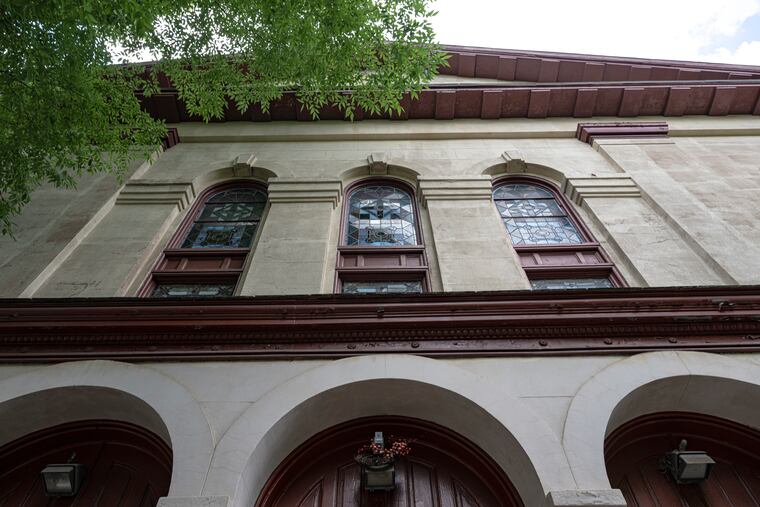
I’ve been struggling with this question since I moderated a panel this spring with Sarah Goodyear and Doug Gordon, the duo from the popular podcast The War on Cars, who just published a rousing call to arms, Life After Cars: Freeing Ourselves from the Tyranny of the Automobile. The event, held at the capacious Resurrection Philadelphia church in Center City, was sponsored by Philly Bike Action and 5th Square Advocacy, two groups dedicated to promoting alternatives to driving.
Resurrection’s sanctuary was packed — with the converted. When Goodyear and Gordon asked the audience who had traveled to the event by car, only a few sheepish hands went up.
While their book does a great job of detailing the ways cars “ruin everything,” there is little in it to help the car-dependent kick the habit. The problem is, most people have no idea where to start.
Even in the Philadelphia region, which has better-than-average transit and cycling infrastructure, the prospect of living without a car can seem a little like trying to swim without arms and legs. How will you take the kids to sporting events, look after elderly parents, and buy groceries without a vehicle? Our local transit services — SEPTA, NJ Transit, and PATCO — don’t serve every nook and cranny of the region and don’t run as frequently as they should.
Like everything else in America these days, the debate over the role of cars in our daily lives tends toward extremes. Philadelphia urbanists can sometimes come off as unsympathetic, as if they expect people to go cold turkey and swap their vehicles for bikes and SEPTA. Meanwhile, the pro-car lobby keeps insisting, against the evidence, that the car-free life is not practical outside a few transit-rich neighborhoods, like Center City.
But who says it has to be all or nothing?
‘Habituate walking’
My advice: Keep your car — for now, at least — but look for opportunities to get around by other means. Walk to the grocery store. Ride a bike to dinner at a nearby restaurant. Think of these excursions as a trial run. Once you feel comfortable, take the train or bus to work. You may never give up your car permanently, but you will save a bundle on gas and maintenance, reduce congestion, and boost your step count.
That’s how Jane Murray started weaning herself from the car. The Ardmore resident, who now runs a popular Instagram account called @Janewalksardmore, first began taking long walks as a way to experience her Main Line town on a deeper level. To give shape to her Instagram project, she decided to visit every block in Ardmore and document her travels.
The more she walked, the more comfortable she felt leaving her car at home. She now wheels a “granny cart” to Trader Joe’s, a 15-minute walk from her house. Not long ago, she hopped a SEPTA bus to meet friends for quizzo in a pub a few towns away. At the end of the night, she took an Uber home.
Murray’s kids still have to take a bus the four miles to their middle school and she drives them to distant sporting events, but makes a conscious effort to “habituate walking” into her routine. Before leaving the house, she checks her transit apps to see if she can get to her destination without driving. Sometimes, she mixes it up: When she’s running errands, she’ll drive part of the way, then walk the last few blocks. Her Instagram has inspired her neighbors, who pepper her for tips about safe walking routes.
A mobility menu
Living in America without a car is often portrayed as a hardship, something that people on the margins are forced to endure. But, for me, living without a car has been a joy.
I didn’t know what to expect when I impulsively decided to get rid of my aging clunker 30 years ago after being presented with an expensive repair bill. Before then, I had rarely taken taxis or splurged on Amtrak to visit family in New York. Since I would no longer have to pay for car insurance, I promised to allow myself those indulgences. My husband and I were living in Center City, which certainly made our experiment more doable. (I should mention that I was pregnant at the time. I took a taxi to and from the hospital.)
Besides saving a lot of money, not having a car has liberated me in ways I never could have imagined. Bike lanes were virtually nonexistent in Philadelphia in the ’90s; today my bicycle is my main form of transportation. Thanks to the city’s mostly flat terrain, I can easily cycle to interviews and events in far-flung neighborhoods. My ride is equipped with side baskets, allowing me to do my grocery shopping by bike. When my destination is beyond biking distance, or when I have to look presentable, I’ll take SEPTA or reserve a Zipcar from the local car-sharing company. In a pinch, I can always summon an Uber, a Lyft, or a taxi. I still walk a lot, and it’s no exaggeration to say I run into people I know on every outing.
The key here is to think of mobility as a menu of options, rather than a car/no-car binary. While low-speed electric bikes have made it easier to cover long distances, not everyone can, or wants to, bike. Even transit can be daunting for a novice. The fear of crime also deters some people from using SEPTA, even though serious incidents have fallen dramatically in the last decade.
Eden MacDougall vividly remembers his trepidation when he started commuting from Langhorne, in Bucks County, to Temple University on SEPTA’s Regional Rail. “I kept thinking, how will I know it’s my stop?”
By the time MacDougall graduated in 2022, he was a super-commuter. To get to his new job at Mastery Charter School, where he is an AmeriCorps reading instructor, he had to use three forms of transportation: He started his day by biking two miles from his home to the Langhorne station. After taking a SEPTA train to Fern Rock, he changed to the Broad Street subway, getting off at Erie. The trip took an hour and 45 minutes, but MacDougall, who never learned to drive, loved it. “I’d open up my book and read the whole way.”
Now he lives in Philadelphia and volunteers as an instructor for Transit Forward Philadelphia and the Bicycle Coalition of Greater Philadelphia, which run Saturday tours to help people feel more confident riding SEPTA. Although the events provide practical advice, like how to use a transit app, they’re intended to be fun excursions. MacDougall recently shepherded a group from Roxborough to the Clark Park farmers market, showing them how to change from the Route 9 bus to a West Philadelphia trolley. Along the way, the group got to see SEPTA’s efficient new Wissahickon Transit Center on Ridge Avenue, where 11 bus routes converge.
The two groups, which have been lobbying the state legislature to help SEPTA secure much-needed state funding, started the Saturday tours as an extension of their advocacy work. They believe the exposure to SEPTA’s system can help reset public perceptions.
“People had a lot of negative experiences during the pandemic,” Julio Rodriguez, the Bicycle Coalition’s policy director, told me. So, when SEPTA announced it was implementing its long-awaited schedule changes this summer, the transit advocates saw a chance to change the conversation.
Helping SEPTA boost ridership isn’t their only goal, however. Because they believe fewer cars will make Philadelphia a safer, more livable city, they’re organizing similar outings to get people comfortable with bike commuting.
Changing habits
Even while these advocates are gaining adherents, many skeptics remain convinced people will never give up their cars.
But the public’s cheerful response to this summer’s car-free celebrations around Philadelphia suggests that habits can change. Almost 600,000 people converged for World Cup watch parties at Lemon Hill in Fairmount Park during the 39-day FIFA Fan Festival — even though parking was banned. After the games ended, I saw hundreds of people streaming along the Schuylkill River Trail to 30th Street Station, a distance of 1.5 miles. Thousands took transit, rode bikes, or walked to the Ben Franklin Bridge to celebrate its centennial in July.
For people who switch to alternative forms of transportation, the payback is immediate. But Philadelphia and the region also have much to gain from having fewer cars racing through the streets: cleaner air, less noise, more casual social encounters with neighbors, and less wear-and-tear on infrastructure
The impact on climate change is a different story. Individual actions can only do so much to slow the dramatic shifts in global weather. It’s also a frustrating chicken-and-egg situation. People won’t see car-free living as truly feasible until there is intensive government investment in transit, bike infrastructure, and pedestrian safety.
Until that happens, carry a fare card, sign up for car-share, install a transit app on your phone — and don’t forget to wear a helmet.