What voters in the U.S. can learn from Australia’s political system
The overall tone of a parliamentary session I attended during a recent visit was kind, even jovial. It reminded me that we have to learn how to argue without the anger that’s infected our politics.
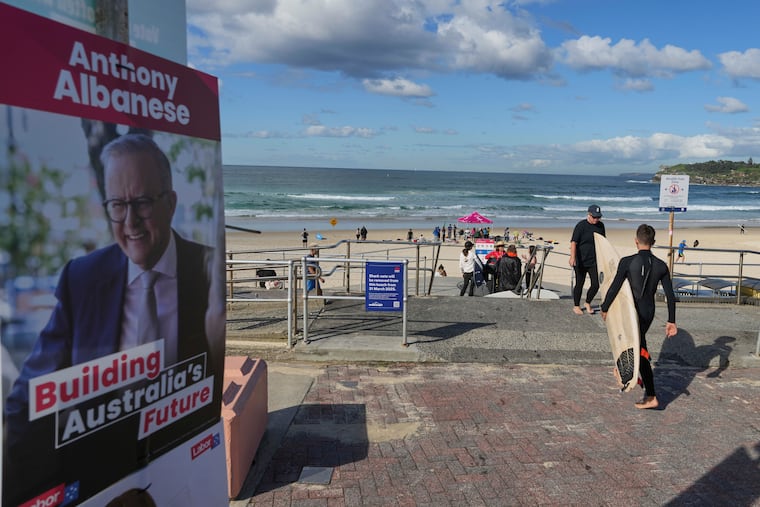
I’ve just returned from a long visit to a country that’s a lot like the United States. It’s a former British colony, blessed with vast natural resources and a richly diverse population. But it also has a functioning democracy.
I’m talking about Australia. Our own political system is in tatters, ripped apart by partisan acrimony and a president who stokes it at every turn. But in Australia, democracy still works.
Indeed, it’s fun. I realized that when I attended Question Time in Parliament, where members of the opposition get to press the ruling party. There were barbs and zingers aplenty. But the overall tone was kind, even jovial. Members on both sides were laughing.
Daily newspapers reflect a similar spirit. Australians debate the same things we do: immigration, education, environmental regulation, and more. But they argue in a friendly way, without the anger and vituperation that has infected our politics.
The exception is One Nation, the right-wing populist party led by Pauline Hanson. Vehemently anti-Muslim, Hanson once wore a burka into Parliament (google it for yourself) to demand a ban on the garment. And she has called for mass deportations of immigrants, praising Donald Trump’s approach as a “great way to do it.”
So why does Hanson remain a minority voice in Australia, while Trump is the president of the United States?
The first reason is mandatory voting. Technically, you don’t have to cast a ballot: When you arrive at the polls, you can submit a blank one if you’d like. But you do have to show up for federal elections or face a penalty of 20 Australian dollars (about $14). States can impose their own fines, which can top $100.
Australians also vote on Saturdays, which makes it much easier for working people to get to the polls. And, yes, they make voting fun. People play music and serve “democracy sausages,” the iconic election day snack. It’s not just a duty. It’s a celebration.
So over 90% of Australian citizens routinely turn out to vote in national elections. In the U.S., by contrast, voter turnout is usually about 60% in presidential elections and 40% in off-year ones. And in our primaries, just 20% of eligible voters participate.
Guess which country has nastier politics? American parties are incentivized to play to their “base” — that is, to voters who are likely to show up. And those are often the people with the most extreme views.
» READ MORE: Platner, Fetterman, and the myth of the working-class politician | Jonathan Zimmerman
In Australia, it’s the opposite. Politicians know that almost everyone is going to vote. So the best strategy is to appeal to the center, not to the margins.
Australia also uses ranked choice voting, which has the same effect. You need at least half the vote to win. That means you often must be the second and third choice of the people who put one of your opponents first.
Two American states — Alaska and Maine — and 39 localities have adopted ranked choice voting, which has already been shown to increase voter satisfaction and reduce negative campaigning in those places.
That’s exactly what it does in Australia. I witnessed a lot of spirited political debate during my four weeks there. But I didn’t hear anyone malign their opponent the way we do.
And I’m as guilty of that as any other American. During a media interview in Australia, I raised eyebrows by calling Hanson a “charlatan and a demagogue.” A reader told me afterward that he agreed with me, but “we just don’t talk that way in Australia.”
Ironically, Australians worry about the future of “social cohesion” in their country. A controversial referendum to give Indigenous people a greater voice in government went down to defeat in 2023, revealing ugly racial resentments that lurk beneath the happy veneer. And the 2025 murder of 16 people at a Jewish celebration in Sydney exposed a long-standing problem of antisemitism, which a national commission is currently investigating.
I witnessed a lot of spirited political debate during my four weeks in Australia. But I didn’t hear anyone malign their opponent the way we do.
But everything is relative, as I kept reminding my hosts. Yes, there are tensions and animosities in Australia. But the overall tone of politics makes America look like a shouting match on a reality TV show.
And that’s how Australians view it, too. A recent poll showed that Australians consume more media about American elections than they do about their own. It’s like watching a car collision in slow motion: You know it’s going to end poorly, but you can’t turn away.
American politics is an accident waiting to happen, and we all know it. I hope we can take some direction from our friends Down Under before we crash and burn.
Jonathan Zimmerman teaches history and education at the University of Pennsylvania. He was a “Thinker in Residence” this summer at the Forrest Research Foundation in Perth, Australia.