Mideast surprise: Dubai is rich, but not oil-rich
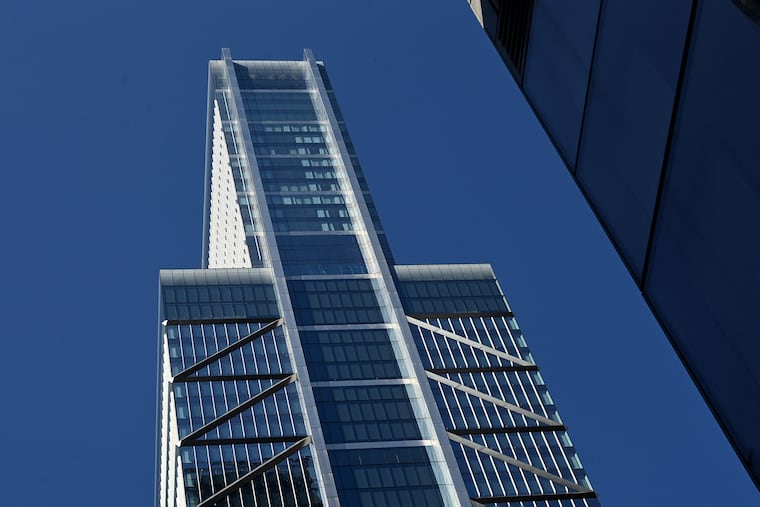
In February, Related Cos., the developer working with architect Frank Gehry on a $3 billion mixed-use complex in downtown Los Angeles, announced it was bringing in a new investment partner: Istithmar, a sovereign-wealth fund controlled by the ruling family of Dubai.
By Christopher Davidson
Columbia University Press. 376 pp. $32.50
nolead ends nolead begins
Reviewed by Christopher Hawthorne
In February, Related Cos., the developer working with architect Frank Gehry on a $3 billion mixed-use complex in downtown Los Angeles, announced it was bringing in a new investment partner: Istithmar, a sovereign-wealth fund controlled by the ruling family of Dubai.
The deal, which gave Istithmar a 45 percent stake in the project, was reminiscent of the 1980s, when Japanese companies took advantage of a sagging U.S. economy to acquire skyscrapers and other high-profile buildings in Manhattan and Los Angeles. And as was the case 20 years ago, people began asking curious, anxious questions about the flush foreigners: Where did they get so much cash, and what is leading them to use it to buy up our skylines?
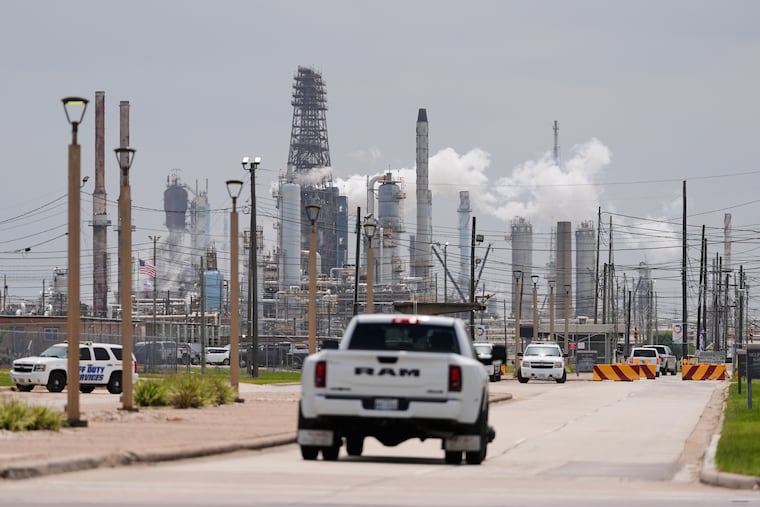
For many, the answer probably seemed obvious: The Istithmar fund gets its money from oil, and Dubai's sheiks are keen to stash it abroad as a way to diversify their portfolios before the petroleum reserves back home run dry.
As Christopher Davidson's Dubai: The Vulnerability of Success makes clear, though, that explanation is mostly wrong. Dubai, one of the United Arab Emirates, has turned itself into a rising and nimble economic power that actually depends on everything but oil to fill its coffers and fund its wide-ranging domestic and international ambitions.
Unlike its supremely wealthy neighbor Abu Dhabi, Dubai never had much of the stuff to begin with. Its production peaked in 1991, and today no more than 5 percent of Dubai's GDP comes from oil-related revenue. The rest is provided by a remarkably forward-looking economic engine that draws steady profit from trade, luxury tourism, high technology, and high-profile real estate investments.
While we moan about gasoline prices and try rather fitfully to imagine a post-petroleum urban future, Dubai has largely already arrived there.
As Davidson traces Dubai's rise from sleepy Gulf port to player on the world scene, he devotes equal time to highlighting "several key problems that lie beneath the emirate's glittering facade." Now a fellow at the Institute for Middle Eastern and Islamic Studies at England's Durham University, Davidson earlier was an assistant professor of political science at the Sheikh Zayed University in Abu Dhabi and Dubai, and his familiarity with the quirks and customs of Dubai helps lift the text, while quite dry, above typical think tank fare.
The book defines Dubai as a new breed of political and urban animal, equal parts Las Vegas and Singapore. Nominally Islamic, but increasingly Western on its public face, Dubai combines laissez-faire economic policies with an unapologetically closed political system. As a political entity, Davidson writes, "Dubai is still an autocracy, where real evidence of an opening for true democracy proves hard to find, and where far less political reform has occurred than in neighboring Gulf states, including even Saudi Arabia."
Like China, if on a far smaller scale, Dubai is involved in a high-stakes game of chance, betting that as long as it can keep its economy revving at a high enough level, it will be able to keep real political restructuring at bay.
Unlike China, however, Dubai's government can take some patriotic solace in the fact that the repressed masses are guest workers rather than its own citizens. Dubai is both a land of opportunity and a harsh proving ground for its lower-class immigrant workforce.
In Dubai, economic growth is a means of maintaining a patronage system for the emirate's 80,000 or so actual citizens, who make up just 5 percent of the total population of roughly 2 million.
That patronage system may pose risks to Dubai's future stability. Because they grow up coddled by "an extreme nanny state in which every aspect of their financial lives has been taken care of," Davidson argues, Dubai's citizens are hardly models of diligent ambition. "A weekday visit to any of Dubai's major shopping malls [reveals] legions of able-bodied young men drinking coffee and playing video games."
The emirate's much-vaunted commitment to free trade has a dark side: It has become a busy hub for gunrunning, money laundering and human trafficking.
Washington has long had serious worries about the ruling sheiks' relationship with al-Qaeda. Two of the Sept. 11, 2001, attackers were UAE natives, and much of the funding for the attacks themselves was wired from or laundered in the Emirates.
At the same time, Dubai's close relationship to Washington makes the emirate itself a possible terror target from the same extremists it is accused by the West of harboring. Rather ominously, Davidson cites a fiery threat from a group calling itself the al-Qaeda Organization in the Emirates and Oman. The statement demands that all U.S. military installations in the UAE be dismantled. Failing that, it concludes, the UAE's ruling families will find "the mujahideen in their faces."