Discovering the rewards of failure
The University City Science Center celebrates its 50th anniversary on Thursday, touting its record as the nation's oldest urban research park.
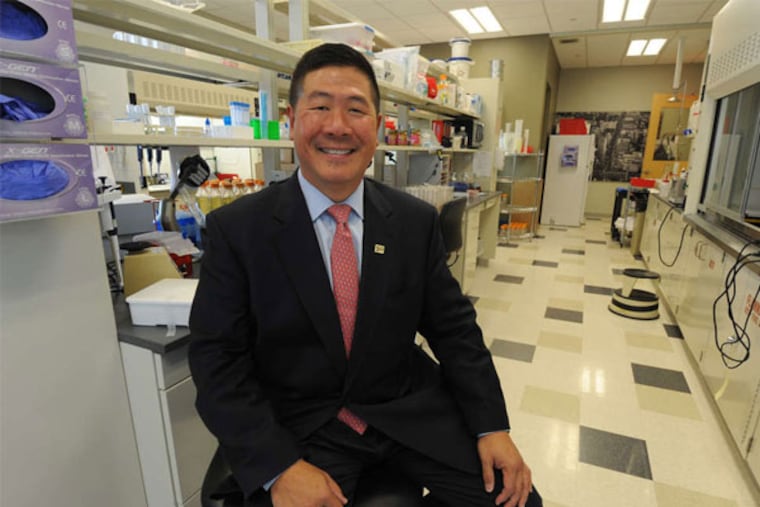
The University City Science Center celebrates its 50th anniversary on Thursday, touting its record as the nation's oldest urban research park.
Its incubator hatched 350 firms, with 93 still local. Famous hatchlings include SEI Investments, Bentley Systems, and Centocor. Buckminster Fuller, inventor of the geodesic dome, was "resident genius" in the 1970s.
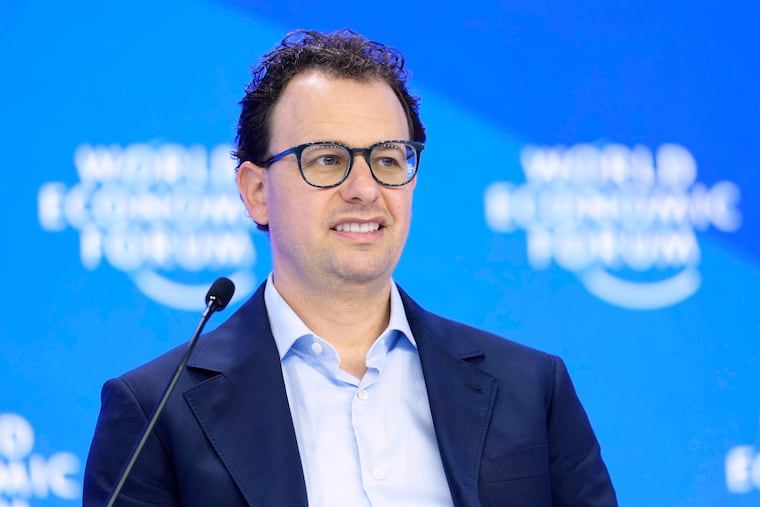
These days, chemical engineer and business executive Stephen S. Tang, 53, leads the nonprofit science center, which now includes 16 buildings, housing 70 companies and 30 new ventures, together employing 8,000.
While Thursday's event will celebrate the center's success, Tang thinks that building a tolerance for failure is key to creating a sustainable entrepreneurial ecosystem.
Question: How does that play out in Philadelphia?
Answer: If a 25-year-old in Philadelphia with an entrepreneurial flair were to seek counsel from his parents, more than likely, he/she would hear, "Get a job." They view that stint as . . . unemployed. If you go to Boston or Silicon Valley and were between gigs, you are embraced because you have the freedom to advance your venture.
Q: So an attitude change is in order?
A: In Philadelphia, we need to accept that failure in high-risk ventures should be expected and even embraced.
Q: Really? Are venture capital investors rushing to hug entrepreneurs whose past ventures have tanked?
A: Some VCs will even tell you that if you failed as entrepreneur, you're even more valuable because you've learned on somebody else's dime. Our role here is to make [incubating companies] succeed or fail faster and cheaper. If it's not going to work, find out now, spend less money, and redirect your venture.
Q: As the head of an incubator, what else have you noticed about the entrepreneurial culture here?
A: If I look at Boston and the Silicon Valley, the biggest companies have some connection between them and the venture capital community. Executives go back and forth between venture capital and operating roles in those companies.
Q: So each side learns the realities and thought patterns of the other?
A: Exactly. That cross-training, if you will, between sectors is something we need to work on.
Q: You grew up in Wilmington and your parents emigrated from China. Has that influenced your thinking?
A: The immigrant's journey and the entrepreneur's journey are very similar because they are both blazing paths for the first time.
Q: What do you do for fun?
A: I'm a cancer survivor.
Q: Survival is good, but colon cancer doesn't sound like fun.
A: I made a renewed commitment to my own fitness. I became a runner. I've been doing yoga for the past three months. I recommitted myself to music, so I am actually taking piano lessons.
Q: Do you practice?
A: Not as much as I should.
Quick hits:
Q: You are very virtuous now. Playing the piano. Mr. Fitness. Downward dogging in yoga. What is rotten about you?
A: I'm impatient. That's the biggest thing.
Q: And?
A: In a nonprofit, you have more influence than you do actual control [as a for-profit executive does]. If you come from a for-profit environment, you can become impatient.
Q: Favorite restaurant?
A: Han Dynasty.
Q: What do you order?
A: Double-cooked pork belly.
STEPHEN TANG
Title: President, CEO, since February 2008.
Home: Center City
Family: Children, Lauren, 23, Walter "Beau," 17, Helana, 14; Fiancee, Diane Miller
Diplomas: College of William and Mary, chemistry; University of Pennsylvania, Wharton, M.B.A.; Lehigh University, Ph.D. chemical engineering.
Resume: High-level posts in life-science companies. As CEO,
led Millennium Cell
Inc., now bankrupt, through an IPO.
EndText
SCIENCE CENTER
Mission: Nonprofit urban research park, incubator specializing
in life sciences, technology.
Headquarters: University City
Annual budget:
$22.1 million
Revenue: Rent from tenant companies.
Impact: 350 graduate companies, 93 local.
Salary: People employed by graduate companies earn an average of $89,000 a year.
Area jobs: Local graduate firms employ 15,000.
EndText
More Online
Stephen Tang on how
CEOs mess up inquirer.com/jobbingEndText
215-854-2769
@JaneVonBergen