Dietz & Watson fire destroyed warehouse but forged stronger bonds
Three years ago, on the Saturday before Labor Day, Louis Eni, 63, Dietz & Watson chief executive, was kayaking near his beach home in Ocean City, N.J., when his wife came out on the dock and motioned him toward the house.

Three years ago, on the Saturday before Labor Day, Louis Eni, 63, Dietz & Watson chief executive, was kayaking near his beach home in Ocean City, N.J., when his wife came out on the dock and motioned him toward the house.
His brother was on the phone.
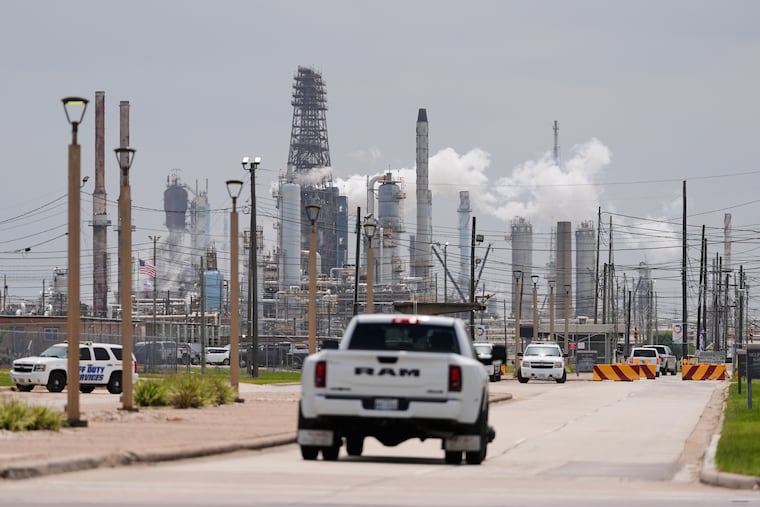
There was a fire at the Philadelphia deli company's warehouse in Delanco, Burlington County. "It was bad. As I'm driving up from the Shore, you can see the smoke from miles away. You go numb," Eni said.
The refrigerated warehouse held all of Dietz & Watson's inventory ready for shipping. Besides that, the company had rented space to the company that distributes food to ShopRite supermarkets.
"ShopRite had, I don't know how many, hundreds of thousands of pounds of turkey for Thanksgiving in the warehouse," Eni said. "They had most of their Thanksgiving turkeys stored in our warehouse. They lost all of that."
It took days for the fire to come under control. Solar panels on the roof posed a hazard to firefighters, and the smell of charred meat lingered, annoying neighbors.
In June 2014, nearly a year after the fire, the firm announced that it would not rebuild in Delanco, instead expanding its Northeast Philadelphia footprint to consolidate operations in the city.
"In many ways, I can look back, and maybe it's just my optimistic nature," he said, "but even though it was tremendously stressful, I think the fire had more positive effects on our business than negative."
Really? How so?
We lost all our inventory. We had nothing to sell. It galvanized the company. Monday was a holiday, but we had 80 percent of our people come to work on that holiday and we started producing here in Philadelphia.
We produced more product in the next two to three weeks than we ever thought we could cook, package, and ship. It was incredible. Everybody stepped up.
Sounds as if it made you appreciate your workforce.
After the fire, New Jersey lobbied hard to keep you.
I don't want to knock the New Jersey program. We, of course, got calls from New Jersey and from people here in Philadelphia and in Delaware. When Mayor Nutter called my cellphone, he said: "Would you sit down with us?" We were going to rebuild in New Jersey because that was really the only option we had.
Then what happened?
So the city arranged a land swap to get you space next door, the state gave you grants and loans. Any other issues?
Can you find workers?
Why?
Aren't you being an old fogy?
So retention is also a problem?
Interview questions and answers have been edited for space.
215-854-2769@JaneVonBergen
LOUIS ENI
StartText
Home: Center City.
Family: Wife, Nina; children, Lauren, 30, Michael, 24.
Diplomas: Ursinus, economics, business.
Favorite product: Scrapple, with eggs.
First job at the plant: Separating hot dogs by twisting them in their casings.
On his hot dog: Mustard, onions, hold the ketchup.
For fun: Kayaking.
Also at work: Daughter of founder Gottlieb Dietz, Ruth "Momma" Dietz Eni, chairwoman; Louis' brother, Chris Eni, COO; sister Cindy Yingling, CFO; 4th generation: Lauren Eni, Christopher Yingling, EndText
DIETZ & WATSON
StartText
What: Maker, seller of deli meats, cheeses.
Where: Based in Northeast Philadelphia. Plants in Baltimore, Corfu, N.Y. Runs turkey farmers' cooperative
in Virginia.
Revenues: More than $500 million.
Employees: 1,300 nationwide, 650 here.
History: Founded in 1939 in Philadelphia. Gottlieb Dietz, a butcher and sausage- maker, joined forces with meat smoker Walter Watson.
Top sellers: Any turkey-breast product.EndText
StartText
At Dietz & Watson, BYOB employee perk helps quality control. www.philly.com/ jobbing
EndText