Program aims to help incoming freshmen adjust
Rod Sutton believes he can reach the bored, disruptive, and disillusioned students who slip through the cracks of the public school system.
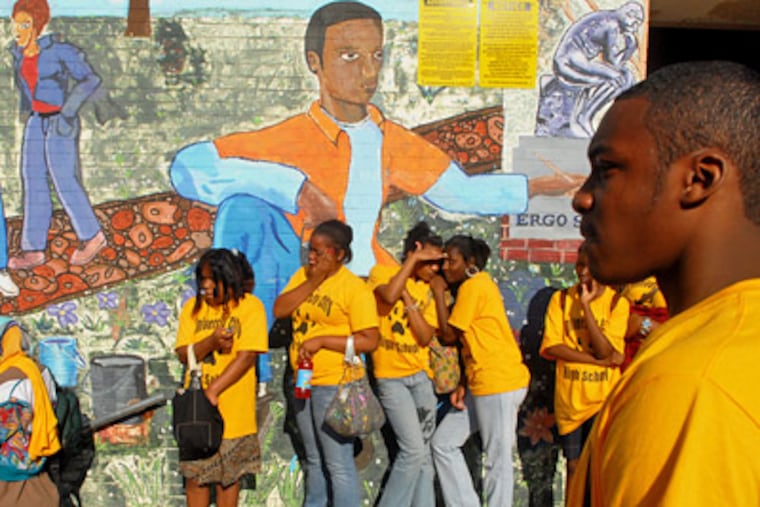
Rod Sutton believes he can reach the bored, disruptive, and disillusioned students who slip through the cracks of the public school system.
He once was one of them.
A child of the Newark, N.J., projects, he lost his father early on and was tossed out of public school for bad behavior - on the road, he says, to being "dead or in jail."
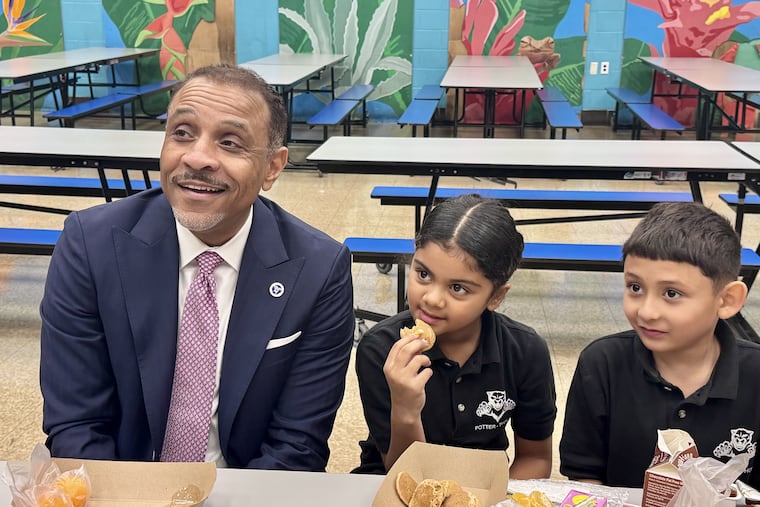
But a parochial school gave him a chance, a strong male role model - his stepfather - helped him settle down, and now Sutton's voice booms with excitement as he talks of changing the troubled culture of University City High, where, at age 43, he is an assistant principal.
"We have to engage these kids, kids who have traditionally tuned out," he said. "We're not going to give up on any of them."
This summer, Sutton and a dozen University City faculty laid what they hope is the groundwork for a transformed school. Every weekday for five weeks, 75 of the 114 incoming freshmen attended the Summer Bridge program, where they learned the tricks of navigating high school, the value of a diploma, the need to separate the classroom from the streets.
The voluntary program rewarded them with a half credit toward graduation.
"We have to build bridges for these kids, so they can do what I did," said Sutton, who has also taught in Camden.
University City, at 36th and Filbert Streets in West Philadelphia, was host to one of a handful of Summer Bridge programs in the city; the last of them ends this week. They were made possible by a $49.5 million grant given last year to seven Philadelphia high schools by the federal Department of Labor.
The money, about $6 million of which went to University City, is to be used to lift problem-plagued schools out of a culture of failure and violence.
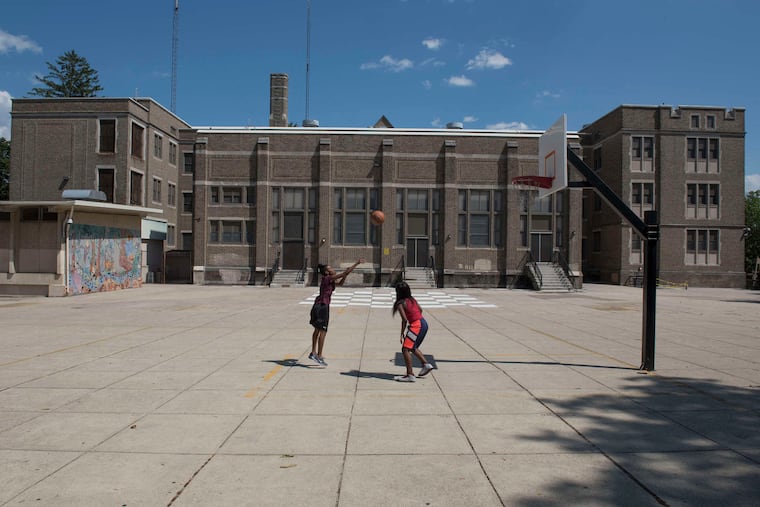
The school has not met state standards for several years running. Nearly 85 percent of its 1,350 students live below the poverty line; on any given day, 24 percent are absent. Though it came off the list last year, University City earned the state's "persistently dangerous" designation because of violence there.
Holding students' interest will be key to a University City renaissance, said Courtney Collins-Shapiro, the Philadelphia School District's director of Multiple Pathways to Graduation. Research has shown that students who fail their freshman year are much more likely to drop out than those who pass the first time.
"We know where we're losing most of these kids in these schools is ninth grade," she said.
Hence Summer Bridge, which draws incoming freshmen into fun activities while offering strategies for high school success (how to build enough credits to graduate, whom to ask for help if math is a struggle).
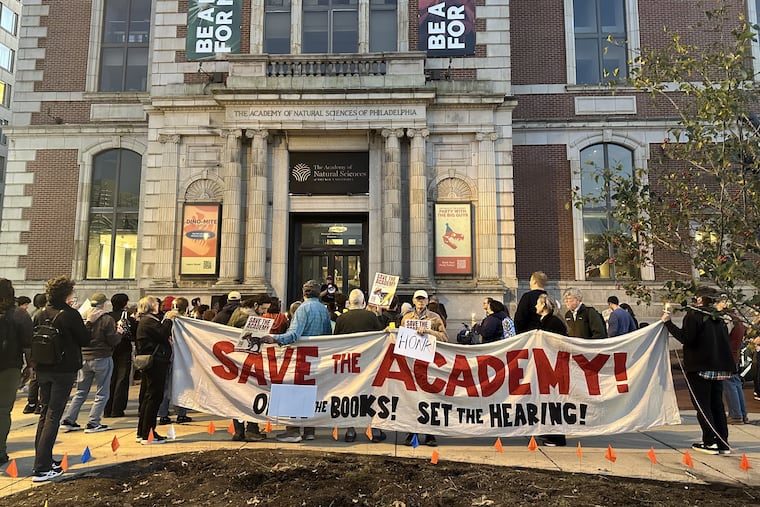
At University City, through partnerships with Drexel University and the Academy of Natural Sciences, students worked on digital-media projects and pondered what it means to be an American.
They took trips to New York to study the Harlem Renaissance and to Margate to examine the native plants and fish of the Jersey Shore.
They painted murals on school walls.
They learned what a GPA is, how to follow a roster, how to behave in the hallways.
And they built an identity as the Class of 2013.
University City spent $250,000 of its grant money to stage Summer Bridge. Sutton started recruiting students in February - knocking on doors, calling homes, visiting middle schools. Parents jumped at the idea of a full day of school and a program flush with funding.
"I told them, 'We have a grant, we have a wonderful opportunity for your child,' " Sutton said. "How beautiful is that?"
For faculty, there were plenty of outside distractions and perceptions to battle, he conceded. The teachers' contract expires at the end of this month; the school's principal was replaced in June.
Students came to school with enormous challenges, too. Some were homeless, others had absent parents or saw family members killed, Sutton said. "But our students amaze me, every day."
On a recent day, a group of freshmen stayed back from the Margate trip. The boys were not allowed to go because of behavior issues.
But Joseph Hill, 14, could tell you exactly how many credits it takes to graduate: 23.5. And although the Summer Bridge program was "intense," he said, "if I didn't feel like doing something, they encouraged me to do it."
Hill's most valuable lesson?
"People react to dumb stuff, but you have to be smart," he said. "High school is hard, frustrating, but you learn to work through it."
Kareem Smith, 14, would have been lying in bed or watching TV if he had not chosen the program, he said.
"Everyone in my family said this is a once-in-a-lifetime opportunity," he said.
The soon-to-be-freshmen were paired with mentors - both adults and peers paid by the Department of Labor - to ease the transition to high school.
One was sophomore Hakeem Brown, 16. Last year, he himself started out on the wrong foot, racking up poor grades and suspensions. But he woke up, he said, and chose a different path.
"I tell them it's really not worth it to get in trouble," Brown said. "It never leaves your record."
Avoid the silly stuff, he advises the freshmen. Do not come in late, walk the halls, skip class. Think about your career, starting today. High school is hard, but dropping out dims your future.
"They listen to me," Brown said. "It's different coming from a kid."
The lessons seem to be resonating. This summer, Sutton said, one student was caught scrawling graffiti on a desk and a wall. The student was punished, but not tossed out.
Instead, he was assigned to the school's mural arts program, where structure turned his talent into something productive. He was the first one in the door in the morning, Sutton said.
Teachers wrote their own curricula and had common planning time daily. The program "created a buzz," Sutton said. "As an administrator, no more do I have to check a teacher's pulse."
In designing his curriculum, veteran English teacher George King said he "paid close attention to the inner-city culture, what the kids gravitate toward." He taught poetry through hip-hop music. His pupils studied broadcast journalism and the performing arts.
"It's something new and fresh, and I wanted to be a part of it," King said. "The energy went from the kids and bounced back to us. We know we're headed in the right direction."