It was Morales' night with the orchestra
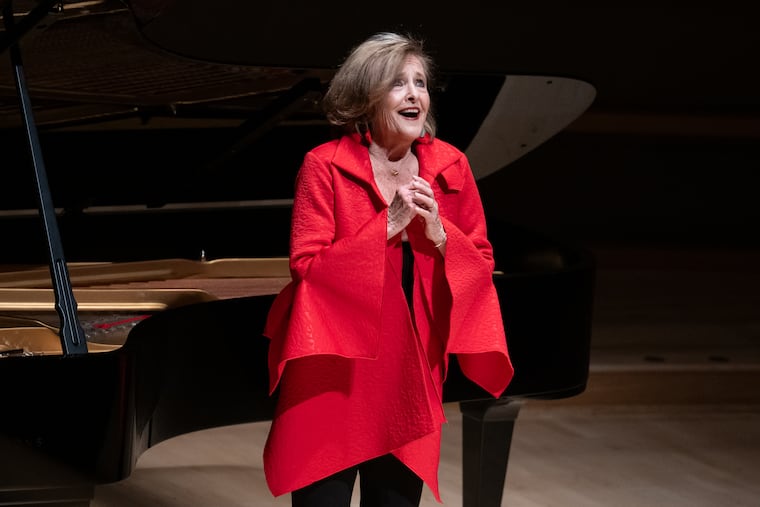
It was Pied Piper night at the Philadelphia Orchestra. The audience Friday at Verizon Hall gladly would have followed clarinetist Ricardo Morales out the doors and to any destination he proposed.
It was Pied Piper night at the Philadelphia Orchestra. The audience Friday at Verizon Hall gladly would have followed clarinetist Ricardo Morales out the doors and to any destination he proposed.
Morales, principal clarinet since 2003, explored shadings of his instrument's eloquence in Debussy's Premiere Rhapsodie and brought the audience to its feet with the cascades of notes and theatrical flourishes that characterize Rossini's Introduction, Theme and Variations.
Although the sheer jubilance and charm of the Rossini evoked that ovation, it was in the subtle and thoughtful Debussy piece that a range of the soloist's gifts could be savored. The first note he played had no beginning but seemed to have been in the air and only needed our awareness. Written as a test piece for Paris Conservatoire hopefuls, the music asks colors, nuance, pinpoint intonation, and a sense of phrase that moves beyond meter. To hear Morales round off a quiet phrase ending, to glow in the low register and inject pure but modulated tones in upward moving lines was to hear an essay in impressionist style.
Then came Rossini. The piece works with parts of arias from the operas La Donna del Lago and Moise, and Morales found a way to balance the mock dignity of the exposition of those operatic airs with the headlong coloratura of the variations. Listeners followed him into technical intricacies and hair's-breadth flights.
How did Rossini's contemporaries manage while playing less evolved instruments? The work must have been heard as music of the future when first played. Played now, as by Morales, it bursts with humor, sly dashes through tonalities, and operatic postures. He was supported by an orchestra caught up in the moods. Conductor Juanjo Mena was attuned to the soloist's vital signs and organized apt color, pace, and enthusiasm right up to the clarinetist's Mach 2 final run.
Mena surrounded all this magic with two Russian standards that sounded ordinary in this context. Rimsky's Capriccio Espagnol, out of the repertoire for four decades, was brought back, and Tchaikovsky's Symphony No. 4 closed the evening without erasing the effect of Morales' performance. Neither piece was explored very deeply, details refreshed or spirit reinvented. The symphony had its muscles in place. Mena urged the music ahead without asking for much inner shading, and built it all toward a thunderous brassy close.
The Capriccio Espagnol sounds like a period piece now. Its Russian-ness crowds against the Spanish dance meters, and, despite the stylish violin solos by David Kim, seemed quaint.
Interestingly, Morales took his seat in the orchestra for the symphony, the only principal wind player on stage. When Mena had the section leaders stand at the end, the audience cheered for Morales.