Council approves red-light cameras near City Hall
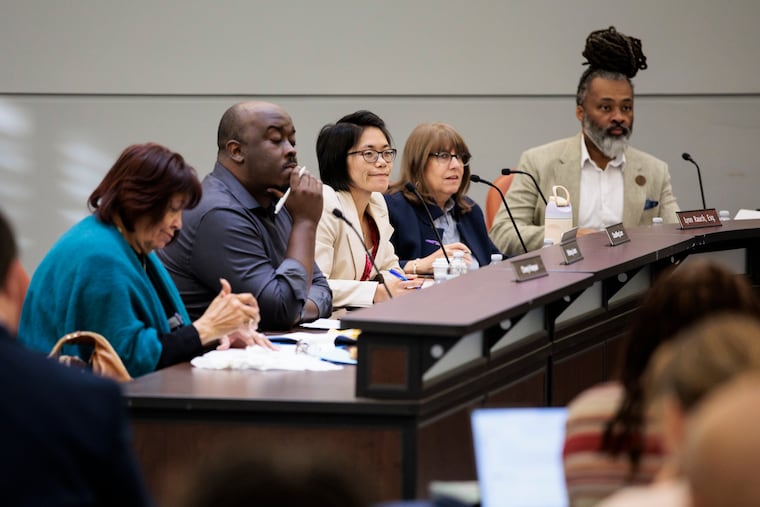
A City Council committee yesterday approved the installation of two red-light cameras at a pair of traffic-clogged and sometimes hazardous intersections at City Hall.
A City Council committee yesterday approved the installation of two red-light cameras at a pair of traffic-clogged and sometimes hazardous intersections at City Hall.
Motorists entering and exiting the City Hall square from North and South Broad Street would be watched by the cameras, which must be approved by Council and the mayor. The Market Street intersections would not be covered by the cameras.
The cameras would bring the citywide total to 15. Motorists who run red lights receive $100 tickets in the mail.
"The intersections around City Hall are an absolute disaster as far as pedestrian traffic is concerned," said Councilman Jim Kenney, who cosponsored the bill that would authorize the cameras.
The Philadelphia Parking Authority, which administers the red-light camera program, put temporary cameras at the intersections on a recent weekday. The cameras recorded more than 234 violations in less than 12 hours, according to Parking Authority officials.
Traffic violations have declined at other intersections where red-light cameras are installed, according to Parking Authority data. At Mascher Street and Roosevelt Boulevard, for example, red-light violations fell from 4,587 in June 2007 to 1,783 in September 2008, the last month for which data were available.
Though no testimony was offered opposing the program, Catherine Rossi, representing AAA, said that organization would oppose the installation of unnecessary cameras.
"This is not supposed to be about making money. It's supposed to be about safety and stopping people running red lights," Rossi said.
Later, she said red-light camera programs had "lost credibility" in many other cities. Philadelphia, she said, had avoided that but must continue to divulge data and operate transparently if motorists are to accept more cameras.
Revenue from the red-light program is sent to the state for use in transportation projects. So far, Philadelphia's program has generated $4 million, said Vincent Fenerty, the Parking Authority's executive director.
The Council committee also approved a bill that would increase the fees on drivers who break or destroy disabling boots attached to their vehicles by the Parking Authority. Though the Parking Authority had requested that the fine be raised from $300 to $700, the Council committee raised the fee to $1,000.