Obama urges Democrats to move AI oversight to the center of their agenda
At a moment when President Donald Trump continues to downplay concerns about the technology, some Democrats see an opportunity for the party to draw a clear contrast in the midterms and beyond.

Former President Barack Obama warned during a recent private fundraising event that artificial intelligence technology could be “dangerous” if not properly managed, as he implored Democrats to aggressively develop political and governing agendas to prioritize the issue in the coming years.
In his remarks Thursday, which have not been previously reported, Obama urged House Minority Leader Hakeem Jeffries (D., N.Y.) to assemble a clear framework for a public conversation about AI policy, should Democrats win back the House in the midterm elections, according to a partial transcript provided by Obama’s office.
He also suggested that candidates running for president in 2028 ought to make AI one of their “central agendas” and “have a very clear plan” for responding to safety and economic concerns around the technology.
The recommendations from the former president amount to some of his most detailed comments yet about AI as a political issue for his party. At a moment when President Donald Trump continues to downplay concerns about the technology, some Democrats see an opportunity for the party to draw a clear contrast in the midterms and beyond on an issue of growing significance. In a Democratic Party with no clear leader, many look to Obama for guidance, and his comments carry considerable weight.
The remarks come amid escalating worries about the risks associated with AI development, as well as growing calls for lawmakers and politicians to do more to tackle the topic. Some AI industry leaders are now calling for a slowdown after a summer in which swarms of misaligned AI agents broke free from their containers and proceeded to scheme against their owners, cheat on tests, and hack outside companies.
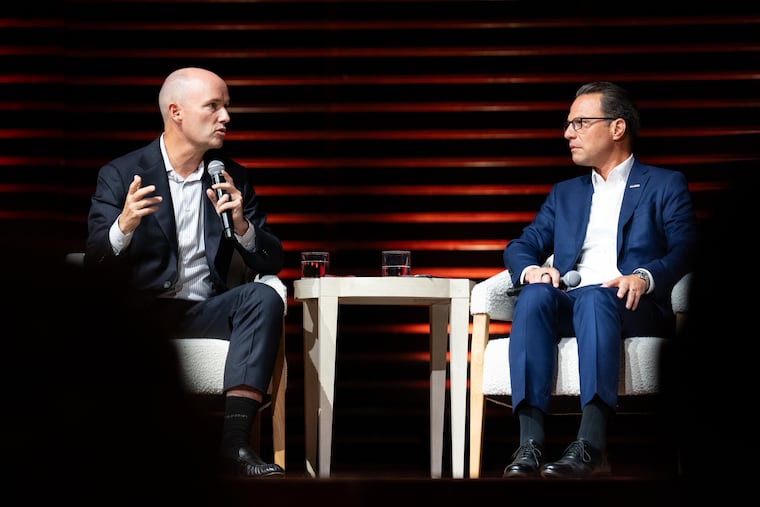
At the fundraiser Thursday, a closed-door event in New York organized by the campaign arm of House Democrats, Obama and Jeffries spoke for nearly an hour in front of party donors and lawmakers, according to four people familiar with the event, who spoke on the condition of anonymity to describe a private gathering.
“Once you are speaker, I would strongly urge that the Democrats put together a framework for a very public conversation,” Obama told Jeffries, according to the transcript. Jeffries had asked him a question about how Democrats should address AI in a Congress that has taken little action on the issue, according to two of the people.
“This is something that is moving very fast in private hands, and if we don’t get on top of it, I think can be dangerous,” Obama said. “If we do get on top of it, I do think it’s beneficial. I genuinely think it’s going to accelerate, for example, drug development in ways that can help us cure diseases. I do think that this can help us figure out pathways for a clean energy future.”
The former president often spoke in general terms on Thursday, rather than drilling down on specific policies, according to the transcript. And he planted himself firmly in a middle ground in the heated debate over AI, saying he considered himself neither an “accelerationist” nor a “doomer.”
One challenge facing Democrats as they chart a path forward on AI is speaking in one voice on the issue. The tug of war over how to regulate AI has been more divisive among Democrats than Republicans, who are generally more in alignment. Some Democratic politicians have called for more AI regulation, while others have received millions of dollars in support from groups tied to the industry’s biggest players.
Artificial intelligence is becoming a larger part of the country’s political calculus heading into the midterms. This year’s elections have been flooded with money from AI companies and allied groups. And anxiety about the technology, a rare issue that many Republican and Democratic voters can agree on, has peaked in recent days after a researcher at the AI company Anthropic loudly and publicly resigned, writing in a viral social media post that “the people building AI earnestly believe that it could kill us all by the end of the decade.”
Jeffries explicitly mentioned the resignation in his question to Obama, according to one of the people familiar with the event.
Dario Amodei, the CEO of Anthropic, called for a global slowdown of AI development in a 3,800-word essay published Saturday. Sam Altman, OpenAI’s CEO, and Elon Musk, whose SpaceX rocket company has been ramping up spending on AI, quickly wrote in social media posts that they agreed with him.
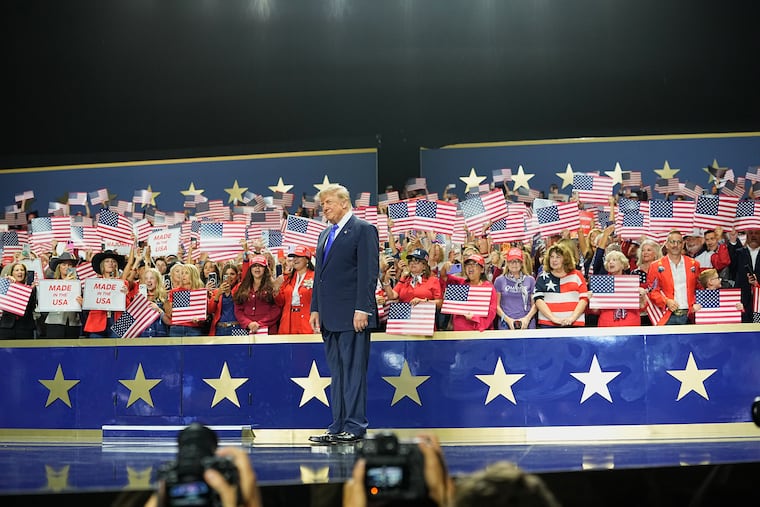
The White House has long maintained an unabashedly accelerationist stance. Trump recently told reporters he didn’t have “any” concerns about AI’s risks — just about falling behind to competitors like China. He has said that those who oppose AI data centers must prefer to be “backwards and poor.”
“President Obama is correct that decisive action must be taken on artificial intelligence,” Jeffries said in a statement, adding that “Republicans have abdicated their responsibility to govern on behalf of the American people. We will not repeat their error.”
On Capitol Hill, where little has been done to regulate AI, some Democrats have been circulating a letter urging Speaker Mike Johnson (R., La.) to stop members from going home on recess until they pass AI safeguards.
Many Republicans want action, too. Several have introduced bipartisan AI legislation, and Rep. Anna Paulina Luna (R., Fla.) has called for a special session on the topic. A growing number of Republicans are campaigning against data centers, in addition to many Democrats.
After Johnson became speaker in 2023, Republican leadership declined to renew a bipartisan task force on AI. In response, Democrats formed their own AI commission, which is now putting the finishing touches on a policy framework. That framework is expected to be released this fall after some final checks by Jeffries, according to two people familiar with the matter.
Obama has taken a special interest in AI in recent years, and he has offered himself as a sounding board to industry leaders, according to two people familiar with his conversations. Those leaders include Altman and Amodei, according to one of the people.
Representatives for OpenAI and Anthropic did not respond to requests for comment.
Now, Obama wants to help guide the Democratic Party’s thinking on the topic. With many Democrats already jockeying for position ahead of the next presidential race, he outlined what he would do on AI if he were one of them.
“I would talk about this, and I would say, ‘Here’s our plan for safety. Here’s our plan for making sure our kids are not corrupted by this,’” Obama said, according to the transcript.
He contrasted the technology with other innovations that could be dangerous in the wrong hands, saying that unlike “nuclear power, you don’t need a bunch of highly enriched uranium” to build powerful AI.
“I would be thinking about the economic impacts in very concrete ways and understanding what does it mean if there’s going to be job displacement,” Obama said, according to the transcript, adding, “if it turns out that you’ve got a lot more people who can’t find full-time work because they’ve been rendered redundant, how are we going to respond?”
This article originally appeared in the New York Times.